Quick Answer
Table of Contents
ToggleA magnetic phone case is a protective smartphone enclosure with an embedded magnetic alignment system that enables compatibility with wireless chargers, mounts, wallets, and other magnetic accessories. It is widely used across both iPhone (MagSafe) and Android (Qi2) ecosystems. For brand owners and procurement managers, it represents one of the fastest-growing and most technically nuanced categories in the global smartphone accessory market.
What Is a Magnetic Phone Case?
Definition and Market Overview
A magnetic phone case is a protective smartphone case engineered with an embedded magnetic alignment ring — typically neodymium-based — that enables the device to interface with magnetic accessories such as wireless chargers, car mounts, and detachable wallets, without physical connectors.
In 2026, magnetic phone cases sit at the convergence of two expanding hardware ecosystems: Apple’s MagSafe and the Qi2 wireless charging standard. For B2B buyers, this convergence represents a product category with durable, ecosystem-driven demand.
Magnetic Cases vs. MagSafe-Compatible Cases
These terms are often used interchangeably, but they reflect different product specifications:
- MagSafe-compatible cases are designed to meet Apple’s exact magnet geometry and field strength specifications, enabling full interoperability within the Apple accessory ecosystem.
- Universal magnetic cases use a similar ring structure but are not restricted to Apple’s specifications — making them compatible with a broader range of devices, including Qi2-certified Android phones.
For procurement managers sourcing phone cases with magnets at scale, this distinction affects tooling specifications, QC protocols, compliance requirements, and unit cost.
Typical Structural Components
Most magnetic phone cases share three core elements:
- Magnetic alignment module — a ring of embedded neodymium magnets, positioned to align with the device’s wireless charging coil
- Outer protective layer — typically TPU, polycarbonate (PC), silicone, or leather, depending on product tier
- Internal reinforcement structure — varies by protection grade; may include air-cushion corners or dual-layer geometry
How Magnetic Phone Cases Work
Magnetic Alignment System
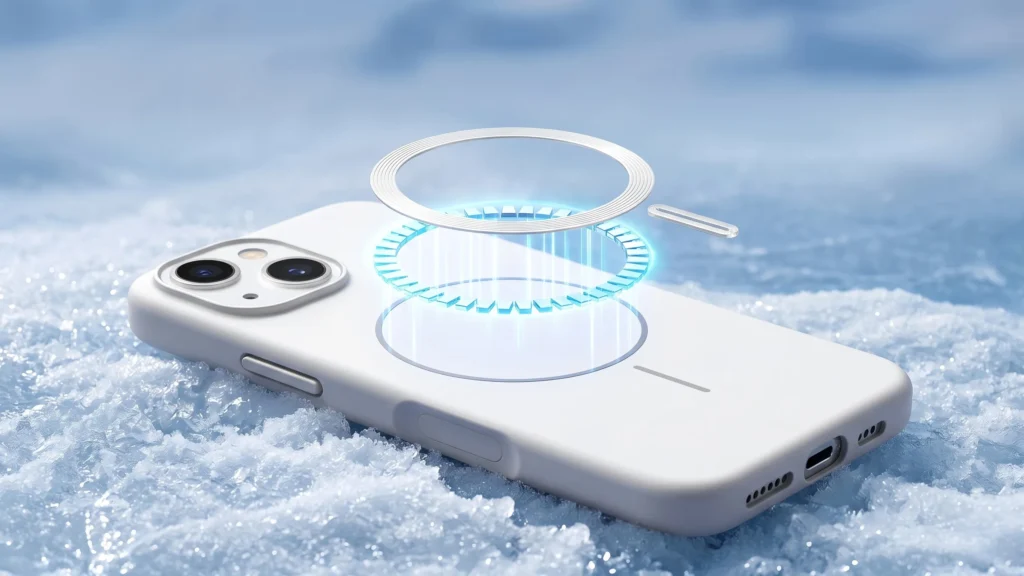
The core mechanism in most magnetic cases is a ring-based magnet array — sometimes referred to as a phone case magnetic ring — a series of permanent magnets arranged in a circular formation within the case body. When brought near a compatible accessory, the magnets snap into alignment, ensuring consistent positioning for charging or mounting.
This alignment precision is what separates a well-engineered case from a commodity product — and is also what ensures magnetic phone holders work correctly with a case installed, a critical factor for automotive and desk mount applications.
Magnet Strength: N35 to N52 Grades
Neodymium magnets are graded by their maximum energy product. In phone case manufacturing, the most common grades are:
| Grade | Relative Strength | Typical Application |
|---|---|---|
| N35 | Standard | Budget-tier magnetic cases |
| N42 | Medium-high | Mid-range consumer cases |
| N48 | High | Premium MagSafe-compatible cases |
| N52 | Maximum commercial | Performance-grade OEM builds |
Specifying magnet grade at the sourcing stage prevents costly production revisions and ensures accessory compatibility from day one.
Wireless Charging Interaction
In a well-designed magnetic case, the alignment ring is positioned around — not over — the device’s charging coil, allowing magnetic charging to work reliably through the phone case with minimal disruption to Qi or Qi2 energy transfer.
Charging efficiency issues are typically the result of poor magnet placement or excessive case thickness — a manufacturing quality issue, not an inherent limitation of the technology.
Types of Magnetic Phone Cases
| Type | Key Feature | Best For |
|---|---|---|
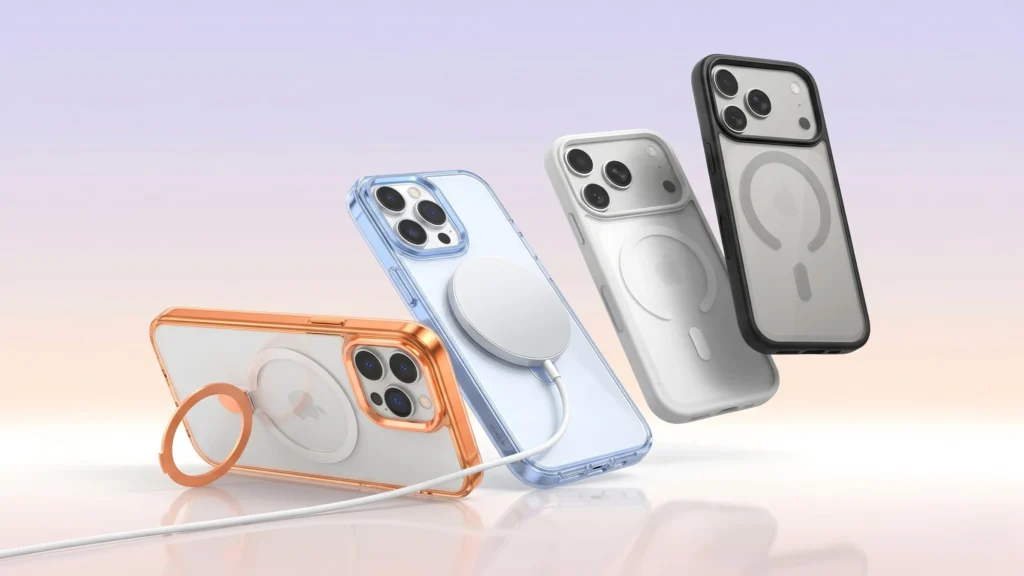
| Slim | Low profile, lightweight | Urban/fashion markets |
| Rugged | Multi-layer drop protection | Outdoor, industrial, enterprise |
| Clear | Optical transparency | Device-aesthetic markets |
| Wallet-style | Integrated card storage | Everyday carry, lifestyle brands |
| Hybrid | Combined material construction | Premium all-around protection |
| OEM / Custom | Full private label capability | Brand owners, wholesalers |
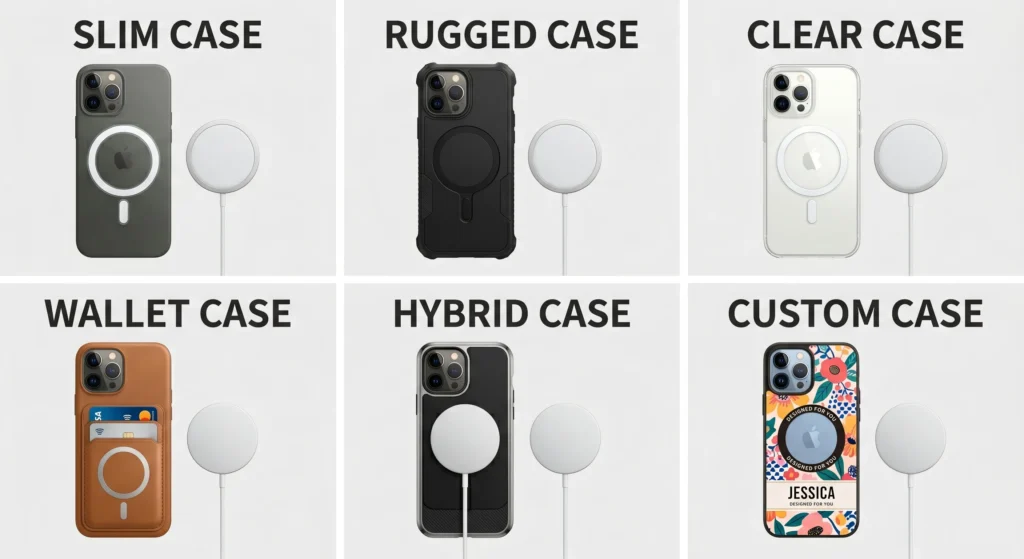
Slim Magnetic Cases
Single-layer TPU or PC shell with embedded magnet ring. Lower material cost, high volume production suitability.
Rugged Magnetic Cases
Multi-layer structures with reinforced corners and, in many designs, MIL-STD-810G drop test certification. Strong pricing in the outdoor and industrial segments.
Clear Magnetic Cases
Optically clear TPU or PC construction. UV yellowing resistance and long-term clarity are key quality checkpoints for this category.
Wallet-Style Magnetic Cases
Magnetic phone case wallet designs integrate card storage via a detachable or snap-on magnetic panel. Alignment geometry in these designs is particularly important to prevent interference with NFC or magnetic stripe cards stored nearby.
OEM / Custom Magnetic Cases
Purpose-built for brands and wholesale buyers. Customization options typically include logo application, custom colorways, material substitutions, and bespoke packaging. This is the highest-differentiation category for factories with full ODM capability.
MagSafe vs. Magnetic Phone Cases
Side-by-Side Comparison
| Feature | Apple MagSafe Cases | Universal Magnetic Cases |
|---|---|---|
| Certification | Apple MFi required | Not required |
| Wireless charging speed | Up to 15W (iPhone) | Typically 5–15W (device-dependent) |
| Accessory ecosystem | Apple MagSafe accessories | Universal Qi2 accessories |
| Device compatibility | iPhone 12 and later | iPhone + Qi2 Android devices |
| Magnet specification | Apple-defined geometry | Manufacturer-defined |
| Unit cost (typical) | Higher | Lower to mid |
| OEM complexity | Higher (tighter tolerances) | Moderate |
Qi2 Standard Adoption
The Qi2 standard, developed with foundational input from Apple’s MagSafe geometry, is now being adopted across Android flagships, including Samsung magnetic phone models and recent releases from Google and Xiaomi. For B2B buyers, Qi2-aligned product specifications offer access to both iPhone and Android markets from a single product design.
Magnetic Cases and Wireless Charging
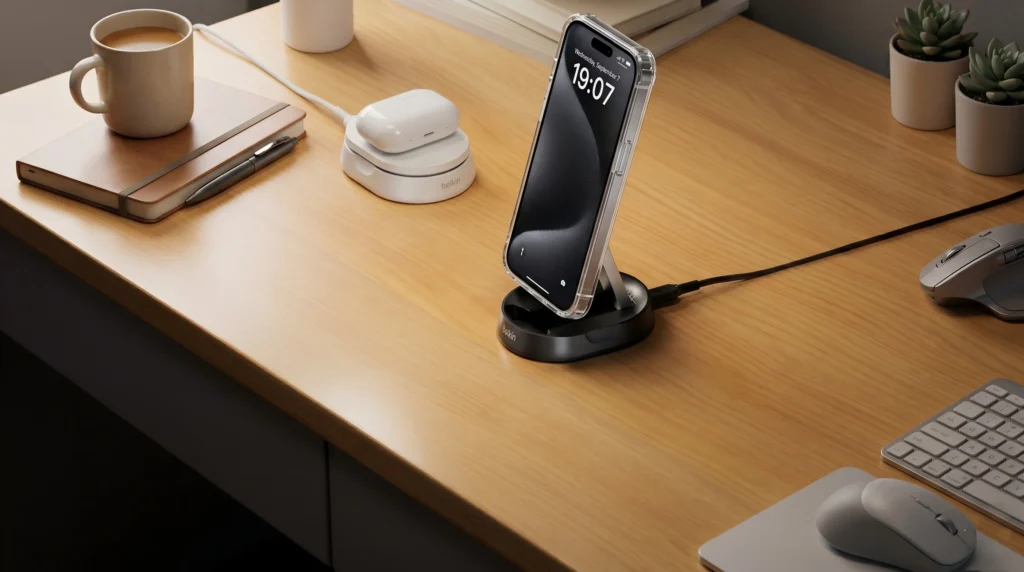
Most quality magnet phone cases are designed to be compatible with Qi and Qi2 wireless charging — meaning magnetic charging functions reliably through the phone case without requiring its removal. Key variables that affect charging performance include:
- Magnet placement — correctly positioned ring magnets typically introduce less than 5% efficiency reduction
- Case thickness — Qi/Qi2 standards generally support reliable charging through cases up to approximately 5mm; a target of 3–4.5mm is common for premium designs
- Metal content — Magnetic metal phone case designs using metal plate inserts — sometimes marketed as cases that adhere to metal surfaces — can cause significant charging interference or prevent wireless charging entirely.
When sourcing magnetic cases for wireless-charging markets, requesting charging efficiency test documentation from factory partners is a recommended step in the supplier evaluation process.
Are Magnetic Phone Cases Safe?
This is one of the most commonly searched questions in the category. The short answer: for most users and most devices, magnetic phone cases are considered safe under normal use conditions.
Key points from industry testing:
- Smartphone hardware: Standard case magnets generally do not carry sufficient field strength to affect solid-state storage, processors, or displays
- Battery safety: Concerns about magnet-related battery damage are not well-supported by current testing data; thermal issues from misaligned wireless charging are a more relevant concern
- Credit cards: Magnetic stripe cards may be affected by sustained proximity to strong magnets (N48+) in wallet-style cases; EMV chip and NFC cards are generally unaffected
- Compass/magnetometer: Strong magnets may cause temporary calibration drift in the device’s compass — typically self-correcting
For detailed safety testing methodology and device-specific guidance, see our dedicated guide on Are Magnetic Phone Cases Safe? Risks, Facts & Buying Guide.
Materials Used in Magnetic Phone Cases
Common Material Overview
| Material | Key Properties | Common Use |
|---|---|---|
| TPU | Flexible, shock-absorbing, cost-effective | Single-layer or inner shell |
| PC (Polycarbonate) | Rigid, impact-resistant, optically clear | Back panel or outer shell |
| Silicone (LSR) | Premium grip, soft feel | High-end single-material designs |
| Aramid / Fiber | Ultra-lightweight, high rigidity | Premium thin cases |
| NdFeB Magnets | High field strength, compact | Alignment ring component |
TPU
The most widely used material in magnetic case construction. Available in a range of Shore A hardness values (typically 60A–90A for phone cases), with softer grades offering better grip and harder grades offering more structural rigidity.
PC (Polycarbonate)
Used for rigid back panels and structural reinforcement. Accepts coatings, textures, and UV printing well. TPU + PC dual-layer construction is the industry standard for mid-to-premium tier cases.
Neodymium Magnets (NdFeB)
Graded N35 to N52. Key sourcing parameters include grade, corrosion-resistant coating (nickel, zinc, or epoxy), operating temperature rating, and dimensional tolerances. Precise dimensional control is essential for alignment performance.
Material Combination Trade-offs
| Combination | Protection | Weight | Cost |
|---|---|---|---|
| TPU only | Moderate | Low | $ |
| PC only | Moderate–High | Medium | $ |
| TPU + PC | High | Medium | $$ |
| TPU + PC + Silicone bumper | Very High | Medium–High | $$$ |
| Aramid composite | High (slim) | Very Low | $$$$ |
How to Choose the Right Magnetic Phone Case
Step 1 — Define Your Target Ecosystem
| If your market is… | Prioritize… |
|---|---|
| iPhone users | MagSafe-compatible specification |
| Android users (2024+ flagships) | Qi2 specification |
| Mixed iPhone + Android | Qi2-aligned universal design |
Step 2 — Select Magnet Grade
- N35–N42: Light accessory use, standard Qi charging
- N48: MagSafe-compatible products, active lifestyle accessories
- N52: Automotive mounts, heavy-duty accessories, performance-grade OEM builds
Step 3 — Align Protection Level With End Market
- Urban/fashion: Slim or clear cases, moderate drop resistance
- Outdoor/active: Rugged multi-layer cases, certified drop ratings preferred
- Enterprise/B2B end users: Durability priority, functional design
Step 4 — Confirm Wireless Charging Compatibility
Verify case thickness target (typically 3–4.5mm for premium wireless charging performance) and request charging efficiency test data from your factory partner.
Step 5 — Evaluate OEM/ODM Customization Scope
For private label brands and wholesale buyers, confirm factory capability across:
- Custom mold development and tooling ownership terms
- Logo application methods (embossing, UV printing, laser engraving)
- Custom colorway development with Pantone matching
- Private label packaging design and production
- Compliance documentation for target markets (CE, FCC, RoHS, MFi where applicable)
Buyer Checklist
✔ Magnet grade specified (N35–N52 range, aligned to accessory ecosystem)
✔ Wireless charging efficiency tested and documented
✔ Material structure confirmed against protection target
✔ Drop protection level verified (MIL-STD-810G or equivalent where relevant)
✔ OEM/ODM customization scope confirmed with factory
✔ MOQ and production lead time aligned with launch timeline
✔ Compliance documentation sourced for target distribution markets
How Magnetic Phone Cases Are Manufactured
Key Production Stages
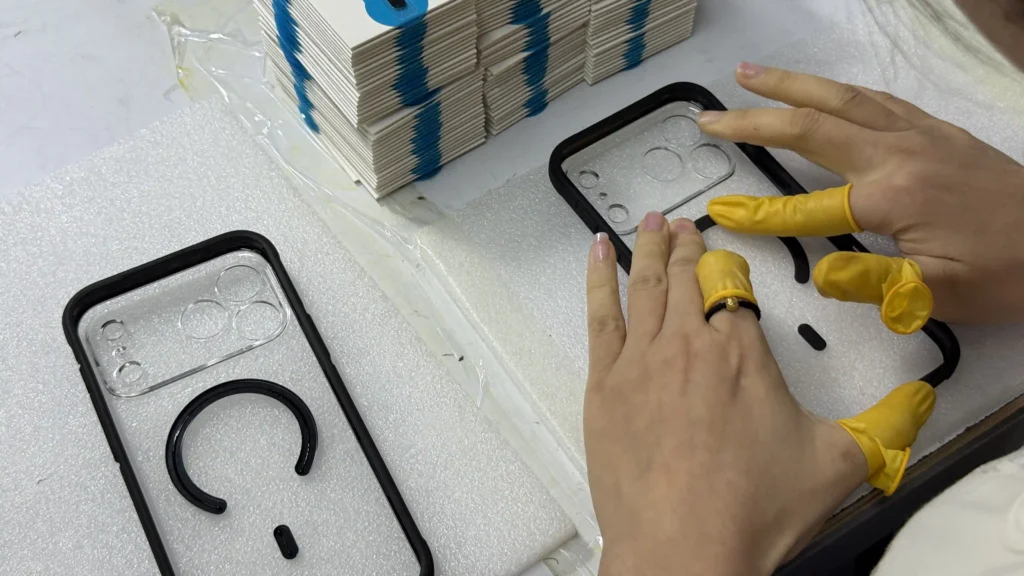
Injection Molding
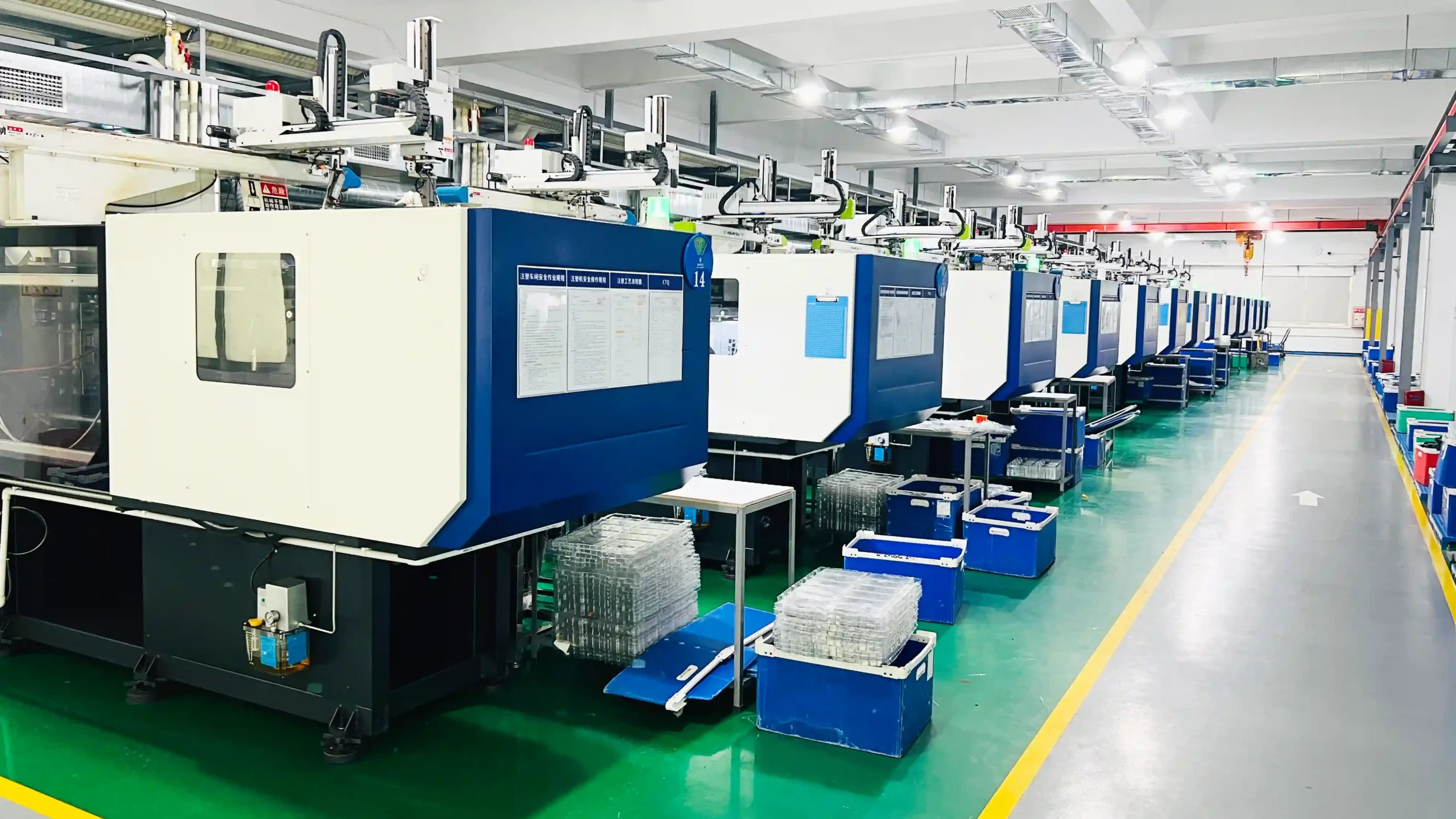
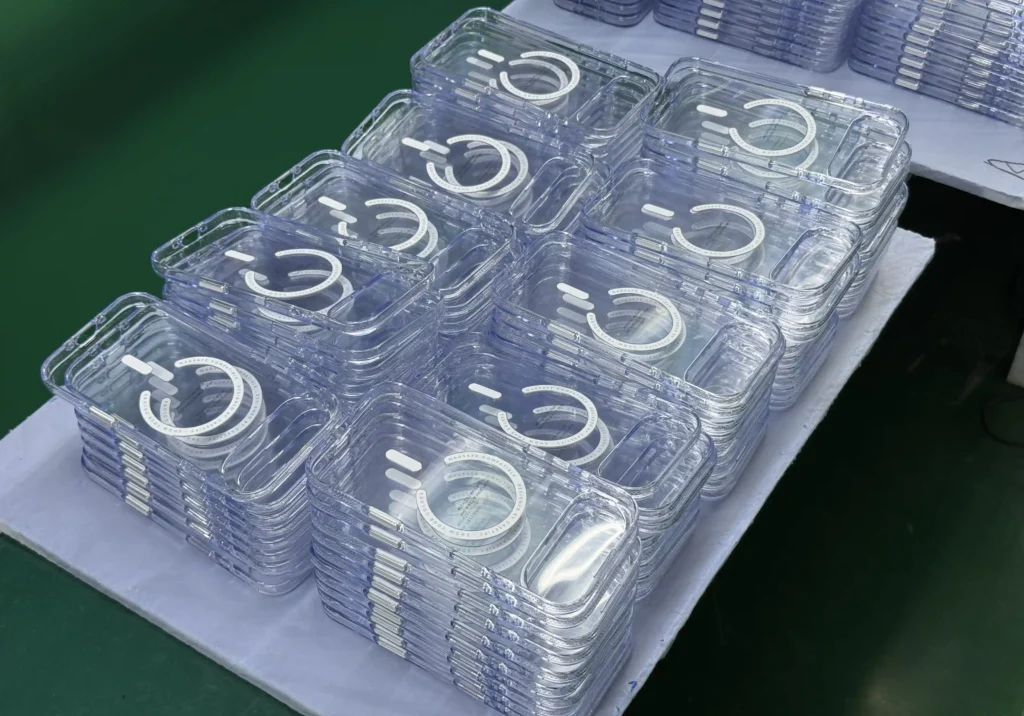
Most magnetic phone case components are formed through precision injection molding. At this stage, mold accuracy directly impacts dimensional consistency and magnet alignment — both critical for product performance.
Multi-Layer Construction
For reinforced or hybrid designs, manufacturers typically use either two-shot injection molding or insert/over-molding. The choice depends on cost structure, bonding requirements, and production scale.
Magnet Integration
Magnets are integrated either during molding or as a secondary assembly step. In-mold embedding generally offers better alignment consistency, while post-assembly provides greater flexibility.
Quality Control
Standard quality checks focus on impact resistance, magnetic performance, wireless charging compatibility, and dimensional accuracy, often referencing benchmarks such as MIL-STD-810G.
Market Trends: Magnetic Phone Cases in 2026
Qi2 Ecosystem Convergence
The adoption of the Qi2 standard across Android flagships is creating a unified magnetic accessory ecosystem for the first time. For manufacturers and brand owners, this reduces product fragmentation and expands the addressable market for a single case design.
Growth in D2C and Private Label Demand
The expansion of D2C e-commerce brands in the smartphone accessory space is driving strong demand for low-MOQ, high-customization OEM manufacturing partnerships. Brands launching on Amazon or regional e-commerce platforms increasingly prioritize factory partners capable of delivering differentiated, private-label products at competitive unit economics.
Customization as a Competitive Differentiator
In a maturing market, product differentiation increasingly drives purchasing decisions. B2B buyers are prioritizing factory partners who offer full ODM capability — from industrial design and material selection through branding, packaging, and compliance — rather than pure manufacturing execution.
FAQ
Do magnetic phone cases affect battery life?
Magnetic phone cases do not commonly affect battery life directly. The more relevant concern is wireless charging efficiency: a poorly aligned charger caused by a low-quality case design can generate excess heat, which may affect long-term battery health over time. A well-designed case with correct magnet placement minimizes this risk.
Do magnetic phone cases work with Android phones?
Yes — a magnetic phone case for Android is widely available. Designs aligned to the Qi2 standard are compatible with Qi2-certified Android devices, including recent flagships from Samsung, Google, and Xiaomi. Compatibility depends on both the case specification and the device’s support for Qi2 wireless charging and magnetic alignment.
What is the difference between MagSafe and a magnetic phone case?
MagSafe is Apple’s proprietary magnetic alignment and wireless charging system, with defined magnet geometry and field strength specifications. A MagSafe-compatible case is certified to meet those specifications. A general magnetic phone case uses a similar ring structure but is not Apple-certified — it may offer broader device compatibility but with less strict tolerances and without MFi compliance.
What magnets are used in magnetic phone cases?
Most magnetic phone cases use neodymium-iron-boron (NdFeB) magnets, graded from N35 to N52. Higher grades offer stronger magnetic fields and are commonly used in premium and performance-grade cases. The grade selected affects accessory hold force, wireless charging compatibility, and unit cost.
Can magnetic cases damage credit cards?
Magnetic stripe cards may be affected by sustained proximity to strong magnets (typically N48 or higher) — a relevant consideration in wallet-style cases where cards are stored adjacent to the magnet ring. EMV chip cards and NFC-based cards are generally not affected by the field strengths used in standard phone case magnets.
Conclusion
The magnetic phone case category has matured into a technically precise, ecosystem-integrated product segment. For brands and procurement managers sourcing at scale, the manufacturing partner you choose determines not just unit cost, but alignment precision, accessory compatibility, wireless charging performance, and ultimately, your product’s reputation in the market.
Interested in OEM or wholesale manufacturing for magnetic phone cases? Contact our team to discuss your product specifications, customization requirements, and MOQ. Factory-direct supply. Full ODM capability.