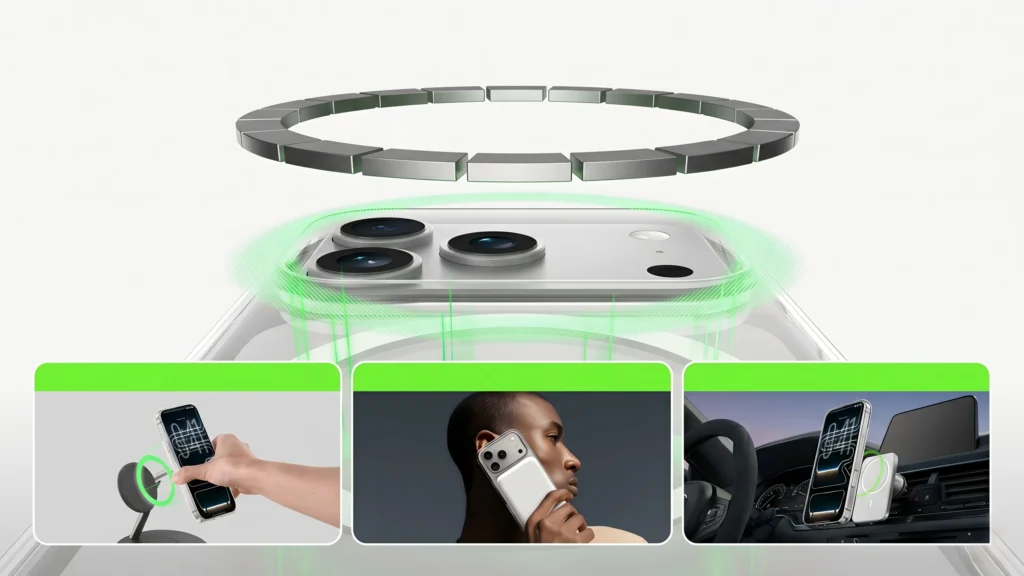
Magnetic phone cases have become standard across the accessories market — from MagSafe-compatible designs to wallet-style cases. As adoption increases, one question continues to surface across both consumers and buyers: Are magnetic phone cases actually safe?
The short answer is yes — but not unconditionally. Safety depends on how the case is designed, how magnets are positioned, and how consistently it is manufactured at scale.
For brands, importers, and sourcing teams, this isn’t just a technical question. It directly affects product performance, return rates, and customer trust.
This guide breaks down what’s proven, what’s misunderstood, and where real risks exist — so you can evaluate magnetic phone case safety with clarity at a product and sourcing level.
Do Magnetic Phone Cases Damage Phones or Battery Performance?
Table of Contents
ToggleMagnetic phone cases do not damage modern smartphones, affect battery performance, or corrupt storage under normal conditions. The fear that magnets destroy phones comes from older hard-drive technology — it does not apply to current smartphone architecture.
Do Magnetic Phone Cases Damage Phones?
Modern smartphones are not vulnerable to the low-level magnetic fields produced by phone cases. The magnets used — typically small neodymium or ferrite units — generate fields in the millitesla range. At that strength, there is no established mechanism by which they corrupt solid-state storage, interfere with processors, or cause physical damage to internal components.
The clearest proof: Apple embeds a standardized magnet array into every iPhone 12 and later model as part of the MagSafe system. Manufacturers do not build magnetic hardware directly into devices they consider magnetically fragile.
Does a Magnetic Case Affect Battery?
No. Lithium-ion and lithium-polymer batteries — the cell types in virtually all current smartphones — are not magnetically sensitive under normal conditions.
Phone case magnets do not measurably:
- Degrade battery chemistry
- Accelerate discharge
- Alter charge cycles
The only battery-adjacent concern is wireless charging efficiency, which depends on magnet placement and case design — covered in the next section.
Smartphone Flash Memory and Magnets
NAND flash memory, the storage technology in all modern smartphones, stores data electrically — not magnetically. It has no magnetic coating that can be disrupted by an external field.
This is a key distinction from traditional hard drives. Phone case magnets cannot corrupt flash storage. Despite being one of the most common concerns raised online, there is no credible technical basis for it.
Do Magnetic Cases Affect Signal, GPS, or Phone Functions?
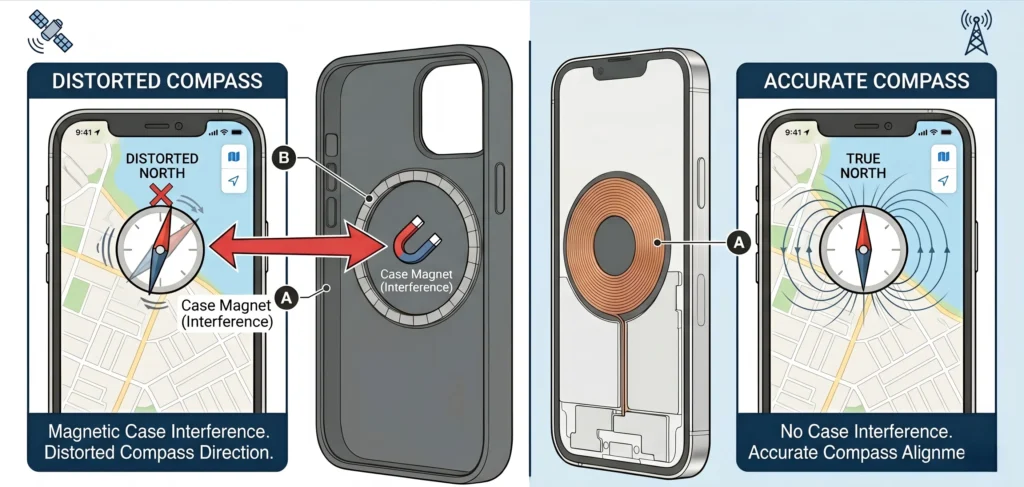
Magnetic phone cases do not interfere with cellular signals, Wi-Fi, or Bluetooth. The one legitimate concern is compass (magnetometer) interference — and only when magnets are positioned too close to the sensor.
Does a Magnetic Case Affect Phone Signal?
No. Cellular, Wi-Fi, and Bluetooth signals rely on antenna geometry and radio frequency transmission — neither of which is disrupted by static magnetic fields at case-level strengths.
When users report signal issues with a magnetic case, the cause is typically:
- The case material physically obstructing antenna paths
- Environmental interference from nearby sources
The magnets themselves are not the issue.
Phone Compass and GPS Interference
GPS is satellite-based and unaffected by magnetic fields. However, the smartphone compass — which navigation apps use for directional heading — relies on a magnetometer that can be disrupted by a nearby magnet.
What this means in practice:
- A magnet placed too close to the magnetometer can cause erratic or inaccurate compass readings
- Navigation apps that combine GPS with compass heading may display incorrect directions as a result
- GPS coordinates remain accurate; only the directional orientation is affected
Well-designed cases map magnet positions against the magnetometer location for each target device. Inconsistent placement — common in lower-cost production runs — is the primary cause of real-world compass complaints.
Do Magnets Affect Smartphone Functions?
At case-level field strengths, there is no established effect on:
- Touchscreen sensitivity
- Microphone or speaker performance
- Camera optics
- Facial recognition systems
These components are either electrically driven or sufficiently shielded from external magnetic interference at this scale.
Are Magnetic Phone Cases Safe for Wireless Charging?
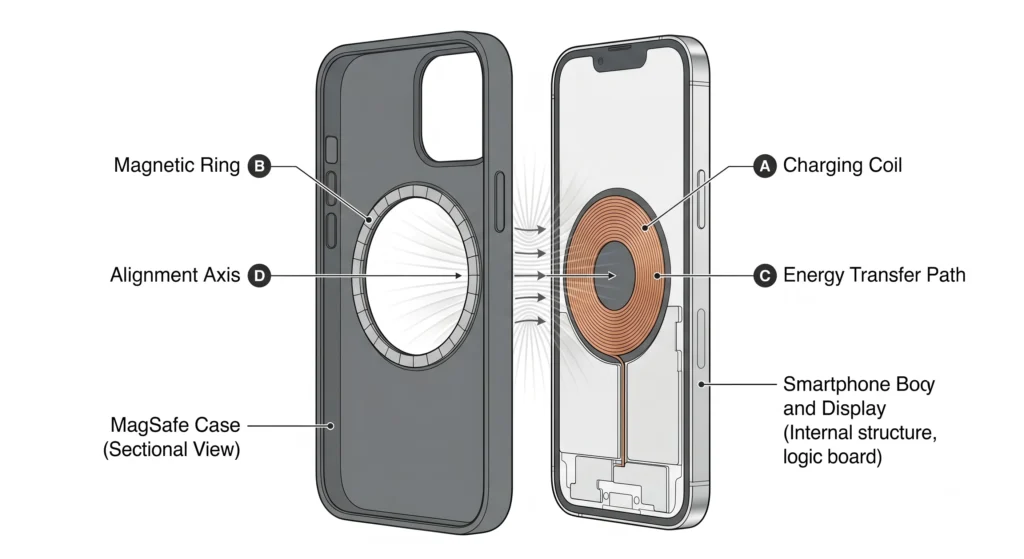
Magnetic cases are generally compatible with wireless charging — but magnet placement and case design directly affect performance. Poorly positioned magnets can reduce charging efficiency or cause heat buildup at the charging interface.
Magnetic Phone Case Wireless Charging
Magnets do not inherently block wireless charging. The Qi standard works through electromagnetic induction between two coils. The problem arises when a magnet sits between those coils — it can reduce transfer efficiency or, in poorly engineered cases, generate localized heat.
The Wireless Power Consortium, which maintains the Qi standard, notes that magnetic and metallic materials placed between charging coils can affect both efficiency and thermal behavior.
Wireless Charging Compatibility
For standard Qi charging: Thin magnets placed at the perimeter of the case — away from the central induction zone — generally allow reliable charging with acceptable efficiency loss. Consistency across high-volume production batches is where many low-cost suppliers fall short.
For MagSafe charging: The system works differently. The magnet ring actively guides coil-to-coil alignment during charging — it is both a mechanical and functional component. Apple specifies the magnet array precisely, and deviations in field strength, ring diameter, or placement affect charging speed and accessory compatibility. Apple’s MagSafe documentation outlines these specifications for licensed manufacturers.
Magnet Alignment Impact
Alignment is the most critical variable in wireless charging performance.
A magnet shifted just a few millimeters off-spec can:
- Reduce output wattage
- Trigger handshake failures between the charger and device
- Cause the charging pad to generate excess heat
In short: This is a manufacturing consistency issue, not a flaw in the technology. It makes supplier quality control a direct product safety factor for any brand selling wireless-charging-compatible cases.
Are Magnetic Phone Cases Safe for Credit Cards, Pacemakers, and Humans?
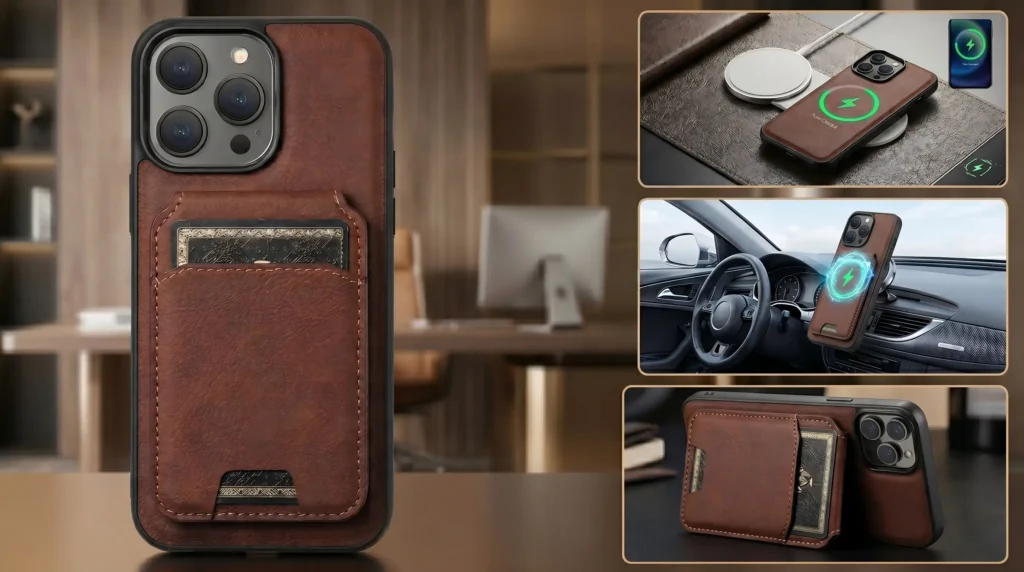
Magnetic phone cases pose a confirmed risk to magnetic stripe cards and require extra caution around implantable cardiac devices. For the general population, they are not considered a health hazard.
Magnetic Phone Case and Credit Cards
Magnetic stripe cards — traditional credit and debit cards, hotel key cards, and many transit cards — store data on a ferromagnetic coating. Sustained contact with a strong magnet can demagnetize that stripe and make the card unreadable.
This is one of the few magnetic phone case safety concerns with a clear, confirmed mechanism.
Credit Card Demagnetization Risk
The risk depends on magnet type and how close the card sits to it:
| Card Type | Risk Level |
|---|---|
| Magnetic stripe (traditional) | Moderate to High — direct contact with strong neodymium magnets |
| EMV chip card | None — data stored on the chip, not the stripe |
| NFC / contactless card | None — data stored electronically |
Practical guidance for product design and labeling:
- Wallet cases should position card slots away from the magnet, not directly adjacent to it
- Product packaging should advise against storing magnetic stripe cards in magnet-adjacent slots
- Weaker ferrite magnets carry lower risk than stronger neodymium magnets for card storage use cases
Magnetic Phone Case and Pacemaker
Magnetic fields can interfere with implantable cardiac devices. Some pacemaker models respond to an external magnetic field by switching to a fixed-rate pacing mode — a behavior designed for clinical use that can be triggered unintentionally by consumer products.
The American Heart Association advises that patients with pacemakers keep strong magnets and electronic devices at least 6 inches from their device. Carrying a phone with a magnetic case in a shirt or chest pocket represents a plausible proximity risk for this group.
Brands sourcing cases with strong neodymium magnets should include appropriate safety labeling and review applicable regulatory requirements for their target markets.
Are Magnetic Phone Cases Safe for Humans?
For the general population, magnetic phone cases are not considered a health hazard. The magnetic fields involved are highly localized and fall well below thresholds associated with biological effects.
The World Health Organization’s assessment of static magnetic fields concludes that everyday exposure at consumer-product levels does not present an established health risk. The FCC does not classify static magnetic fields from consumer electronics in this range as a radiation concern.
Are Magnetic Phone Cases Safe for iPhone and MagSafe Devices?
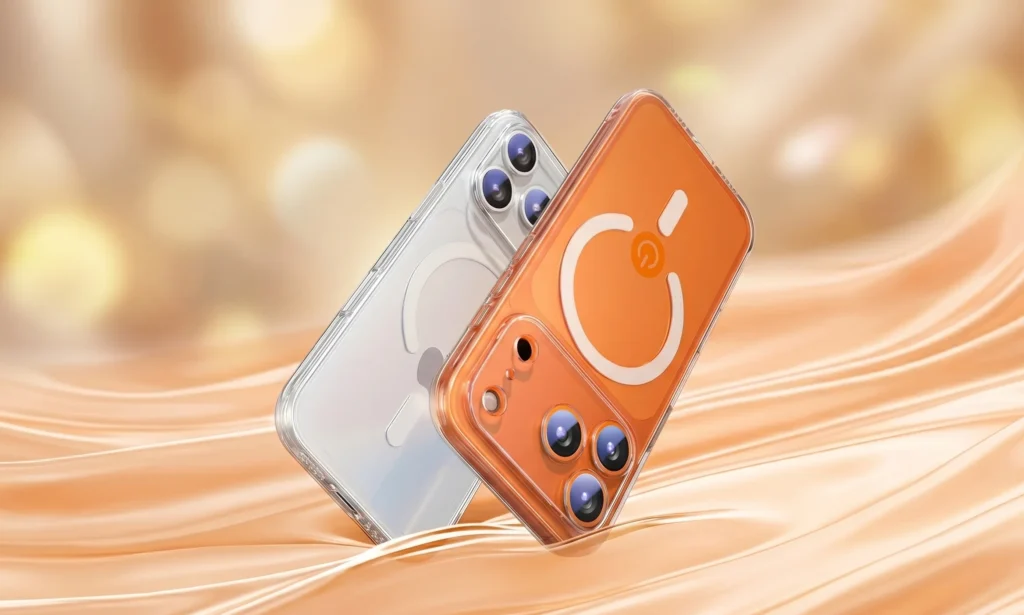
Magnetic phone cases are safe for iPhone 12 and later models when built to Apple’s MagSafe specifications. Apple designed these devices with magnetic accessories as a core part of the hardware — not an afterthought.
Magnetic Phone Case for iPhone
Apple’s MagSafe ecosystem, introduced with the iPhone 12 series, is built around a standardized ring of magnets in the rear of the device. Cases designed to MagSafe specifications use a matching magnet array that aligns precisely with this ring.
Apple defined and validated the field strength and positioning as part of the iPhone’s own hardware. A properly specified MagSafe case is safe by design for these models.
MagSafe Case Safety
Certified MagSafe accessories (carrying Apple’s Made for MagSafe authorization) are tested for:
- Alignment accuracy
- Thermal performance under charging conditions
- Compatibility with the broader MagSafe accessory ecosystem
Cases that claim MagSafe compatibility without certification may use magnet arrays that deviate from Apple’s specifications — leading to reduced charging efficiency, unreliable accessory attachment, or both.
For importers and brand owners, this distinction carries direct commercial risk. A case marketed as MagSafe-compatible that underperforms on charging creates measurable returns exposure and brand credibility issues at scale.
Compatibility Considerations
iPhones prior to the iPhone 12 do not include MagSafe magnet hardware. Magnetic cases will attach to these devices physically but will not enable MagSafe charging.
In short: Brands selling across multiple device generations should clearly reflect this in product descriptions to avoid buyer confusion and reduce support volume.
When Are Magnetic Phone Cases NOT Safe? (Common Problems)
Magnetic cases become unsafe when design or manufacturing falls short. Most real-world problems with magnetic phone cases are predictable, preventable, and tied to specific production failures — not the technology itself.
Magnetic Phone Case Problems
When magnetic cases cause problems — compass drift, charging failures, card damage — the root cause is almost always one of three things: poor-quality magnets, misalignment, or inadequate materials. Each is a manufacturing decision, not an inherent flaw.
Poor-Quality Magnets
Magnets with inconsistent gauss ratings produce unpredictable outcomes:
- Too weak: MagSafe accessories fail to hold; charging alignment is unreliable
- Too strong: Compass interference increases; credit card demagnetization risk rises
- Inconsistent between units: End users receive different performance from the same product
This variance is difficult for buyers to detect without physical testing — which is why magnet specification and quality verification matter at the sourcing stage.
Misalignment Issues
Even a few millimeters of deviation in magnet position can cause:
- Reduced wireless charging output or complete handshake failure
- Compass drift in navigation apps
- MagSafe accessory detachment under light load
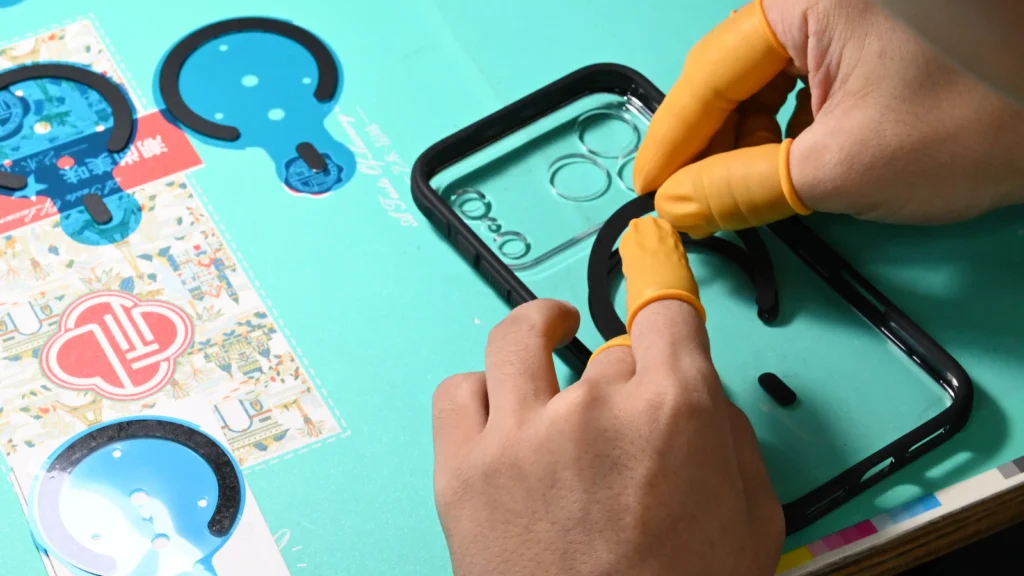
Misalignment typically results from loose tooling tolerances or insufficient device-specific testing during production validation.
Cheap Materials
The structural material surrounding the magnet affects long-term reliability:
- Low-grade adhesives allow magnets to shift or detach after repeated use
- Thin backing materials provide less magnetic shielding, allowing flux to radiate beyond intended boundaries
- Poorly placed card slots in wallet cases — without adequate separation from the magnet — are the most common cause of magnetic stripe demagnetization complaints
FAQ
Q: Do magnetic phone cases ruin phones?
No. Modern smartphones use solid-state storage and components that are not affected by the low-level magnetic fields produced by phone case magnets.
Q: Can a magnetic phone case affect wireless charging?
It depends on magnet placement and case design. Cases with properly positioned magnets generally maintain Qi and MagSafe charging performance. Off-spec magnet placement can reduce efficiency or cause heat buildup at the charging interface.
Q: Will a magnetic phone case demagnetize my credit card?
It can, if a strong magnet is in sustained direct contact with a magnetic stripe card. EMV chip and NFC contactless cards are not affected. The risk is primarily a design and labeling issue for wallet-style cases.
Q: Are magnetic phone cases safe for pacemaker users?
Not without precaution. People with pacemakers or other implantable cardiac devices should consult their cardiologist and follow device-specific guidance. The American Heart Association recommends maintaining at least 6 inches of separation from strong magnets.
Q: Do magnetic cases interfere with GPS?
GPS accuracy is unaffected by magnetic fields. However, the compass (magnetometer) used for heading in navigation apps can be disrupted if a magnet is positioned too close to the sensor, which varies by device model.
Q: Are MagSafe cases safe for iPhone 12 and newer?
Yes, when built to Apple’s specifications. Apple designed the iPhone 12 and later models to work with MagSafe magnet arrays. Certified cases are tested for safety and performance; uncertified cases claiming MagSafe support may not meet those standards consistently.
Q: Can a magnetic case damage a phone battery?
Under normal conditions, no. Lithium-ion and lithium-polymer batteries are not magnetically sensitive. Case magnets do not measurably affect battery chemistry or charge cycle behavior.
Q: What makes a magnetic phone case unsafe?
The main risk factors are inconsistent magnet strength, incorrect placement relative to sensors or charging coils, and inadequate material shielding — all of which are manufacturing and design issues, not inherent flaws in the technology.
Conclusion
Magnetic phone cases are generally safe — but only when design and manufacturing meet the required standards. The real risks are not in the technology itself, but in how consistently a product is engineered and produced.
For brands and buyers, that makes supplier selection a critical factor. Magnet strength, placement accuracy, and production consistency directly determine whether a case performs reliably in real-world use.
If you’re developing or sourcing magnetic phone cases, working with an experienced manufacturer can help you avoid common design and production issues early in the process.
Need support with magnetic phone case development or sourcing? Contact us to discuss your project, request samples, or review technical specifications with our team.