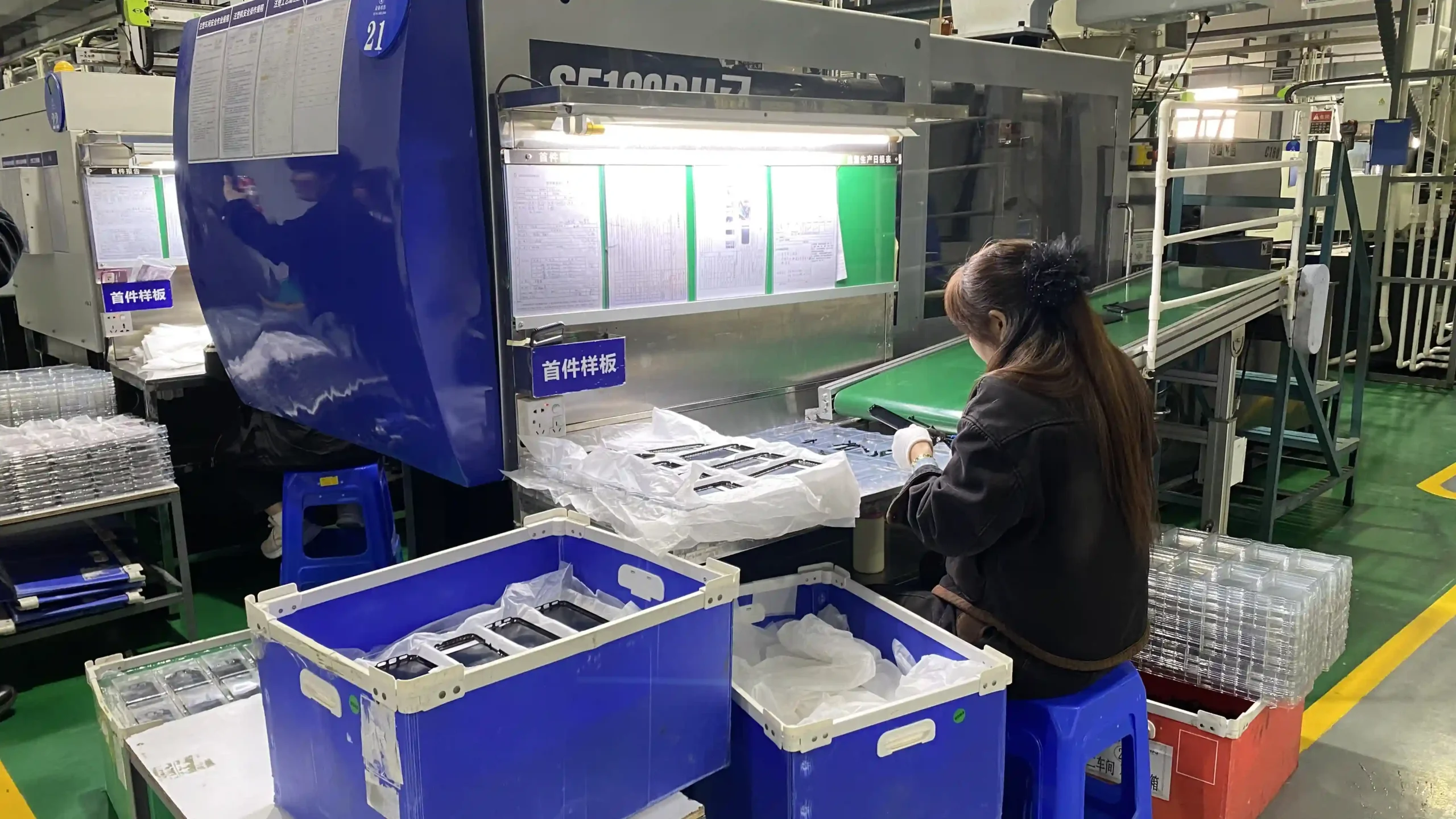
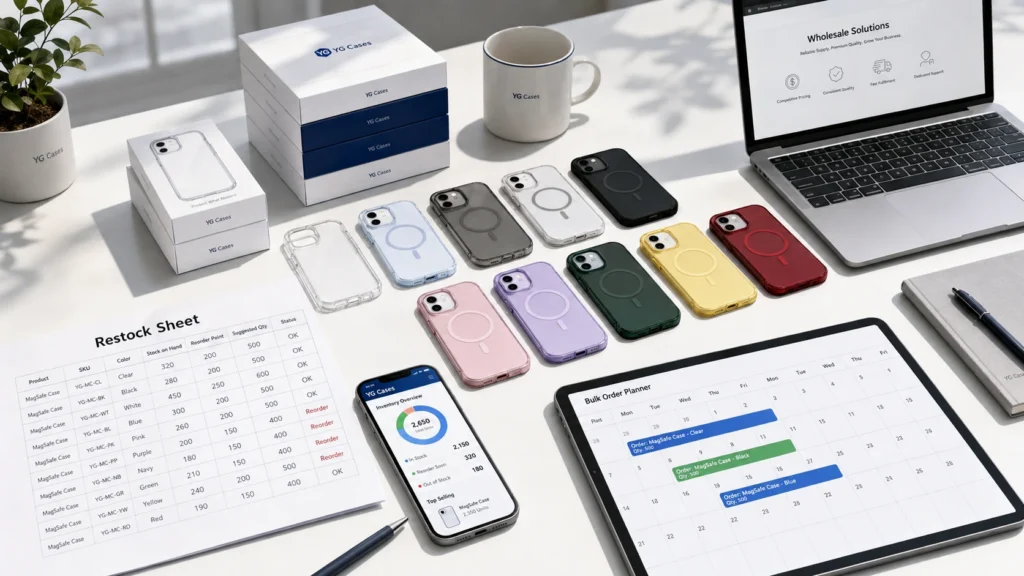
Getting your first batch of products to market is just the beginning. The real test of your supply chain happens when it is time to restock. Working with a reliable phone case supplier means turning that initial success into a highly stable, scalable business.
You need a proactive reorder plan. This ensures your bestsellers stay on the shelves while giving new designs enough runway for sampling and production. Let’s break down how to optimize your next procurement cycle and build a bulletproof product matrix.
Why Proactive Reorder Planning Makes or Breaks Your Margins
Table of Contents
ToggleA reactive approach to inventory kills profitability. Waiting until your warehouse is nearly empty forces rush shipping costs and risks devastating stockouts.
Your sales data tells a clear story after the first few months. You know exactly what colors fly off the shelves and which designs need a little more time to gain traction. Use this hard data to shape your next move. Every phone case product line expansion requires a tailored approach based on the device’s life cycle.
Testing the Waters with New Device Models
Tech giants drop new devices every year. Jumping on a new launch model is highly profitable, but early market demand remains unpredictable.
Keep your first batch strictly focused. Stick to core colors and your most proven case materials. Ask your custom phone case supplier for tight delivery windows and early mold checks to beat competitors to market without over-investing.
The Hidden Costs of Poor Inventory Management
Stockouts on platforms like Amazon or Shopify immediately tank your organic search rankings. Conversely, over-ordering unproven models ties up your working capital in dead stock. A structured reorder plan aligns your purchasing cadence directly with actual market velocity.
Strategic Stocking: Managing Your Product Life Cycles
Not all phone cases should be treated equally in your next bulk order. You must separate your catalog into distinct lifecycle categories before cutting a purchase order.
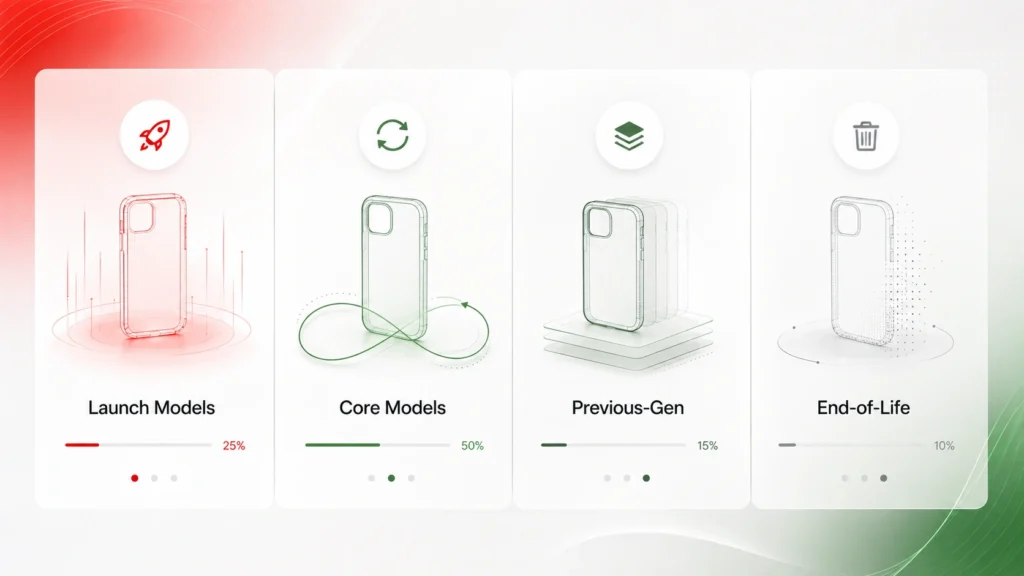
Launch Models: Testing the Waters Early
Tech giants drop new devices every year. Jumping on a new launch model is highly profitable, but early market demand remains unpredictable.
Keep your first batch strictly focused. Stick to core colors and your most proven case materials. Ask your custom phone case supplier for tight delivery windows and early mold checks to beat competitors to market without over-investing in massive quantities.
Core Models: Keeping Best-Sellers on the Shelf
Your evergreen models pay the bills. For these items, supply chain stability is your absolute top priority.
Match your inventory depth to actual channel demand. If a previous-generation case still sells consistently, keep it in the active rotation. Just control the bulk order quantities to prevent dead stock and free up cash flow for new development.
End-of-Life Models: Controlled Sunsetting
When a phone model ages past two or three generations, demand naturally tapers off. Do not carry heavy inventory for these items. Shift them to smaller, selective replenishment batches or phase them out entirely to make warehouse room for upcoming flagship releases.
Nailing the Details: SKUs, Colors, and Packaging Continuity
A repeat order should be entirely seamless. However, a single misaligned barcode or slightly off color can wreck your retail launch. Consistency at the factory level is non-negotiable.

Mastering Color Consistency Across Batches
Always use physical color samples rather than screen renders. A matte silicone case reflects light differently than a clear acrylic or TPU hybrid case. Log your approved physical samples, Pantone codes, surface finishes, and material specs for every single batch to ensure your supplier hits the exact same shade every time.
Streamlining File Version Control
Lock down your file version control before communicating with your factory. If you tweak a barcode, update private label packaging, or change a logo placement, flag it immediately.
Send your supplier one definitive file set for exact repeats, and a completely separate folder for SKU updates. Do not force your production manager to guess which PDF is the final version.
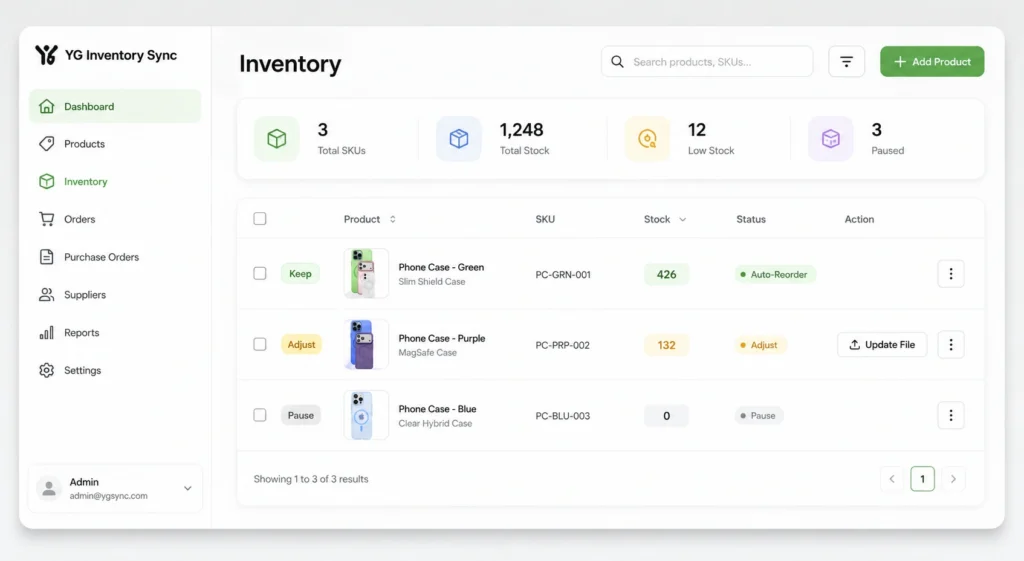
The “Keep, Adjust, Pause” SKU Framework
Clean up your SKU list before issuing the next PO. Group your catalog into three distinct buckets:
Keep: Proven SKUs with stable sales. Reorder these using exact approved files to trigger immediate mass production.
Adjust: Products requiring tweaks to quantity, color names, or retail-ready packaging. These require an updated artwork file and a brief verification step.
Pause: Slow-moving items that need more sales data. Hold off on reordering to protect your budget.
Scaling Up: Growing Your Brand with a Custom Phone Case Supplier
Once a baseline clear phone case or silicone cover takes off, it is time to scale. You might want to add magnetic charging rings, upgrade to a premium finish, or develop a unique structural design.
This is where YG steps in as your manufacturing arm. We don’t just process orders; we help you build out a comprehensive, high-margin product matrix based on what your audience already loves.
Upgrading Materials and Finishes
If your standard TPU cases are selling well, test a premium tier. Introduce soft-touch coatings, anti-yellowing tech, or genuine leather inserts. Tie every new style to a specific business goal, whether that means chasing higher margins or dominating physical retail.
Custom Molds and Private Label Packaging
Off-the-shelf designs get your brand started, but custom mold development builds your competitive moat. Let your sales data guide your investments. If you have a proven audience, investing in a proprietary mold or high-end custom display boxes transforms you from a generic seller into a recognized brand.
Your Final Pre-PO Checklist for Seamless Production
Do not hit send on that purchase order just yet. Give your phone case supplier a crystal-clear reorder package to eliminate guesswork and prevent costly delays.
List your active SKUs, exact quantities, and approved logo positions. Clearly separate exact repeat items from products requiring new physical samples or artwork updates.
Calculating True Replenishment Lead Time
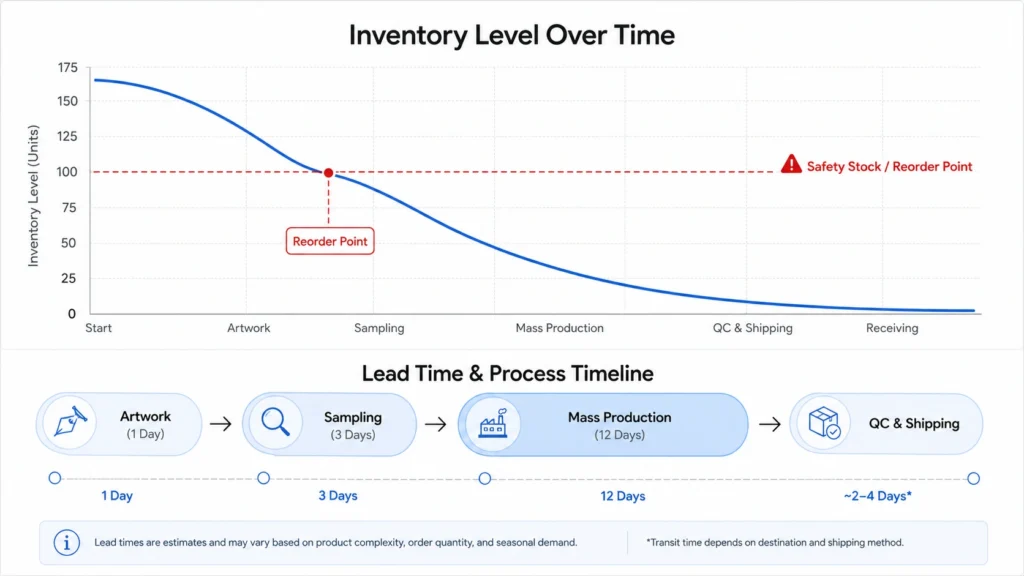
Factor in your true replenishment lead time. A common mistake is only counting the mass production days.
Your real timeline includes: Artwork Approval + Material Prep + Mass Production + QC + Freight + Warehouse Receiving. Typically, at YG, an exact repeat order moves swiftly into production, while a modified SKU or new custom mold requires dedicated days for fresh sampling and engineering checks. Organizing this data upfront guarantees your bulk order lands exactly when you need it.
Conclusion
A successful reorder strategy turns unpredictable sales into a highly predictable revenue engine. You already have the hard market data. Now you just need to align your SKU framework, lock down your packaging files, and calculate your true production lead times.
Stop letting inventory gaps dictate your growth. Ready to streamline your next bulk order? Contact us today to discuss your SKU strategy, request custom mold samples, or get a detailed quote for your next PO. Let’s scale your product line exactly when your customers demand it.
FAQs
How frequently should you review inventory?
Check your core SKUs weekly. Do not wait until you hit safety stock levels to act. Factor in your total lead time so your warehouse shelves never sit empty during peak seasons.
Which files require updates before reordering?
Only touch files if something physical changed. If you tweak a color name, carton mark, or barcode, send fresh files. For exact repeats, stick strictly to the previously approved batch to avoid factory-level confusion.
What phone models should take priority?
Prioritize current flagship devices and proven previous-gen models with steady daily sales. Always back your purchasing decisions with hard channel demand rather than industry rumors.