Phone case manufacturing cost depends on material, structure, mold, order quantity, printing, packaging, and quality requirements.
A basic TPU case costs less than a MagSafe case, a shockproof case, or a leather wallet case.
That is why phone case suppliers may quote different prices for similar-looking products.
This guide explains what affects phone case cost per unit, what is usually included in a quote, and how to control custom phone case manufacturing cost before bulk production.
Key Factors That Affect Phone Case Manufacturing Cost
Table of Contents
ToggleThe final cost of a phone case depends on several connected factors.
Material, structure, order quantity, customization, and quality standards all affect the final phone case production cost before mass production starts.
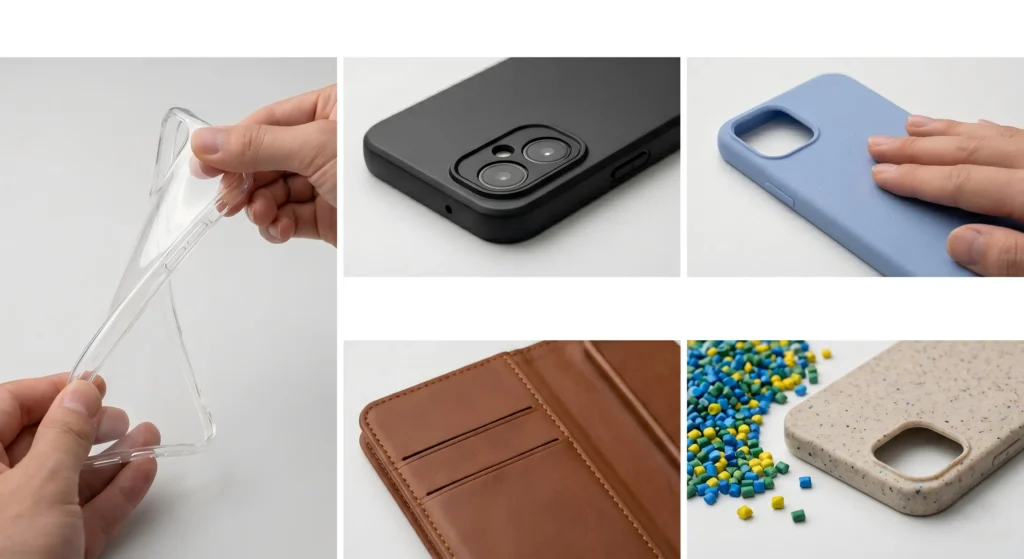
Material Choice
Phone case material is one of the first factors that affects phone case manufacturing cost.
It also affects touch, weight, durability, flexibility, protection level, and product positioning.
TPU phone case manufacturing cost is usually competitive for soft cases, clear cases, and basic protective cases.
TPU is flexible, lightweight, and suitable for bulk production using existing molds.
PC phone case cost is often stable for hard cases, slim cases, transparent hard cases, and printed designs.
PC is rigid and works well when the product needs a clean surface for logo or graphic printing.
Silicone phone case production cost is usually higher than basic TPU or PC.
Silicone gives a softer touch and a more premium feel, but it also requires better color matching, coating, dust resistance, and surface control.
Leather or PU leather is used for wallet cases and business-style phone cases.
These products need cutting, stitching, bonding, and manual assembly, so the cost is higher.
Eco-friendly materials may help brands target sustainability-focused buyers, especially in Europe and North America.
They can cost more than standard plastics and may require extra certification or material testing.
Product Structure and Functions
A simple phone case is cheaper to produce because it has fewer parts and fewer production steps.
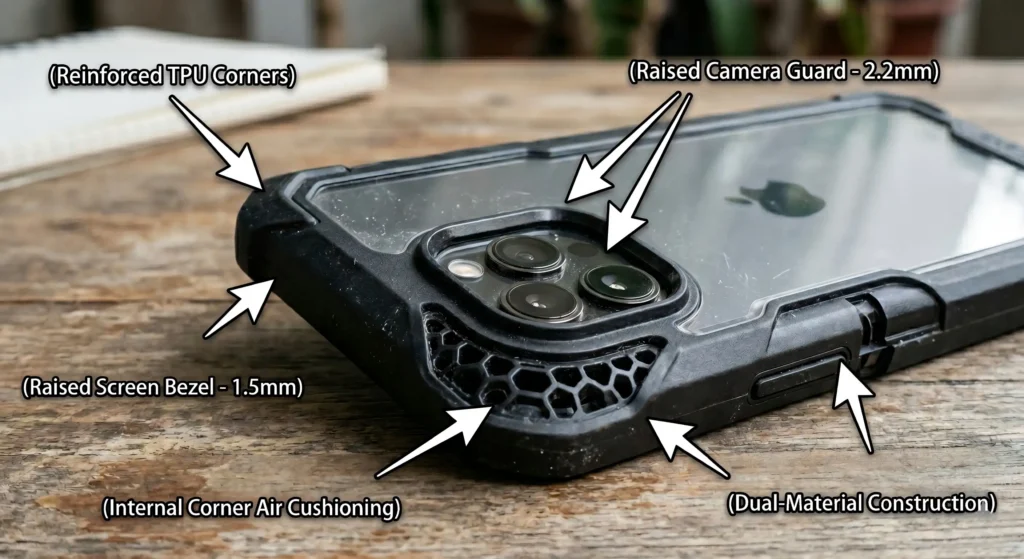
A protective phone case manufacturing cost is higher when the product includes reinforced corners, raised edges, air-cushion structures, thicker sidewalls, or a TPU + PC hybrid design.
A MagSafe phone case manufacturing cost is also higher than that of a standard phone case.
The magnetic ring must be placed accurately, fixed securely, and tested for magnetic strength and charging alignment.
Wallet cases and stand cases cost more because they include extra parts such as card slots, hinges, magnetic closures, inner shells, or kickstands.
In general, the more parts and functions a case has, the higher the final custom phone case cost.
Order Quantity and MOQ
Order quantity has a direct impact on the phone case cost per unit.
Small orders usually cost more because setup costs are spread across fewer pieces.
The factory still needs to prepare materials, adjust machines, test printing, confirm colors, arrange workers, and inspect products.
These costs do not disappear when the order is small.
This is why the low MOQ custom phone case cost is usually higher than bulk order pricing.
Larger orders usually lower the unit cost because material purchasing, mold setup, printing setup, labor, packaging, and inspection costs can be shared across more products.
Customization Requirements
Customization can quickly change the final quote.
A plain case with no logo is easier to produce. A branded case with custom colors, graphics, surface finish, packaging, or private mold development needs more preparation.
For custom logo phone cases, the cost depends on logo size, position, color count, printing method, and inspection requirements.
Full-color artwork, gradient designs, edge-to-edge printing, Pantone color matching, and premium finishes usually increase the cost.
Custom packaging also affects the price, especially for private-label phone cases.
Color boxes, barcode labels, manuals, inserts, stickers, hang tabs, and eco-friendly packaging all add material and labor costs.
Quality Standard and Testing
Quality requirements also affect phone case production cost.
A low-cost promotional case may only need a basic appearance inspection. A retail product for Europe or North America usually needs more detailed checks.
Common quality checks include fit testing, button response, camera opening accuracy, color consistency, surface defects, print alignment, and packaging condition.
For protective cases, buyers may need drop tests, corner strength checks, raised-edge inspection, and material flexibility tests.
For MagSafe cases, the factory may need to check magnetic strength, ring position, charging alignment, accessory compatibility, and bonding stability.
Higher quality standards increase inspection cost, but they help reduce returns, complaints, and brand risk.
Phone Case Manufacturing Cost Breakdown
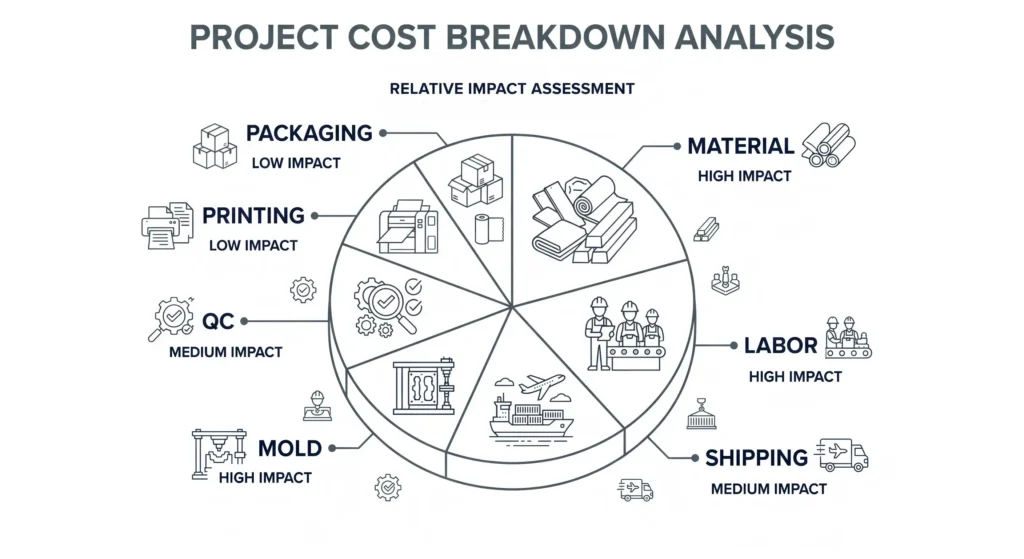
A clear phone case manufacturing cost breakdown helps you understand what is included in a supplier quote.
The final unit price is usually made up of material, mold, printing, labor, assembly, quality control, packaging, and shipping-related costs.
| Cost Factor | Cost Impact | Why It Matters |
|---|---|---|
| Material | Medium to High | Affects base price, touch, durability, and protection level. |
| Mold | Medium to High | Private mold projects require higher upfront investment. |
| Printing | Low to High | Depends on artwork complexity, print area, and printing method. |
| Labor & QC | Medium | More parts and higher standards increase assembly and inspection cost. |
| Packaging | Low to Medium | Retail packaging can clearly increase total cost. |
| Shipping | Medium to High | Trade terms and shipping methods affect landed cost. |
Material Cost
Phone case material cost depends on material type, thickness, hardness, color, transparency, and performance requirements.
Basic TPU and PC are usually cost-effective.
Anti-yellowing TPU, high-transparency PC, soft-touch silicone, recycled materials, or premium leather materials usually cost more.
For transparent cases, material quality is especially important.
Low-grade transparent materials may yellow faster. Better anti-yellowing materials cost more but help protect your brand reputation.
Mold and Tooling Cost
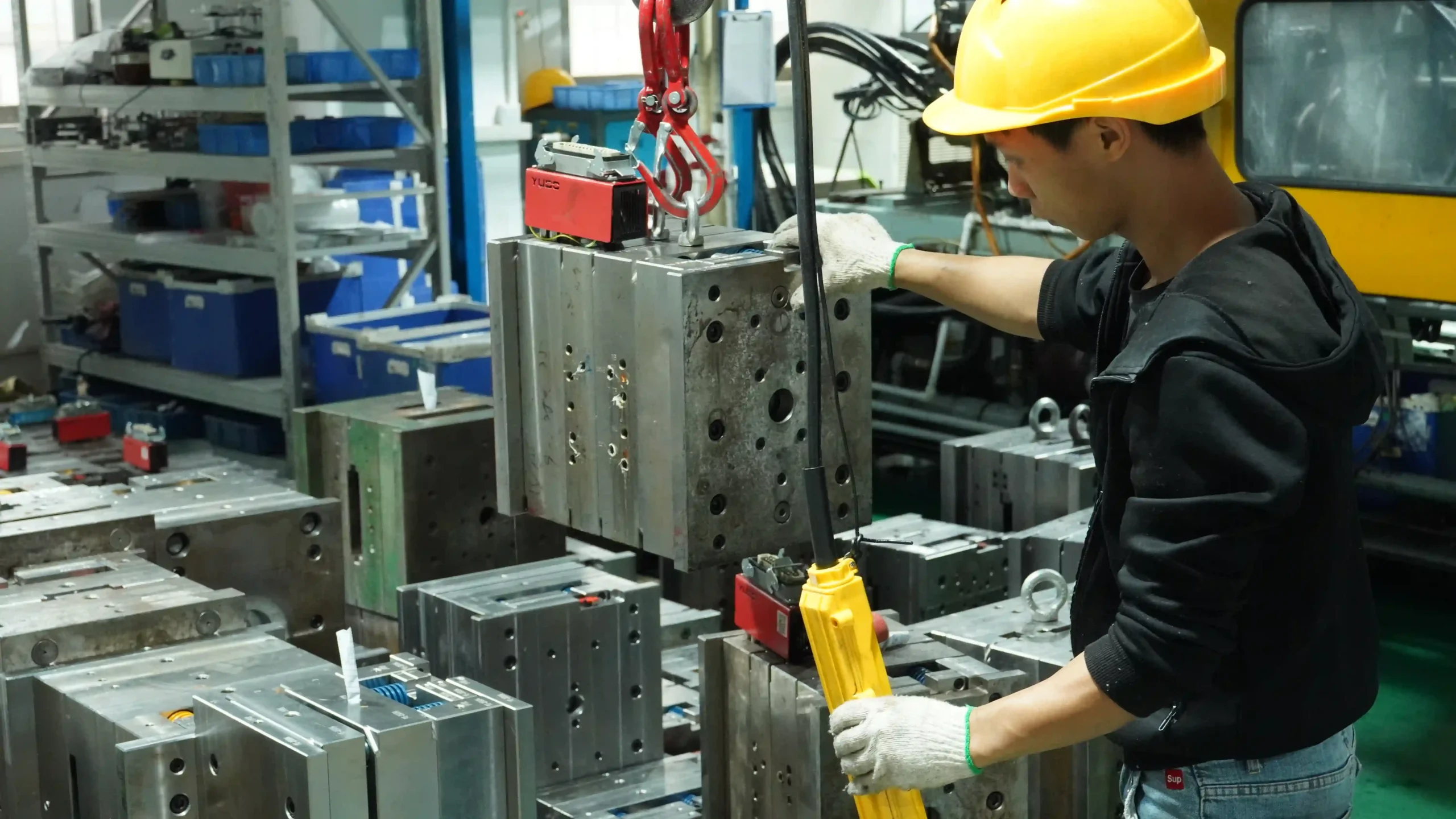
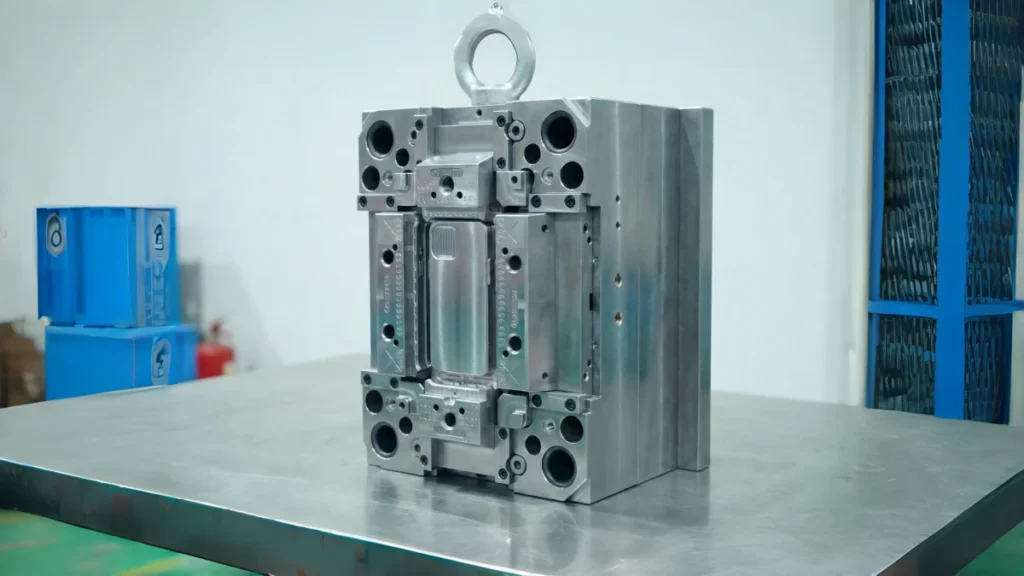
Phone case mold cost depends on whether you use an existing mold, modify a mold, or develop a private mold.
An existing mold has the lowest upfront cost. It is suitable for standard TPU cases, PC hard cases, clear cases, and basic protective cases.
A modified mold costs more because the factory may need to adjust the camera opening, button area, texture, thickness, or small structural details.
A private mold has the highest phone case tooling cost.
It is used for unique shapes, exclusive structures, special functions, or long-term product lines.
For small orders, the mold cost is harder to spread across each unit.
For larger orders, the mold cost can be divided across more products, lowering the real mold cost per case.
Printing and Surface Treatment Cost
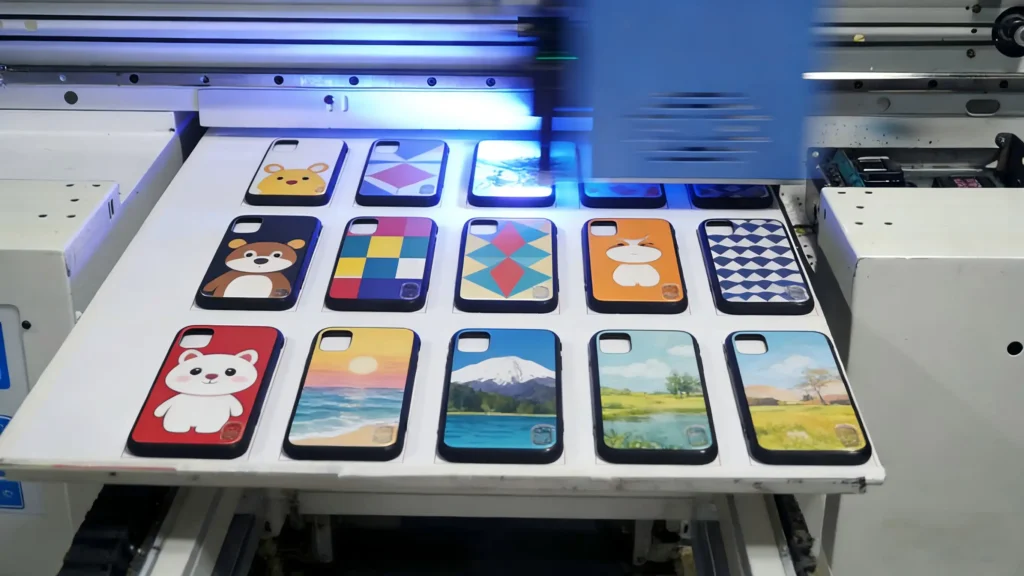
Custom phone case printing cost depends on the printing method, artwork complexity, print area, and surface finish.
Silk screen printing is suitable for simple logos, solid colors, and large repeat orders.
UV printing phone case cost is usually higher when the artwork covers a large area or needs strict color matching.
UV printing works well for colorful logos, detailed graphics, and small-batch custom designs.
IMD and IML offer better durability and a more integrated look, but they cost more because they require film preparation and precise molding.
Surface treatments such as matte coating, glossy finish, soft-touch coating, anti-fingerprint coating, spray coating, laser engraving, embossing, or debossing can improve product appearance.
They also add processing time, defect risk, and inspection cost.
Labor, Assembly, and QC Cost
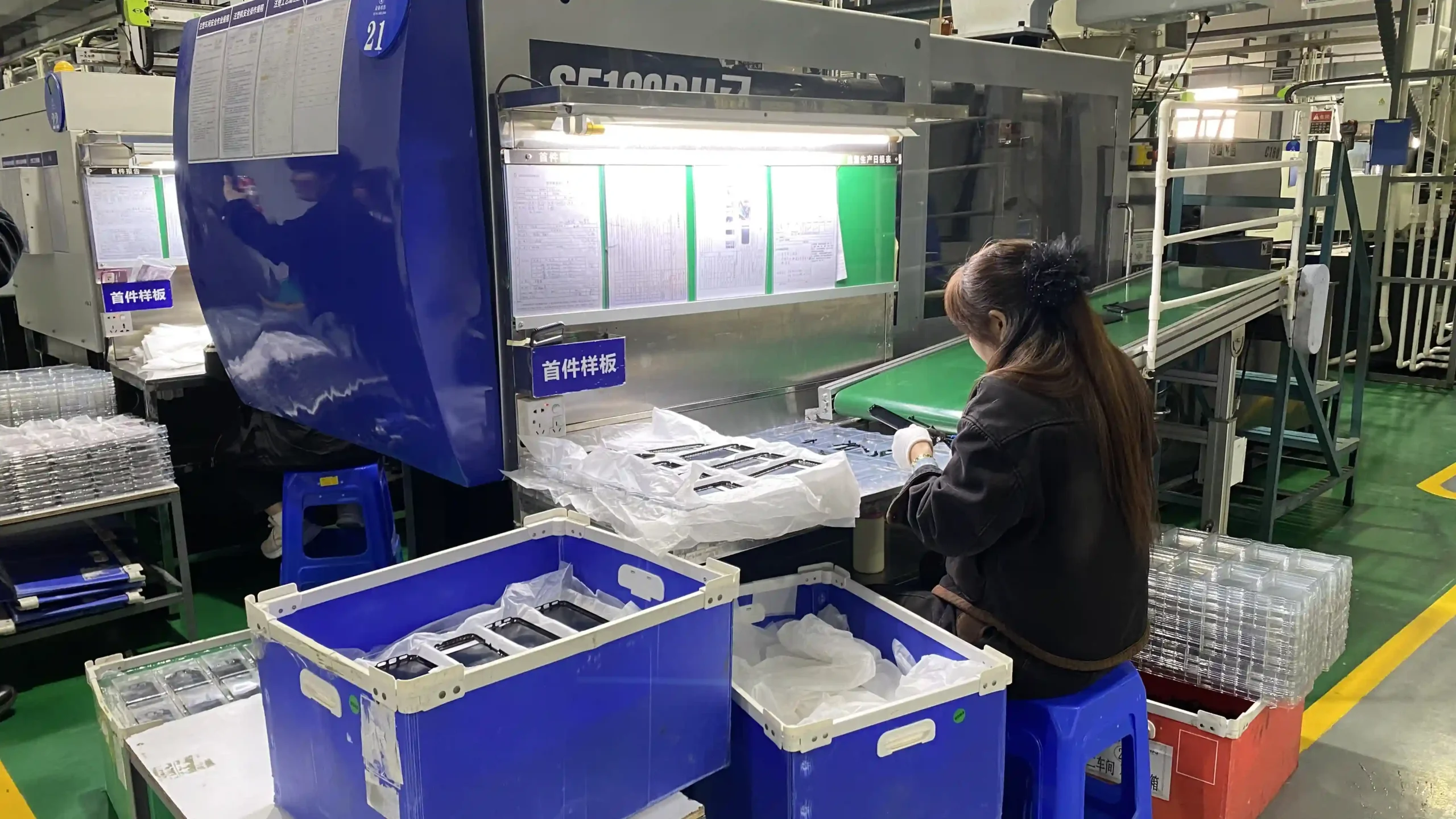
Labor cost depends on how many steps are involved in the phone case manufacturing process.
A one-piece TPU or PC case needs fewer manual steps.
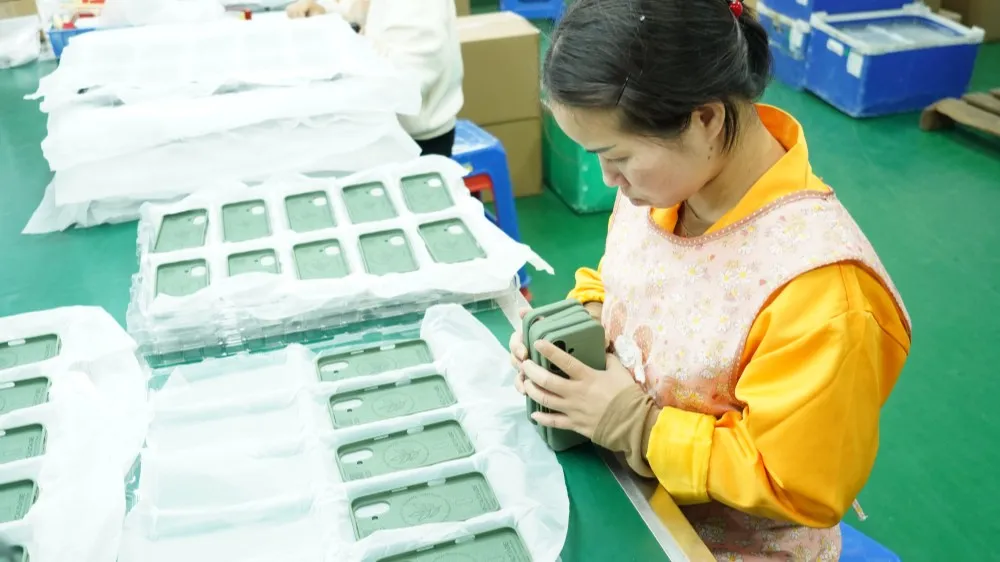
After molding, the main work is trimming, inspection, optional printing, and packing.
A hybrid protective case may require separate molding, fitting, pressing, and checking.
A MagSafe case needs magnetic ring placement, bonding, alignment checks, and strength testing.
A wallet case may require cutting, stitching, card slot assembly, magnetic closure installation, inner shell bonding, and final appearance inspection.
More parts create more failure points, so assembly and quality control costs increase.
Packaging, Shipping, and Export Cost
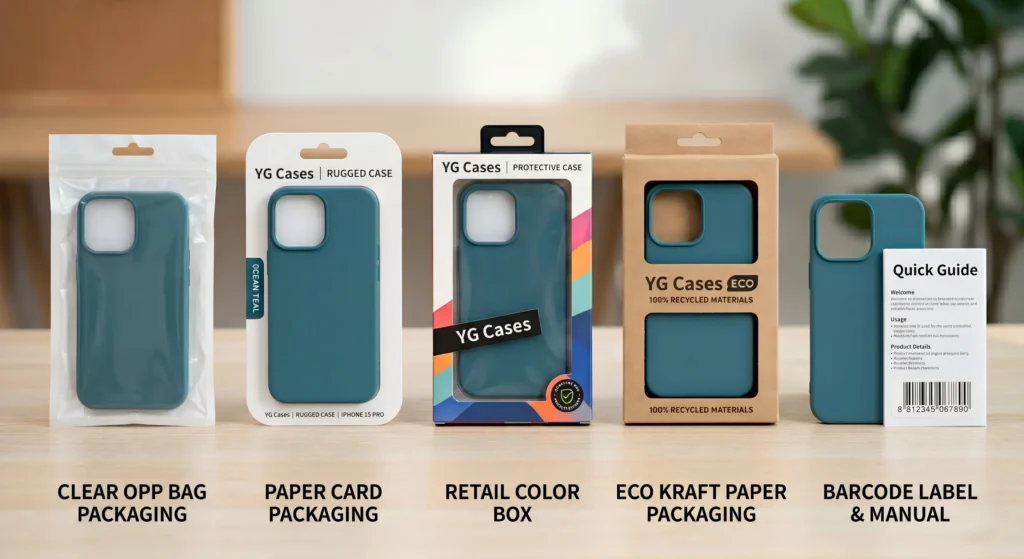
Phone case packaging cost depends on how the product will be sold.
An OPP bag is the lowest-cost option. It protects the case during transport but adds limited retail value.
A paper card or insert card adds branding, product information, a barcode, and basic selling points.
A retail box costs more because it requires printing, cutting, folding, packing, and more shipping space.
Phone case shipping cost depends on order volume, carton size, gross weight, shipping method, and trade terms.
For bulk phone case export, always confirm whether the quote is EXW, FOB, CIF, or DDP.
A low unit price may not be the best deal if freight, duties, customs clearance, or local delivery are not included.
Phone Case Manufacturing Cost by Product Type
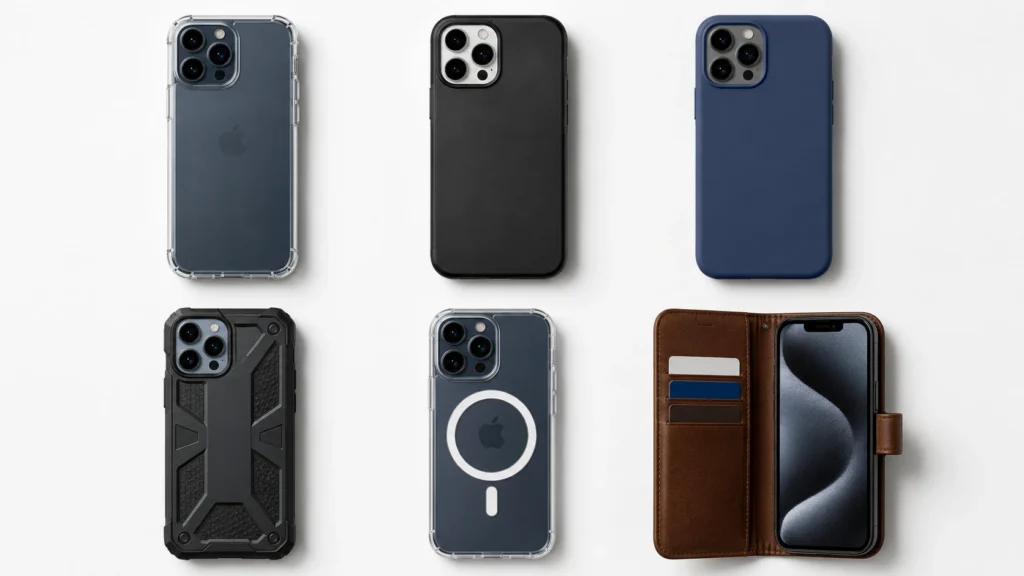
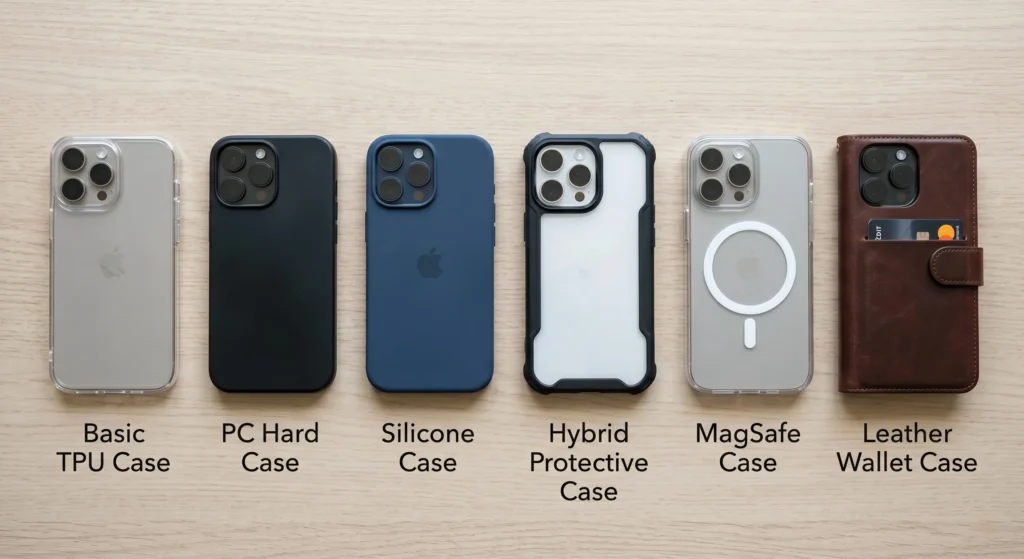
Different phone case types have different cost levels.
Material matters, but structure, surface treatment, assembly, testing, and packaging also affect the final price.
| Phone Case Type | Cost Level | Best For |
|---|---|---|
| Basic TPU Case | Low | Wholesalers, promotional orders |
| PC Hard Case | Low-Medium | Printed designs, e-commerce sellers |
| Silicone Case | Medium | Gift brands, lifestyle brands |
| Hybrid Protective Case | Medium | Shockproof brands, Amazon sellers |
| MagSafe Case | Medium-High | Mid-to-high-end accessory brands |
| Leather Wallet Case | High | Business gifts, premium retail brands |
Basic TPU and PC Cases
TPU and PC cases are usually the most cost-effective choices for bulk orders.
TPU is flexible and works well for soft cases, clear cases, and basic protection.
PC is harder and works well for slim hard cases, transparent hard cases, and printed designs.
These cases can often be made with existing molds, which helps reduce upfront cost and shorten production time.
Silicone Cases
Silicone phone case manufacturing cost is higher than basic TPU or PC cases.
Silicone cases need better material control, color matching, coating, dust resistance, and surface treatment.
They are suitable for brands that want a softer hand feel, richer colors, and a more premium retail image.
Hybrid Protective Cases
Hybrid protective cases usually combine a TPU bumper with a PC back panel.
They may include reinforced corners, raised screen edges, camera protection, air-cushion structures, and thicker sidewalls.
These details improve protection but increase material use, mold precision, assembly steps, and quality testing.
MagSafe Cases
MagSafe phone case manufacturing cost is higher because these cases include magnetic rings and extra assembly work.
The magnetic ring must be placed accurately, fixed securely, and tested for magnetic strength and charging alignment.
Clear MagSafe cases may cost even more because the ring and adhesive area are visible, so appearance control must be stricter.
Leather Wallet Cases
The leather phone case manufacturing cost is usually higher because leather wallet cases require more manual work.
They may include PU leather, genuine leather, card slots, stitching, magnetic closures, inner shells, lining, and edge finishing.
These cases are better suited for premium retail, business gifts, and private label product lines.
How MOQ Affects Phone Case Cost Per Unit
MOQ has a direct effect on unit cost.
Small orders usually have higher prices because setup, printing, labor, packaging, and inspection costs are spread across fewer products.
For small batch phone case manufacturing, the factory still needs to prepare materials, adjust machines, test printing, confirm colors, arrange workers, and inspect products.
These preparation costs are fixed.
When the order quantity is low, each case carries a larger share of those costs.
That is why the low MOQ custom phone case cost is usually higher than bulk order pricing.
How Bulk Orders Reduce Unit Cost
Bulk phone case manufacturing cost is usually lower per unit because fixed costs are shared across more products.
At 1,000 pieces, the factory can spread setup and labor costs more efficiently.
At 5,000 pieces, material purchasing usually becomes more cost-effective.
At 10,000 pieces or more, mold setup, printing setup, packaging preparation, and inspection costs are divided across a much larger quantity.
| Order Quantity | Unit Cost Trend | Suitable Buyer |
|---|---|---|
| 100–300 pcs | Highest | Small brands testing the market |
| 500–1,000 pcs | High | Startups and new product launches |
| 3,000–5,000 pcs | More competitive | Wholesalers, Amazon sellers |
| 10,000+ pcs | Lowest | Large brands, long-term buyers |
How to Choose the Right MOQ
If you are launching a new design, a lower phone case MOQ helps reduce inventory risk.
You can test colors, materials, packaging, and customer response before placing a larger order.
If the product already has stable sales, a higher MOQ usually gives better pricing and more efficient production.
For private label phone cases, MOQ should also match your packaging and branding needs.
Custom boxes, barcode labels, inserts, and special colors may require higher minimum quantities than plain cases.
Public Mold vs Private Mold: Which Is More Cost-Effective?
Phone case mold cost depends on the level of customization you need.
The best choice is not always the cheapest one. It depends on your budget, launch timeline, order volume, and need for product differentiation.
| Mold Option | Upfront Cost | Unit Cost | Best For |
|---|---|---|---|
| Public Mold | Low | Low | Wholesalers, startups |
| Modified Mold | Medium | Medium | Growing brands |
| Private Mold | High | Lower at scale | Mature brands, large-volume buyers |
Public Mold
A public mold phone case uses an existing mold that the factory already has.
It is the most practical option for low-cost phone case manufacturing, especially for basic TPU cases, PC hard cases, clear cases, and simple protective cases.
The main advantages are lower upfront cost and faster production.
The limitation is product similarity. Other buyers may use the same case shape, so your differentiation depends more on color, printing, packaging, and branding.
Modified Mold
A modified mold sits between a public mold and a private mold.
It allows small changes such as camera opening, button area, thickness, texture, logo position, or minor structural details.
This option is suitable for growing brands that want some differentiation without paying the full custom phone case mold cost.
Private Mold
A private mold phone case is developed for your own product design.
It is suitable for mature brands, large-volume buyers, and companies building long-term product lines.
Private mold gives you more control over shape, protection level, button feel, camera area, surface texture, and brand identity.
The upfront cost is higher, but it can make sense if your expected order volume is large enough to spread the tooling cost.
Before choosing private mold, ask your OEM phone case manufacturer for mold cost, sample timeline, expected unit cost, MOQ, and estimated cost allocation.
How to Reduce Phone Case Manufacturing Cost Without Lowering Quality
You can reduce phone case manufacturing cost without using the cheapest material or skipping quality control.
The better approach is to match material, design, packaging, and order quantity with your real market needs.
Choose the Right Material
Do not choose phone case materials only by price.
Cheap material may lower the first quote, but it can create problems with yellowing, poor fit, weak protection, or bad reviews.
For entry-level wholesale orders, TPU or PC is often practical.
For mid-to-high-end retail products, silicone, MagSafe, or leather cases may support a higher selling price.
Simplify the Design
Complex design increases the cost of a custom phone case.
More colors, more parts, special textures, large print areas, and extra functions all add to sampling time and production risk.
Before scaling production, remove features that do not improve sales or user experience.
A cleaner design is easier to quote, produce, inspect, and repeat.
Use Existing Molds First
For early-stage orders, start with an existing mold if possible.
A public mold helps you test the market without paying high tooling costs.
Once sales are stable, you can consider modified mold or private mold development.
Optimize Packaging
Phone case packaging cost should match your sales channel.
Offline retail may need color boxes, hang tabs, barcode labels, and inserts.
E-commerce and wholesale orders may only need an OPP bag, paper card, or compact kraft box.
Good packaging should support your brand, but it should not add unnecessary cost.
Work Directly With an OEM Phone Case Manufacturer
Working directly with an OEM phone case manufacturer makes the cost structure clearer.
You can see how material, mold, printing, packaging, labor, and quality control affect the final quote.
A reliable custom phone case manufacturer can suggest lower-cost alternatives without changing the core product quality.
For example, you may reduce color count, adjust material thickness, use an existing mold, or simplify packaging.
Conclusion
Phone case manufacturing cost is not decided by one factor. Material, structure, mold choice, MOQ, printing, packaging, quality control, and shipping all affect the final price.
For brands and bulk buyers, the goal is not to choose the lowest quote. The goal is to understand what is included, compare suppliers fairly, and choose a production plan that matches your market.
If you want to control phone case cost per unit, start with the right material, use existing molds when possible, simplify unnecessary design details, and increase order quantity once demand is stable.
Working with an experienced OEM phone case manufacturer can help you get a clearer cost breakdown, reduce hidden costs, and keep product quality consistent during bulk production.