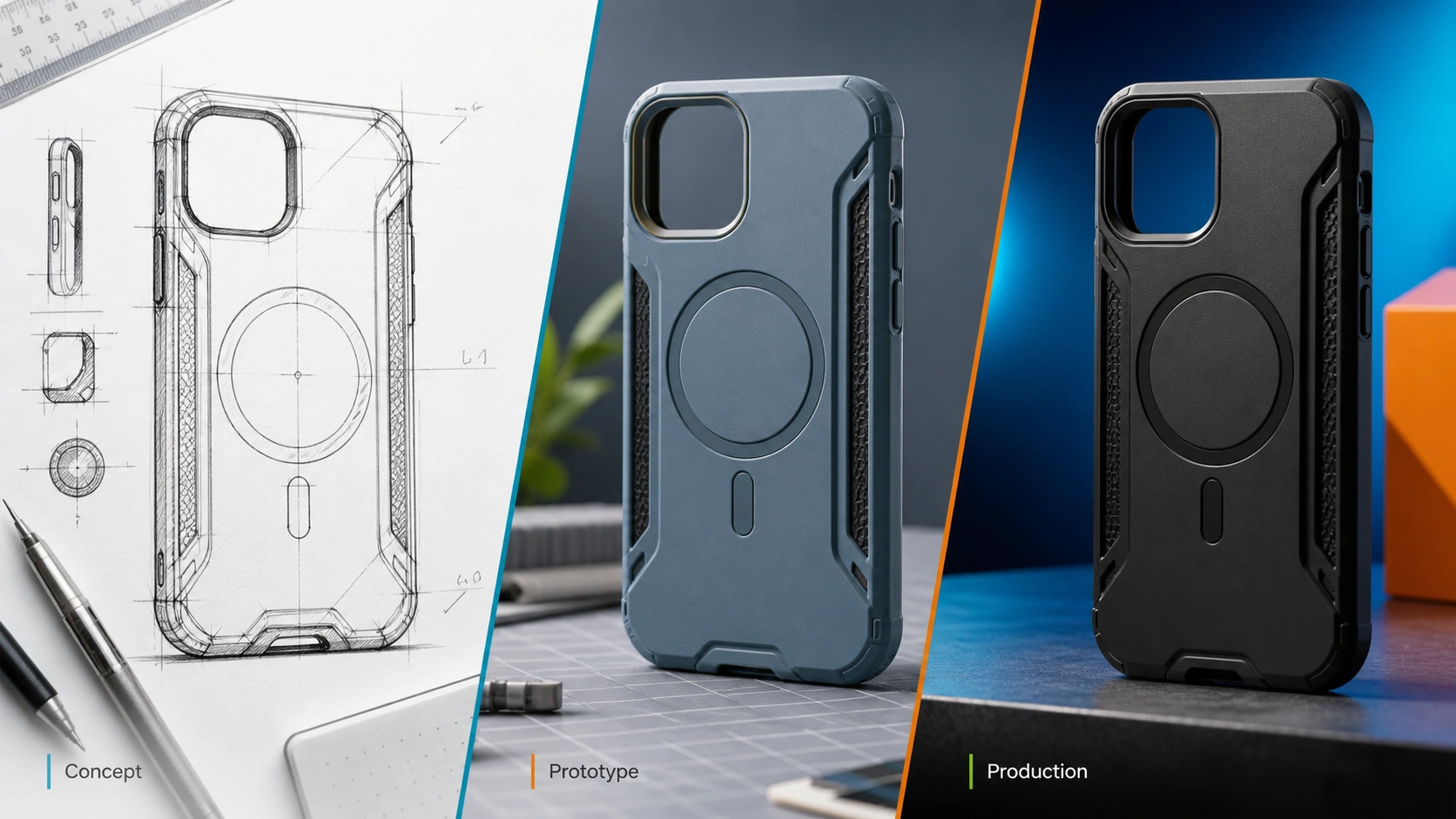
A working prototype proves that your product idea is feasible. However, it does not necessarily mean the product is ready for large-scale manufacturing.
Moving from prototype to mass production requires manufacturers to review the design, select production-grade materials, develop tooling, validate molded samples, and establish consistent quality standards.
For custom phone cases and plastic electronic accessories, solving potential problems before tooling and volume production can significantly reduce delays, defects, and unnecessary costs.
What Is the Role of a Prototype?
Table of Contents
ToggleA prototype helps transform an idea into a physical product that can be evaluated and improved.
Depending on the development stage, it can be used to check:
- Product shape and appearance;
- Fit with the target device;
- Button, camera, and port alignment;
- Material feel and flexibility;
- Component placement and assembly;
- Basic product performance.
Visual prototypes are commonly used to confirm appearance and dimensions, while functional prototypes help test fit, structure, and usability.
However, prototypes are often produced by 3D printing, CNC machining, or manual assembly. These methods are suitable for fast verification but may not fully represent injection-molding conditions.
Before moving from prototype to production, the design must also be evaluated for moldability, material shrinkage, tolerances, surface quality, and assembly efficiency.
Apply DFM Before Tooling
Design for Manufacturing, or DFM, is one of the most important steps in the prototype to mass production process.
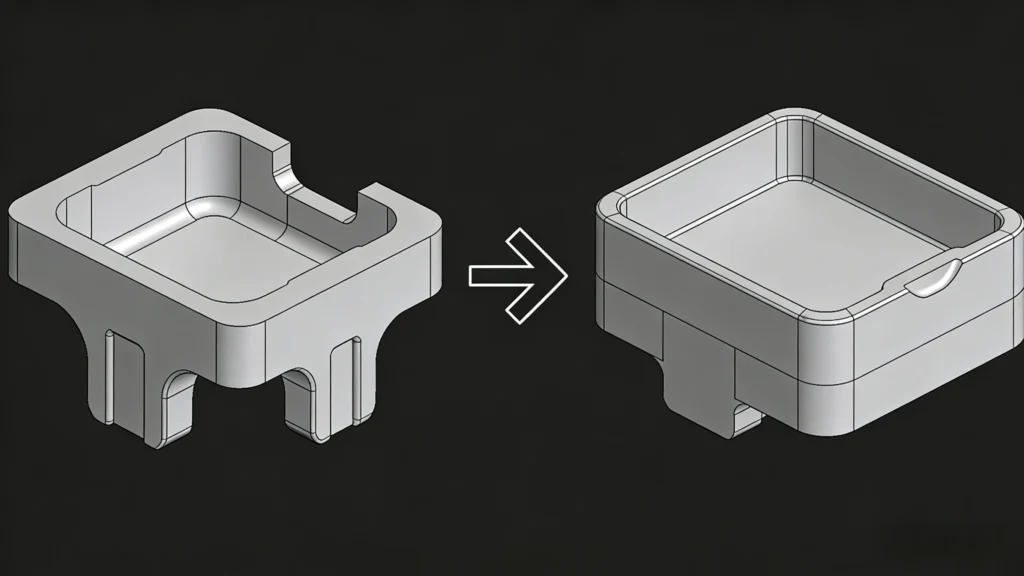
DFM identifies design features that may cause problems during mold making or injection molding. For a phone case or plastic housing, engineers typically review:
- Wall thickness;
- Draft angles;
- Undercuts;
- Parting lines;
- Gate locations;
- Material shrinkage;
- Critical dimensions;
- Assembly structure.
For example, walls that are too thin may lead to incomplete filling, while uneven wall thickness can cause sink marks or warpage. Unnecessary undercuts may also increase mold complexity and tooling costs.
Effective industrial design for mass production should therefore balance appearance, function, and manufacturability. The goal is not to simplify every product, but to ensure that its key features can be produced consistently.
YG applies DFM and mold flow analysis before tooling to evaluate structural feasibility, gate placement, wall thickness, shrinkage, and other potential production risks.
Select the Right Materials and Process
Materials used for early prototypes may behave differently from production-grade materials. Switching materials after the mold has been developed can affect dimensions, product fit, flexibility, surface finish, and molding conditions.
For this reason, the final material should be selected and tested before the design is frozen.
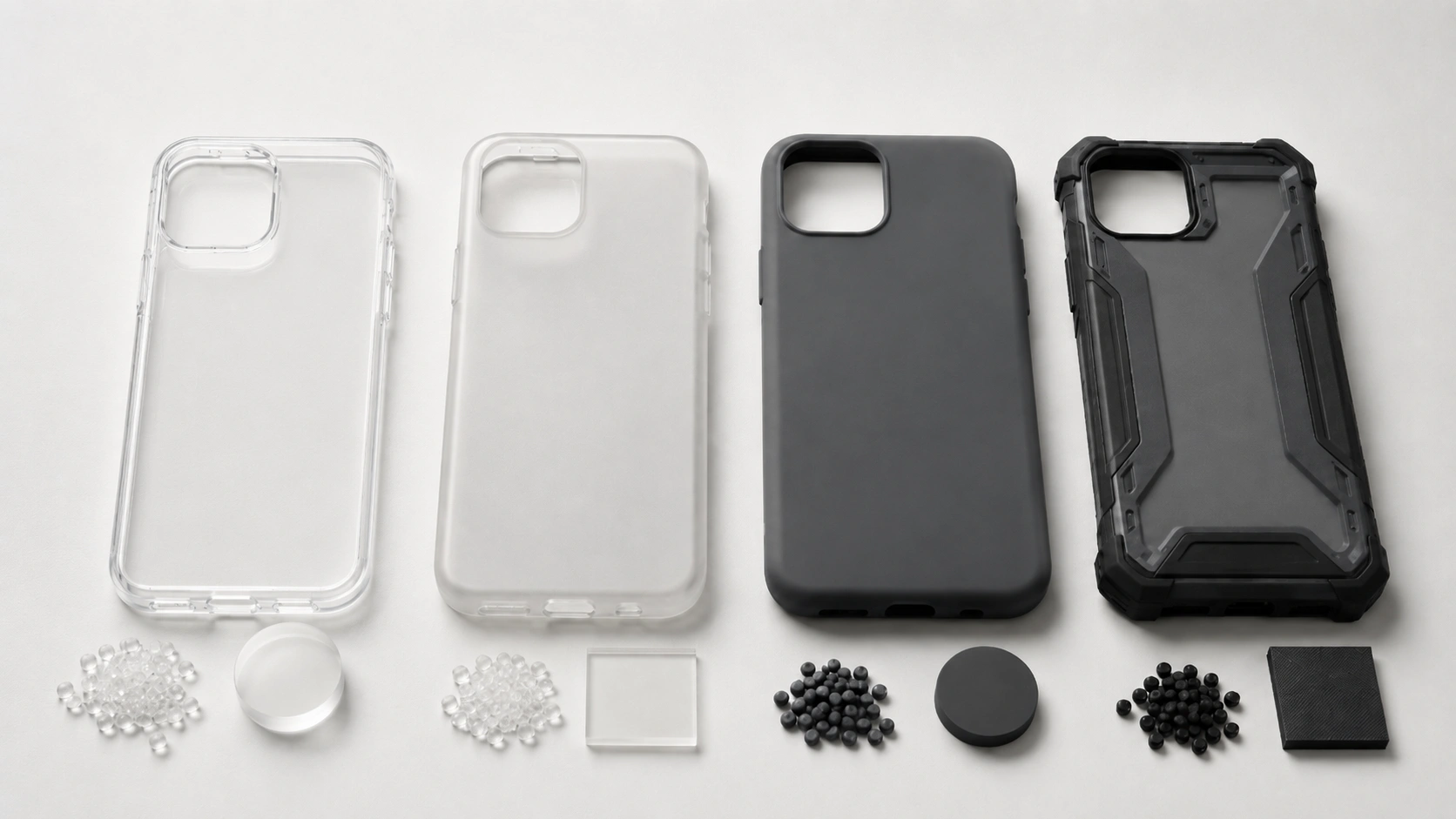
Common materials for custom phone cases include:
- TPU for flexibility and impact absorption;
- PC for rigidity and transparency;
- Silicone for grip and a soft-touch feel;
- Recycled plastics for sustainability-focused products.
The material should be selected according to the product’s protection level, appearance, flexibility, environmental requirements, and intended manufacturing process.
Material and process decisions should be made together. A 3D-printed sample may be suitable for checking appearance, but injection-molded samples made from the intended resin are more useful for final production validation.
Choose the Right Manufacturing Partner
A capable manufacturer should provide more than a prototype or tooling quotation. It should help identify production risks and support the complete transition from prototype to mass production.
When evaluating a manufacturing partner, consider:
- Experience with similar products;
- DFM and engineering support;
- Prototyping capabilities;
- Mold design and manufacturing;
- Injection-molding capacity;
- Quality-control systems;
- Ability to support growing order volumes.
Continuity is also important. When the same manufacturer handles both prototyping and production, the engineering team already understands the design intent, previous revisions, material requirements, and critical dimensions.
This reduces repeated communication and helps create a smoother transition between product development and manufacturing.
YG’s design-to-production ODM process integrates rapid prototyping, in-house tooling, injection molding, finishing, and assembly within one coordinated production system.
Validate the Molded Samples
Once the design and materials are confirmed, the project can move into mold manufacturing and trial production.
The first formal mold trial is commonly called T1. During this stage, engineers check for issues such as:
- Flash or short shots;
- Sink marks and warpage;
- Flow or weld lines;
- Incorrect dimensions;
- Difficult ejection;
- Poor device fit;
- Surface defects.
The mold and injection parameters are then adjusted based on the trial results.
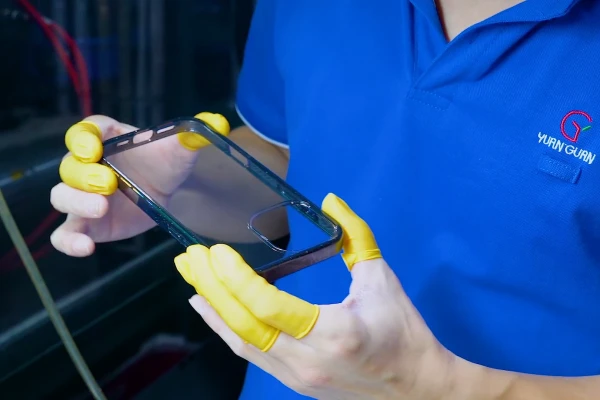
After the problems have been corrected, an approved Golden Sample should be established. This sample becomes the reference for appearance, dimensions, fit, color, texture, and assembly quality during mass production.
At YG, the Golden Sample is approved before the project proceeds to volume injection molding.
Use Pilot Production to Reduce Risk
For new or complex products, prototyping and small-batch production can help bridge the gap between sample approval and full-scale manufacturing.
Unlike early prototypes, a pilot run should use the intended:
- Production mold;
- Final material;
- Injection-molding process;
- Assembly components;
- Inspection standards.
Pilot production helps identify problems that may not appear in a single prototype, such as inconsistent cycle times, cosmetic defects, tolerance accumulation, or inefficient assembly steps.
This stage is especially useful when the product includes multiple materials, magnets, metal buttons, camera rings, or other assembled components.
The purpose is simple: correct production problems at a small scale before they affect thousands of units.
Establish Quality Control Early
Quality control should be planned before mass production begins—not added after defects appear.
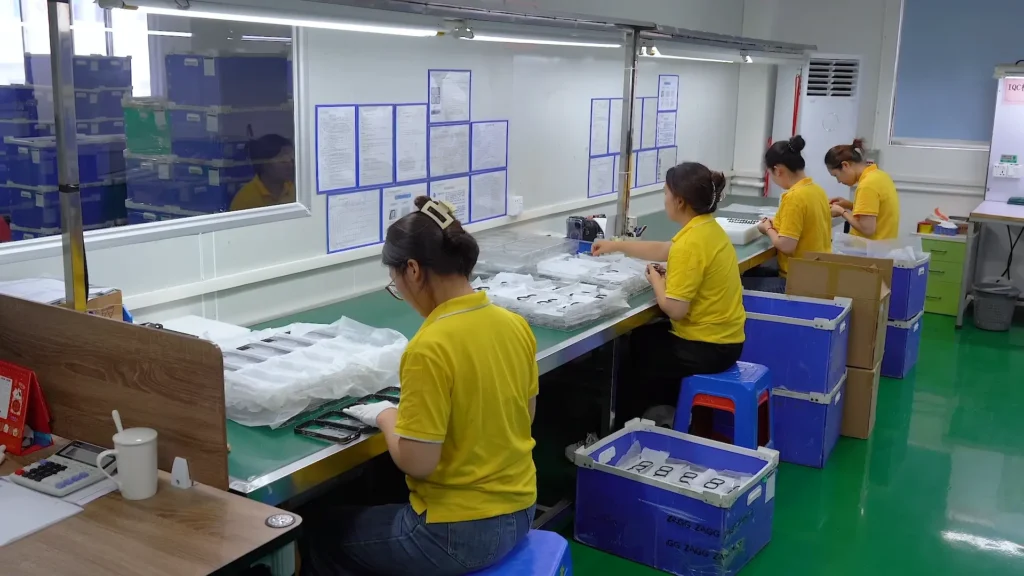
A scalable quality-control system should include:
- Inspection of raw materials and components;
- In-process checks during molding and assembly;
- Dimensional and appearance inspection;
- Functional testing;
- Final inspection before shipment.
The manufacturer and customer should also agree on critical dimensions, cosmetic standards, test methods, and acceptable defect levels.
Clear inspection standards reduce subjective decisions and help ensure that each production batch matches the approved Golden Sample.
Scale to Mass Production
A product should only move into full production when:
- The design has passed DFM review;
- Production materials are confirmed;
- The mold operates consistently;
- T1 issues have been corrected;
- The Golden Sample is approved;
- Assembly and inspection procedures are established.
Rushing the prototype to production transition does not eliminate existing problems. It simply repeats them at a larger scale.
During mass injection molding, manufacturers must control material conditions, injection pressure, mold temperature, cooling time, and cycle time to maintain consistent product quality across batches.
Common Prototype-to-Production Mistakes
When learning how to go from prototype to production, avoid these common mistakes:
- Starting mold development before completing DFM;
- Treating a visual prototype as a production-ready sample;
- Changing the material after tooling begins;
- Using unnecessarily tight tolerances;
- Skipping mold trials or pilot production;
- Starting mass production without an approved quality standard;
- Choosing a manufacturer based only on the lowest quotation.
These mistakes can lead to mold modifications, production delays, higher defect rates, and additional development costs.
Summary
Moving from prototype to mass production is not simply about increasing the order quantity. It requires a structured process that connects design validation, DFM, material selection, tooling, mold trials, pilot production, and quality control.
The most effective approach is to solve design and manufacturing problems before they reach full production.
YG supports custom phone case manufacturing throughout the complete development process—from initial prototyping and DFM to mold manufacturing, injection molding, assembly, and production delivery.
Have a product design or working prototype? Contact YG to evaluate its manufacturability and prepare it for mass production.