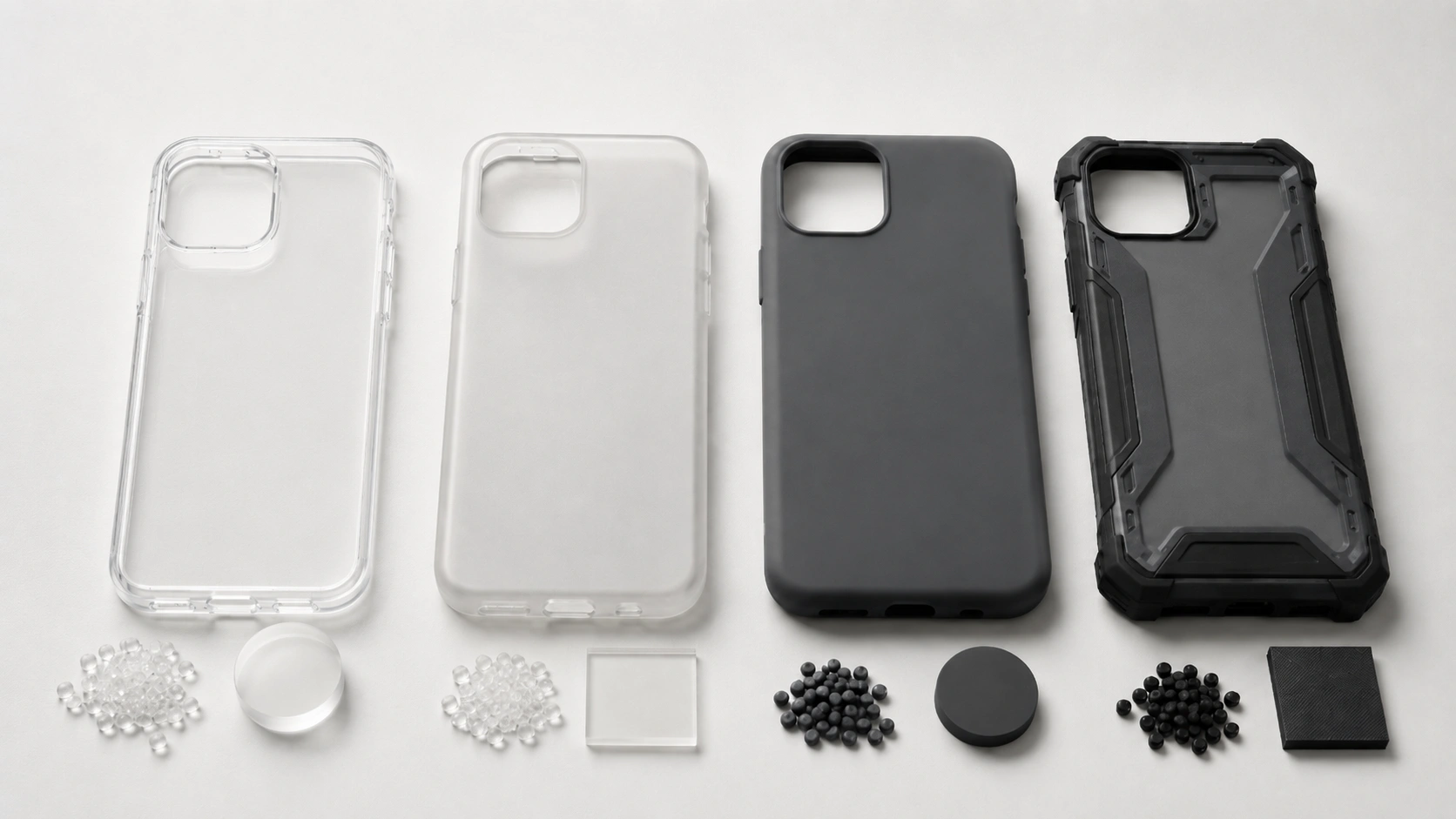
With so many phone case materials available, choosing the right one can be harder than it looks. TPU, polycarbonate, silicone, and hybrid constructions all offer different levels of protection, grip, weight, and appearance.
So, what are phone cases made of, and which material is the better choice for your product? In this guide, we compare the most commonly used materials, where each one works best, and the key factors to consider when choosing a phone case material.
Why Does Phone Case Material Matter?
Table of Contents
ToggleThe material you choose affects far more than how a case feels in your hand. It influences impact absorption, rigidity, grip, weight, transparency, surface durability, and how thick the finished case needs to be.
That is why there is no single best material for phone cases in every situation. A slim clear case and a rugged protective case solve different problems, so they should not be built around the same material strategy.
In practice, the right choice starts with the product goal: Do you need flexibility, structural support, a soft-touch finish, or a combination of these properties?
Common Phone Case Materials
TPU: Flexible and Shock-Absorbing
Thermoplastic polyurethane (TPU) is one of the most common materials used in phone cases because it combines flexibility with good impact absorption.
When a phone is dropped, TPU can deform slightly and help absorb part of the impact. Its flexibility also makes it suitable for corners, side buttons, and areas that need to stretch during installation.
TPU is commonly used for clear cases, flexible protective cases, bumpers, and the soft outer layer of hybrid designs.
Its main trade-off is surface aging. Clear TPU can yellow over time depending on the resin formulation, UV exposure, heat, and use conditions. If long-term clarity is important, material grade and anti-yellowing performance should be considered early.
Polycarbonate (PC): Rigid and Lightweight
Polycarbonate (PC) is a rigid thermoplastic used when a case needs stronger structural support or a firm back panel.
It holds its shape well, stays relatively lightweight, and works well for hard shells, clear backplates, and decorative surfaces. Compared with TPU, however, PC is less flexible and does not absorb impact in the same way.
For this reason, PC is often used where rigidity and dimensional stability matter most, or combined with a softer material when more drop protection is needed.
Silicone: Soft Feel and Better Grip
Silicone is a strong option when comfort and grip are part of the product experience. It provides a soft, smooth hand feel and can reduce slipping during everyday use.
This makes silicone suitable for premium soft-touch cases and products where tactile quality matters as much as impact protection.
Its surface can attract dust more easily than some thermoplastics, and long-term wear depends on the formulation and finish. Silicone also requires a different manufacturing approach from standard TPU or PC, so it should not be treated as a direct substitute simply because both materials feel soft.
PC + TPU: A Balanced Hybrid Option
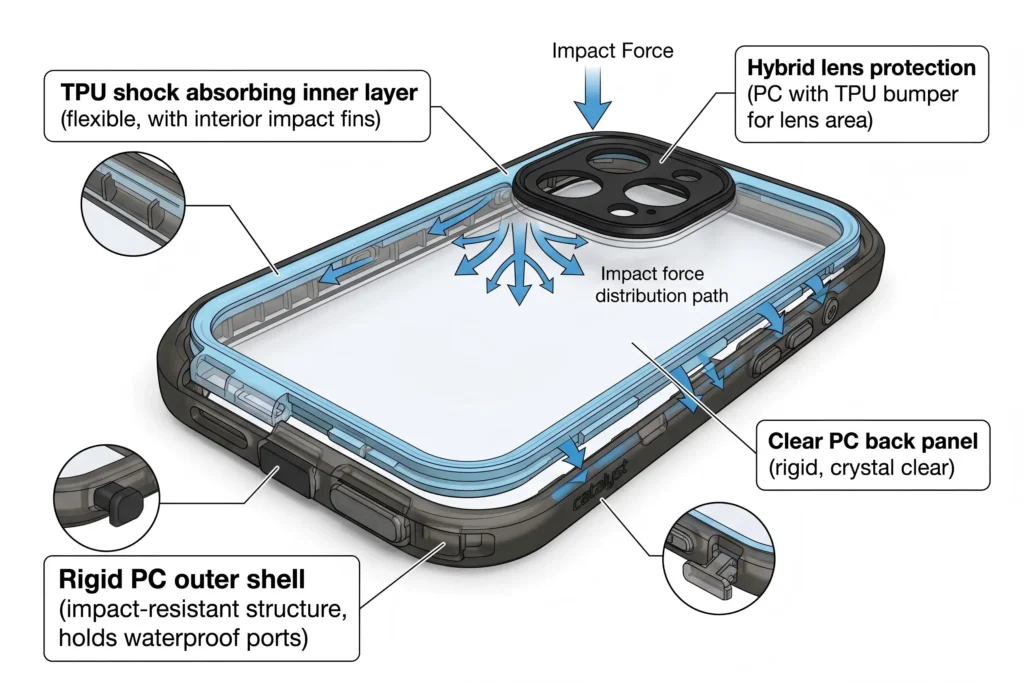
For many protective products, the best material for a phone case is actually a combination of materials.
A common hybrid structure uses a rigid PC back or frame for shape and support, together with a flexible TPU edge to help absorb impact around the corners and sides.
This combination is widely used for rugged cases, clear-back cases, and other designs that need both structural stability and shock absorption.
Depending on the design, multi-material structures can be assembled as separate components or integrated through processes such as overmolding or 2K molding.
Other Material Options
Not every product needs to use TPU, PC, or silicone. Recycled plastics, bio-based polymers, aramid fiber, leather, and other specialty materials can be considered when sustainability, low weight, appearance, or premium positioning is more important.
The key is to make sure the material still meets the case’s fit, durability, protection, and manufacturing requirements.
Quick Comparison of Phone Case Materials
| Material | Impact Protection | Flexibility | Scratch Resistance | Weight | Best For |
|---|---|---|---|---|---|
| TPU | High | High | Medium | Light | Everyday protective cases |
| PC | Medium | Low | High | Light | Hard shells and clear backs |
| Silicone | High | High | Medium | Light | Soft-touch cases |
| PC + TPU | High | Medium | High | Medium | Rugged and hybrid cases |
This table is a useful starting point, but material alone does not determine how protective the final product will be.
What Is the Best Material for a Phone Case?
The answer depends on what you want the case to do.
For everyday protection: TPU is often a practical choice because it offers flexibility, impact absorption, and easy installation without adding too much bulk.
For a slim, rigid case: PC is better suited to designs that prioritize shape retention, a hard back, or a clean transparent surface.
For a soft grip: Silicone works well when tactile feel and comfort are major selling points.
For stronger all-around protection: A PC + TPU hybrid can offer a better balance by combining a rigid structure with flexible impact zones.
So when comparing the best phone case material, avoid focusing only on hardness or thickness. The better choice is the one that matches the actual use case.
Why Case Design Matters Too
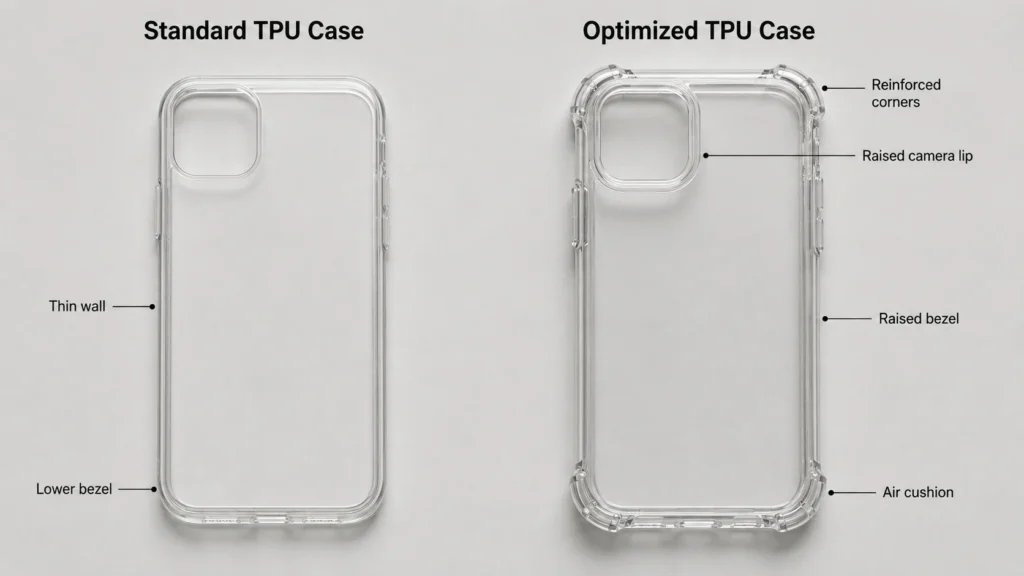
Two cases made from the same material can perform very differently in a drop test.
Protection also depends on how the case is designed. Reinforced corners can help manage impact where drops occur most often. Raised bezels can protect the screen and camera from direct contact. Wall thickness, internal cushioning, and the fit between the phone and case also influence how impact forces are distributed.
This is especially important when comparing different types of phone cases. A thin TPU shell, for example, will not behave like a TPU bumper with reinforced corners, even if both use the same resin.
The best protection comes from the combination of material properties and case structure—not from material selection alone.
How to Choose the Right Phone Case Material
Instead of starting with a material name, start with the product requirements.
Protection
Decide how much drop and impact protection the case needs. Everyday slim cases may work well with TPU, while rugged products often benefit from a hybrid structure.
Look and Feel
Do you want a transparent finish, a rigid glossy back, a soft-touch surface, or a matte texture? The desired appearance can quickly narrow the material options.
Weight and Thickness
A material may perform well mechanically but create too much bulk for the target market. The final design should balance protection with the size and weight users are willing to carry.
Product Type
Different types of phone cases require different priorities. Clear cases need clarity and yellowing resistance. Rugged cases need impact management. Soft-touch cases prioritize grip. Eco-focused products may require recycled or bio-based material options.
For custom phone cases, these decisions should be made before the final structure and tooling are locked in.
Material Choice Also Affects Manufacturing
The selected material also changes how the case is molded and finished.
TPU hardness affects flexibility and demolding. PC requires good control of molding conditions and surface quality. Hybrid cases require the rigid and flexible components to work together both mechanically and during production.
Clear materials also demand tighter control of tooling surfaces, contamination, and appearance defects. Recycled or bio-based materials may require additional validation to confirm stable molding and consistent performance.
This is why material selection should be reviewed together with the part structure, molding process, and expected production volume rather than treated as a separate sourcing decision.
Choose the Material Around the Product
There is no single material that fits every phone case. TPU works well when flexibility and impact absorption matter, PC provides rigidity and structural support, silicone offers a softer tactile experience, and hybrid structures can combine several of these benefits.
If you are developing custom phone cases, choose the material around the protection, appearance, feel, and manufacturing requirements of the product—not the other way around.
YGcases supports phone case projects from material evaluation and DFM to tooling, injection molding, finishing, and assembly. Have a product concept, sample, or CAD file ready? Contact our team to discuss your project and get material and manufacturing recommendations before tooling begins.