When a phone case or consumer electronics accessory uses multiple molded parts, the joining method can directly affect its appearance, internal space, and production efficiency. Glue requires dispensing and curing, while screws add components and visible fastening points.
Plastic ultrasonic welding offers a fast, clean way to create permanent joints without separate fasteners. However, the material, joint structure, and molding consistency must be evaluated before tooling.
What Is Plastic Ultrasonic Welding?
Table of Contents
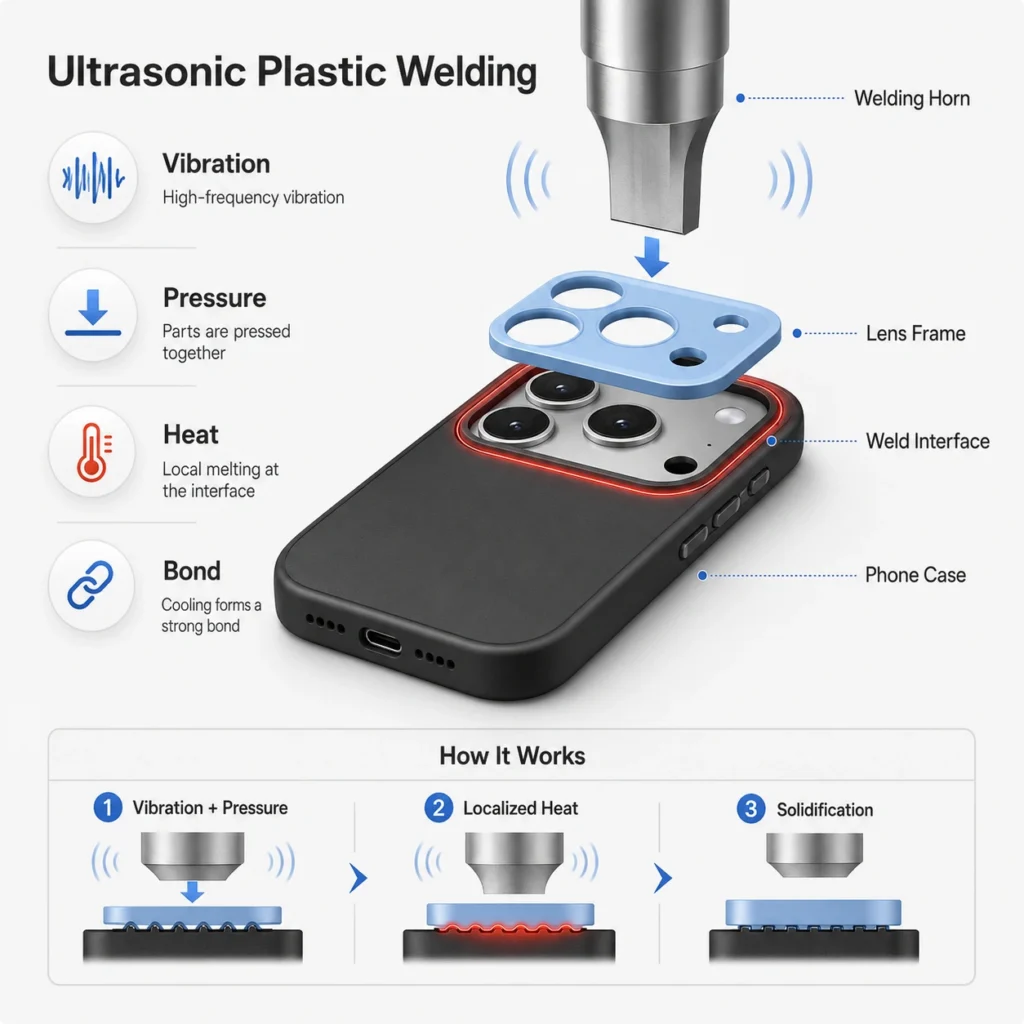
TogglePlastic ultrasonic welding uses high-frequency mechanical vibration to create localized heat at the interface between two compatible thermoplastic parts. The material at the joint melts, then cools under pressure to form a permanent bond.
Because the heat is concentrated near the joint, the entire component does not need to be heated. This makes the ultrasonic welding of plastics useful for compact, multi-part housings used in phone cases and consumer electronics accessories.
How Does Ultrasonic Plastic Welding Work?
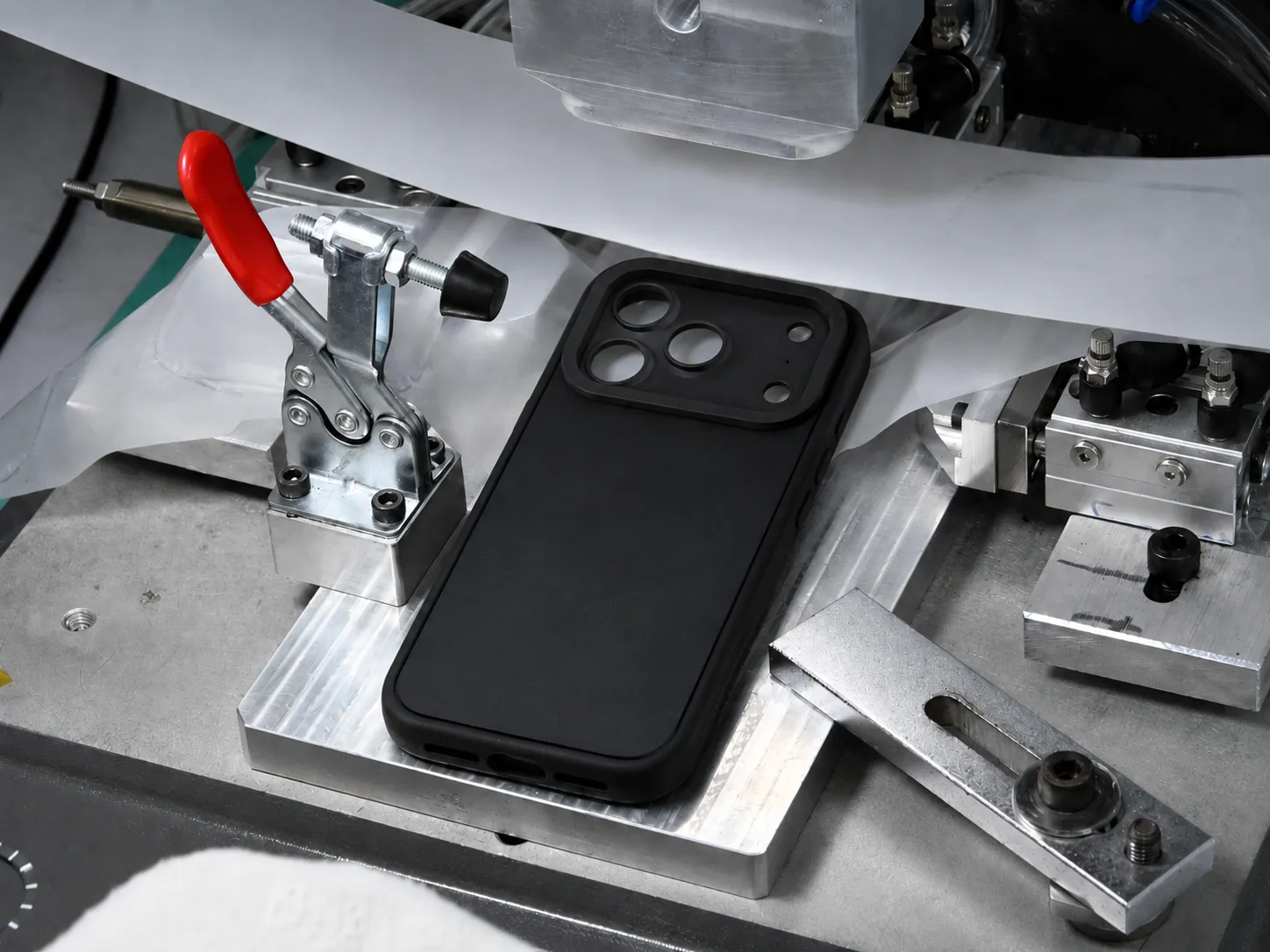
During the process, the molded components are positioned in a fixture and held together under controlled pressure. A welding horn transfers high-frequency vibration through the upper part to the joint interface.
The vibration causes a small amount of plastic at the contact area to melt. Once the vibration stops, pressure is maintained briefly while the material cools and solidifies.
The process does not work simply by pressing two flat molded surfaces together. The resin, joint geometry, energy director, horn access, and fixture support must all be designed to transfer ultrasonic energy effectively.
Why Use Ultrasonic Welding for Consumer Electronics Accessories?
For a suitable product structure, ultrasonic welding can provide three practical advantages.
Cleaner Product Appearance
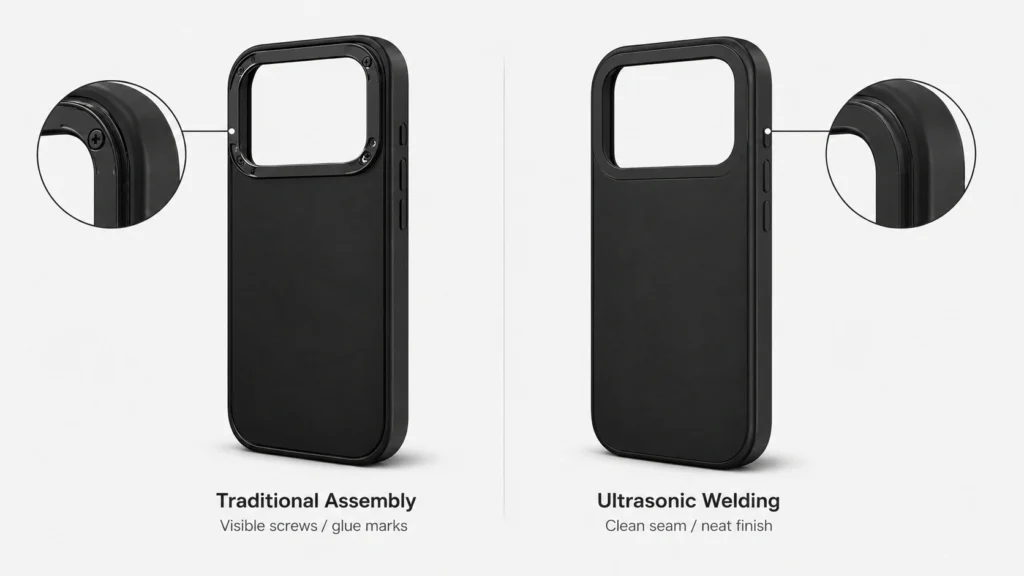
Consumer electronics accessories are judged by appearance as well as function. Visible screws, uneven adhesive lines, or excess glue can make a finished product look less refined.
An ultrasonic plastic weld can create a permanent joint without external fasteners or adhesive residue. The seam may be placed along an edge, beneath a decorative feature, or within the housing structure.
This is useful when the product needs:
- a smooth exterior;
- a narrow, consistent seam;
- fewer visible assembly points;
- a more integrated appearance.
Proper flash control is still essential. If displaced material has nowhere to go, excess plastic may remain visible around the weld line.
Faster and More Repeatable Assembly
Ultrasonic welding usually has a short process cycle because there is no adhesive curing stage. Once the parts are loaded and positioned, welding and holding can be completed quickly.
Parameters such as weld time, amplitude, pressure, energy, and collapse distance can be controlled to establish a repeatable production window.
Total production efficiency still depends on part loading, fixture design, joint length, inspection requirements, and the level of automation.
Fewer Added Parts and Consumables
Adhesive assembly requires glue and dispensing controls. Screw assembly requires fasteners, molded bosses, and additional installation steps.
Ultrasonic welding can reduce these added materials, simplify the bill of materials, and decrease the number of components handled on the assembly line.
Removing screws or large adhesive channels may also free up internal space for:
- magnets;
- batteries;
- circuit boards;
- charging components;
- buttons;
- connectors.
For compact phone cases and electronic accessories, even a small amount of additional internal space can improve the overall product layout.
Which Phone Cases and Electronic Accessories Can Use Ultrasonic Welding?
Standard one-piece TPU, silicone, or PC phone cases do not usually require ultrasonic welding. The process is more relevant when a product contains two or more rigid molded components that must be joined permanently.
Possible applications include:
- multi-part waterproof phone cases;
- protective cases with separate rigid frames or backplates;
- cases with permanently installed windows or covers;
- AirPods and wireless earbud protective housings;
- charging accessory housings;
- adapter and power-supply covers;
- small smart-device enclosures.
For example, a rugged phone case may use a rigid front frame and rear housing that need to remain securely connected. A charging accessory may use two molded shells around internal components. In these situations, ultrasonic welding may create a cleaner permanent joint than screws or adhesive bonding.
The final decision still depends on the actual design. Flexible materials, large joint areas, and vibration-sensitive internal components can make the process more difficult.
Ultrasonic Welding vs. Glue and Screws
Each joining method has advantages. The correct choice depends on how the product will be used.
| Assembly method | Main advantages | Main limitations |
|---|---|---|
| Ultrasonic welding | Fast, clean, and suitable for repeatable production | Requires compatible thermoplastics and a purpose-designed joint |
| Adhesive bonding | Can accommodate some irregular surfaces and material combinations | Requires dispensing and curing and may introduce overflow or variation |
| Screws | Allow the product to be opened for repair or maintenance | Require fasteners, bosses, and additional assembly space |
Ultrasonic welding is worth evaluating when the product requires a permanent joint, a clean exterior, and repeatable high-volume assembly.
Screws may be better when the housing must be opened. Adhesives may be more suitable when the materials cannot be welded or when the geometry prevents proper horn and fixture access.
Three Factors That Determine Weld Quality
A stable welding machine cannot compensate for an unsuitable material or a poorly molded joint. Three factors have the greatest influence on the final result.
1. Material Compatibility
In practice, ultrasonic welding of plastic depends on how well the chosen thermoplastic transmits vibration and melts at the joint.
Using the same resin for both parts is often easier than joining unrelated materials, but the general material name is not enough to confirm compatibility. The exact production grade must be reviewed.
Weld performance can be affected by:
- resin formulation;
- fillers;
- flame retardants;
- lubricants;
- colorants;
- moisture content;
- recycled content;
- other additives.
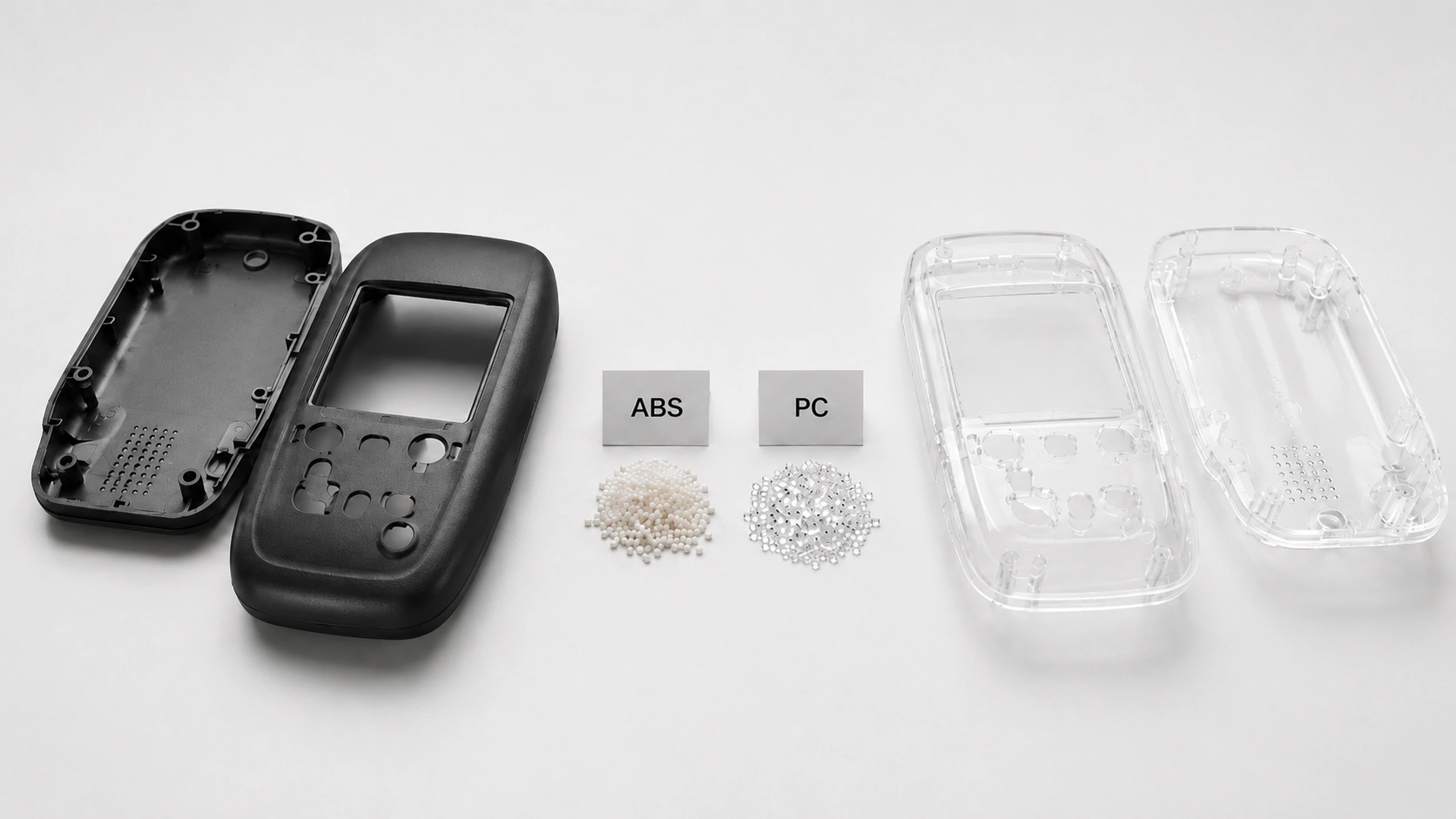
Rigid materials such as ABS, PC, and compatible PC/ABS grades may be considered, depending on the product structure and resin formulation.
Flexible TPU and silicone behave differently and may not transfer vibration effectively enough for the same joint design. Material testing should therefore use the final production resin rather than a generic sample with a similar name.
2. Joint and Energy Director Design
Two flat plastic surfaces pressed together do not automatically create a reliable weld.
Many ultrasonic joints use an energy director: a small molded ridge placed along the interface. Its narrow contact area concentrates ultrasonic energy so melting begins in a controlled location.
The joint must also account for:
- part alignment;
- weld-line continuity;
- joint width and wall thickness;
- flash containment;
- horn access;
- fixture support;
- nearby cosmetic surfaces;
- sealing requirements.
The energy director concentrates energy, but it does not automatically align the parts or hide displaced material. Separate alignment features and flash traps may still be required.
These details should be included in the CAD model and injection mold. Adding them after tooling is complete can require costly mold modification.
3. Injection-Molded Part Consistency
Ultrasonic welding depends on consistent contact between the molded components.
If the parts are warped or the joint surfaces are uneven, pressure may be concentrated in only part of the weld line. One area may weld correctly while another remains weak or incomplete.
Common molding-related risks include:
- inconsistent energy-director height;
- poor joint flatness;
- warping around the housing edge;
- dimensional variation between cavities;
- sink marks near supporting ribs;
- residual stress around the weld area;
- variation in material drying or shrinkage.
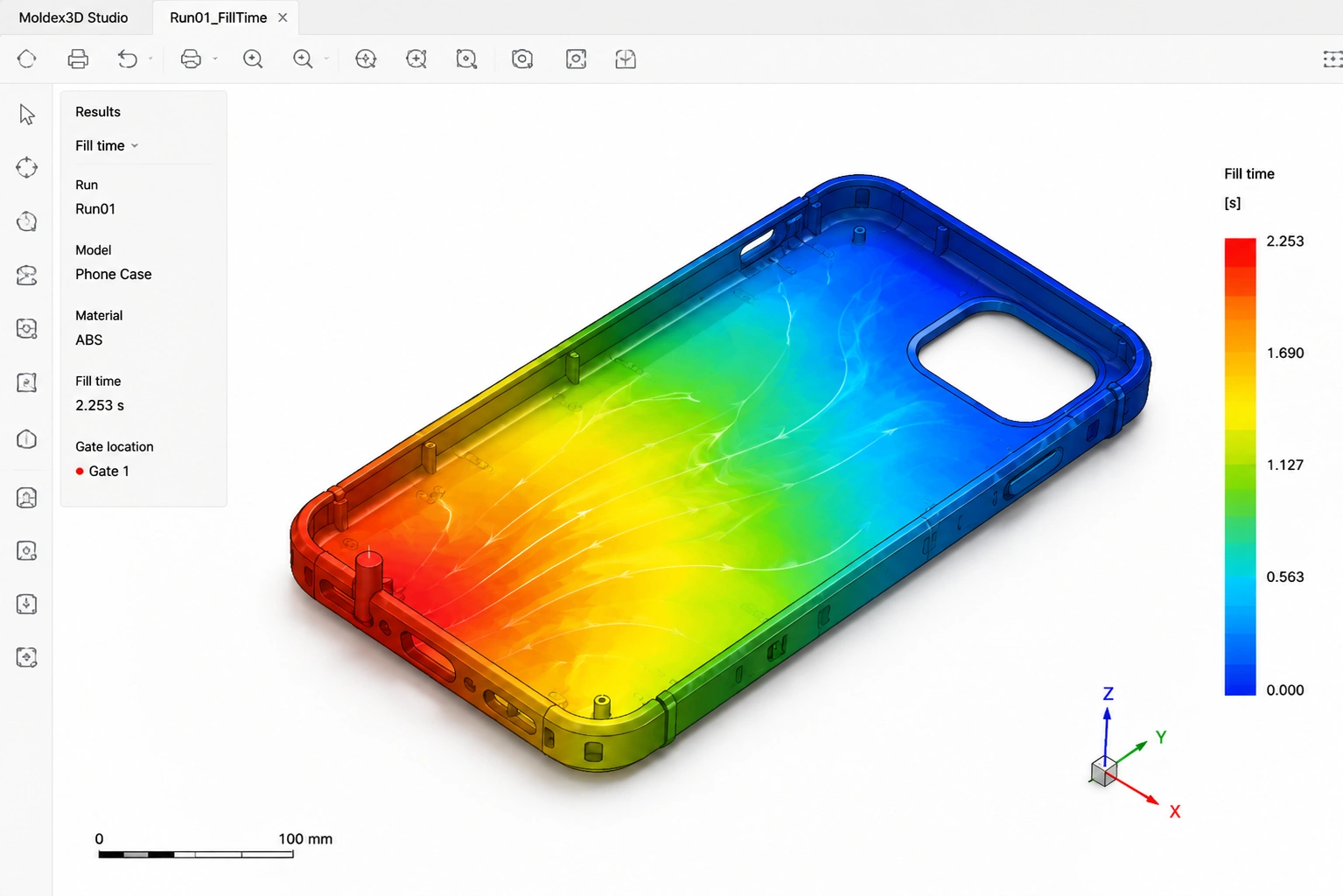
Gate location, cooling layout, ejection, and wall-thickness distribution can all affect the final weld interface.
For this reason, welding performance should be considered during DFM and mold development. The mold must reproduce the joint geometry consistently across every cavity and production cycle.
When Ultrasonic Welding May Not Be Suitable
Another joining method may be more appropriate when:
- the product must be opened for repair;
- the materials are not weld-compatible;
- the parts are too flexible to transfer vibration;
- the horn or fixture cannot reach and support the joint;
- internal components are highly sensitive to vibration;
- the product cannot tolerate horn-contact marks;
- the joint area is too large or irregular.
These limitations should be identified early. Introducing ultrasonic welding after the molded parts have been finalized can lead to weak joints, visible defects, or tooling rework.
Plan the Welding Process Before Tooling
The joining method should be selected during product development, not treated as a final assembly decision.
Before tooling, you should confirm:
- the production resin;
- material compatibility;
- weld-joint location;
- energy-director geometry;
- alignment features;
- flash control;
- horn access;
- fixture support;
- strength or sealing requirements.
The joint should then be reviewed together with the gate position, wall thickness, cooling system, and expected shrinkage.
YG combines more than 30 years of mold making and injection molding experience with over a decade of phone case manufacturing experience. For multi-part phone cases and consumer electronics accessories, our engineering team can review the product structure, molding risks, and intended assembly method before tooling begins.
Send us your CAD files, material requirements, and assembly expectations. We can help determine whether plastic ultrasonic welding is suitable for your design and identify the changes needed to support stable production.