When comparing ABS vs polycarbonate for a plastic housing or protective case, the decision is not simply about which material is stronger.
The right choice depends on how the product will be used. A desktop electronic enclosure may prioritize surface quality and cost, while a handheld device may need to survive repeated drops. A transparent indicator window also has very different requirements from an opaque game console cover.
In general:
- Choose ABS for cost-effective, opaque housings with a reliable molded or decorated finish.
- Choose polycarbonate, or PC, when impact resistance, heat resistance or transparency is more important.
- Choose PC/ABS when the product needs a balance of toughness, appearance, moldability and cost.
For consumer electronics brands, material selection should be reviewed together with the part structure, wall thickness, assembly method, surface finish and expected production volume.
ABS vs Polycarbonate at a Glance
Table of Contents
Toggle| Product requirement | ABS | Polycarbonate | PC/ABS |
|---|---|---|---|
| General impact resistance | Good | Excellent | Very good |
| Heat resistance | Moderate | High | Higher than standard ABS |
| Transparent parts | No | Yes | No |
| Cosmetic molded finish | Excellent | Good | Excellent |
| Color, painting and plating | Easy | Depends on grade and process | Easy |
| Injection molding difficulty | Relatively forgiving | More demanding | Moderate |
| Relative material cost | Lower | Higher | Usually between ABS and PC |
| Typical applications | General electronic housings | High-impact or transparent parts | Durable electronic enclosures |
These are general comparisons. Actual performance varies between resin grades, additives, colors, part thicknesses and test conditions.
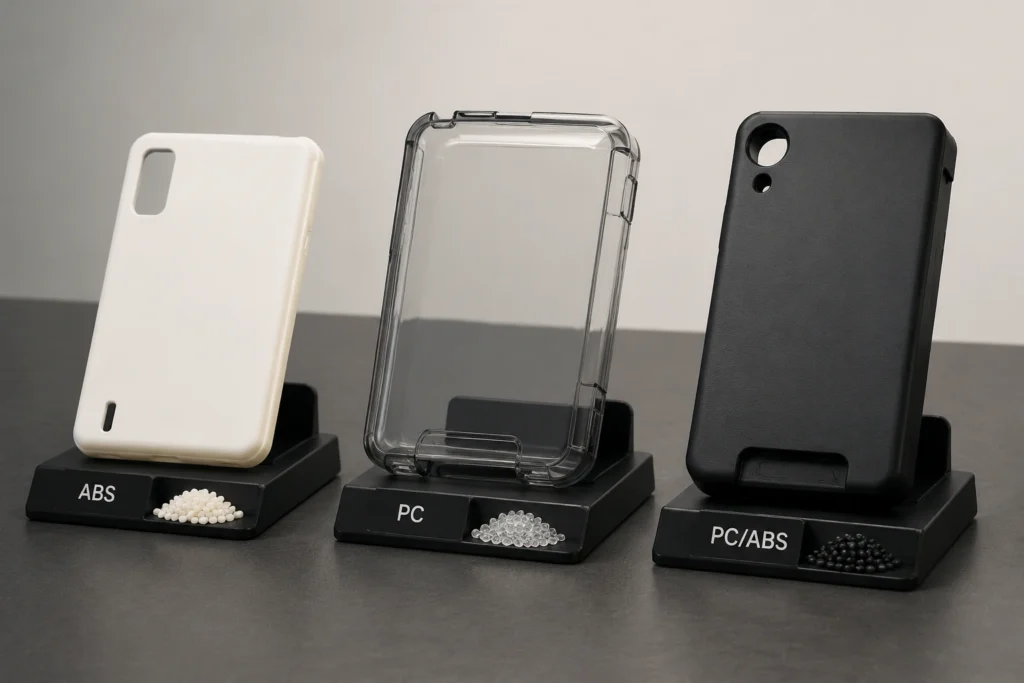
ABS VS PC: What Is the Practical Difference?
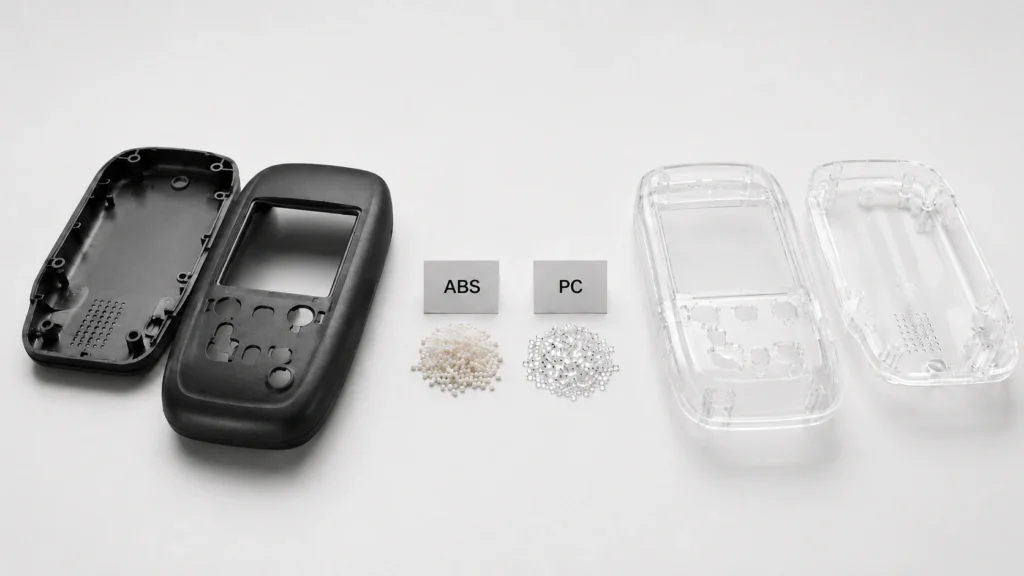
ABS, or acrylonitrile butadiene styrene, is widely used for injection-molded housings because it provides a useful balance of rigidity, impact resistance, surface quality, and processability.
Manufacturers offer different ABS grades for electrical and electronic products, including high-flow, high-impact, high-heat and flame-retardant options. This makes ABS suitable for a broad range of opaque exterior housings and decorative components.
Polycarbonate is an engineering thermoplastic known for high impact resistance, heat resistance, dimensional stability and transparency. PC grades are commonly used for demanding electronic housings, transparent covers, lighting components and protective structures.
In a practical ABS vs polycarbonate comparison, the important point is not that one material is always better. Each material solves a different product problem.
Impact Resistance: Does the Housing Need to Survive Drops?
Polycarbonate is generally the stronger starting point for products exposed to repeated drops, heavy impacts, or demanding mechanical environments.
PC may be suitable for:
- Rugged handheld device housings
- High-impact protective shells
- Strong internal structural components
- Transparent protective covers
- Products exposed to low-temperature impact
ABS still provides sufficient durability for many general consumer electronics products. Remote controls, desktop accessories, appliance housings and decorative covers do not always need the additional performance or cost of pure PC.
Part design remains equally important. A PC housing can still crack around sharp corners, thin screw bosses, or poorly designed snap-fits. An ABS part with uniform walls, suitable radii, and properly positioned ribs may perform better than a poorly designed PC part.
Material and product structure should therefore be evaluated together before mold development begins.
Appearance: Which Material Better Supports the Product Design?
For opaque consumer electronics housings, ABS is often selected because it can reproduce a clean molded surface and works well with different decorative processes.
Depending on the grade and project requirements, ABS parts can support:
- Fine matte textures
- High-gloss surfaces
- Custom molded colors
- Spray painting
- Soft-touch coating
- Pad printing
- Laser marking
- Electroplated finishes
This makes ABS particularly useful when brand appearance, color consistency and surface texture are important.
Polycarbonate is more appropriate when the part must be transparent or translucent. Typical examples include:
- Display windows
- Indicator light covers
- Transparent protective panels
- Lighting components
- Clear decorative structures
However, clear PC parts place greater demands on mold quality and process control. Gate marks, weld lines, flow marks, dust, trapped gas, and internal stress can all become more visible on a transparent surface.
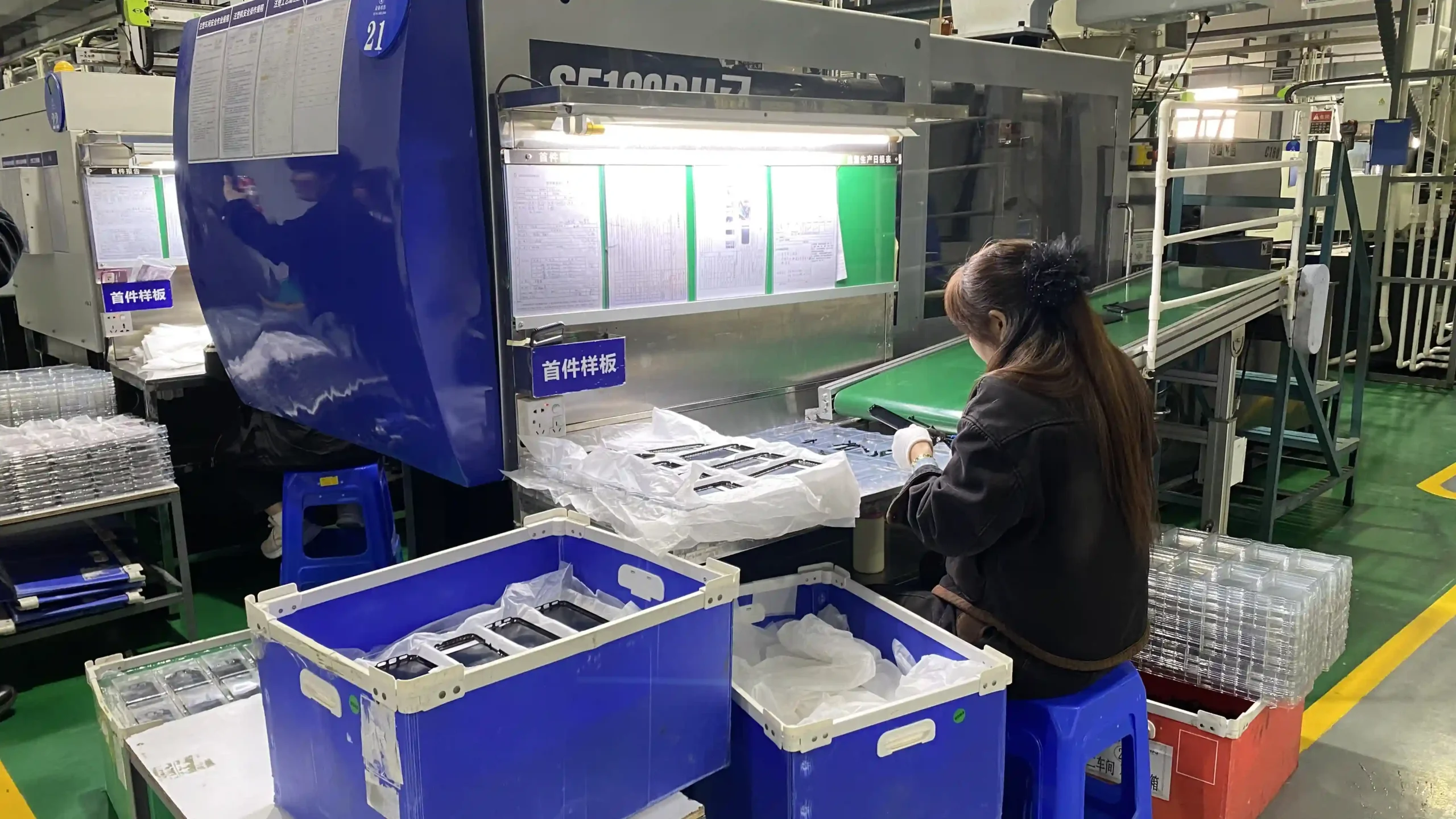
For transparent and high-gloss electronic components, YGcases reviews mold polishing, gate placement, venting, and surface quality before mass production. We also support UV coating, soft-touch finishing, NCVM plating, IMD/IML decoration, laser marking, and pad printing for custom electronic housings.
ABS vs PC Cost: Is Polycarbonate Worth the Extra Cost?
ABS is generally the more economical option in both resin purchasing and injection molding.
PC usually requires stricter material drying, higher processing temperatures, and tighter process control. These requirements can increase energy use, production difficulty, and the risk of cosmetic defects when the process is not properly managed.
However, an ABS vs PC cost comparison should not stop at the raw resin price.
The total project cost may also include:
- Required wall thickness
- Material drying
- Molding temperature
- Cycle time
- Scrap rate
- Painting or coating
- Assembly method
- Drop-test failures
- Warranty or replacement costs
For example, choosing PC for a stationary indoor housing may add unnecessary cost. But choosing ABS for a frequently dropped handheld product may create higher failure and replacement costs later.
The better material is usually the lowest-cost option that still satisfies the product’s actual performance requirements.
Which Material Is Better for Different Electronic Products?
The material choice becomes clearer when it is connected to a specific product structure and use environment.
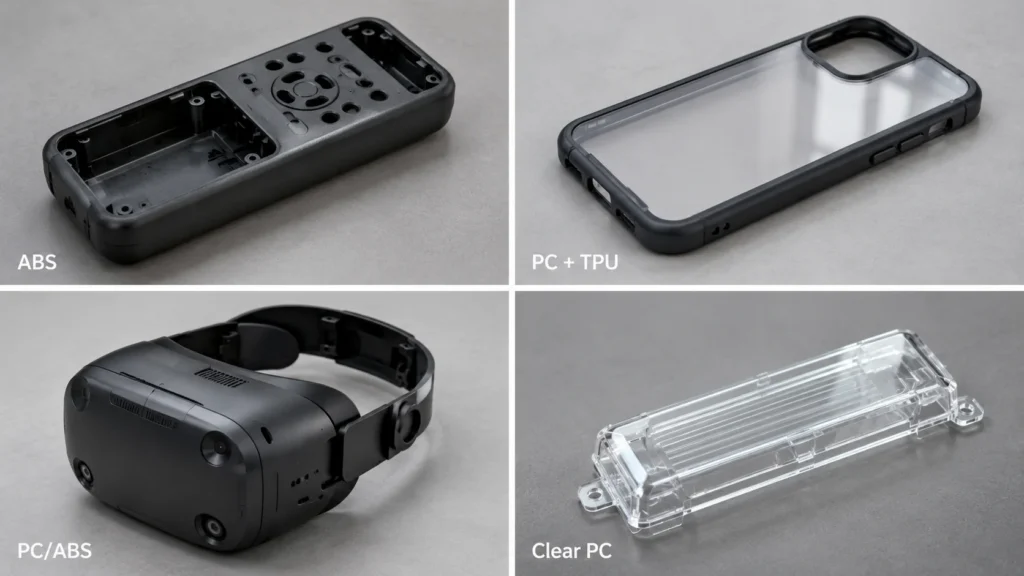
General Electronic Housings
ABS is often a practical starting point for remote control shells, charging cradles, desktop electronics, appliance covers and other indoor enclosures.
These products typically benefit from:
- Good dimensional stability
- A clean molded finish
- Easy color customization
- Moderate impact performance
- Controlled mass-production cost
When the housing is close to a heat source or needs to meet higher drop requirements, PC/ABS may be a better option.
Phone and Tablet Protective Cases
For protective cases, pure ABS is rarely the only material under consideration.
A common protective structure may include:
- A rigid PC back or inner shell for structural support
- A TPU edge or bumper for grip and shock absorption
- Magnets, metal camera rings or decorative inserts
Depending on the product design, these components can be produced through separate molding and assembly, overmolding, or 2K injection molding.
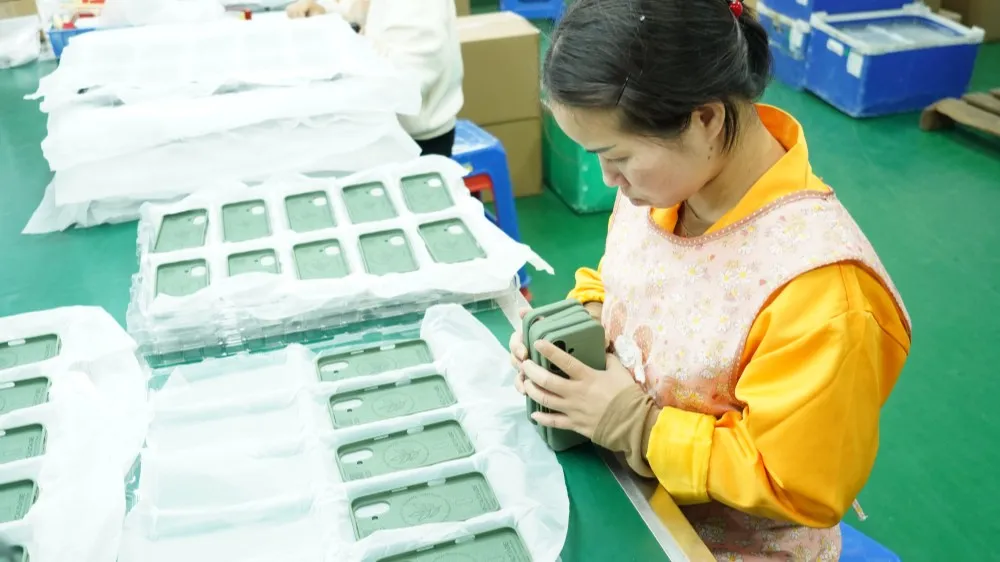
YGcases supports standard injection molding, 2K molding, overmolding, and insert molding for phone cases, tablet cases, wearable accessories, and other electronic protection products.
This allows the material structure to be designed around the required balance of rigidity, shock absorption, appearance, and assembly efficiency.
Game Console and AR/VR Housings
Game console covers and AR/VR exterior housings often need to balance rigidity, heat resistance, surface appearance, assembly accuracy, and part size.
ABS may work well for decorative exterior panels with moderate heat and impact requirements.
PC/ABS may be considered when the housing needs better impact strength or heat resistance without moving entirely to pure PC.
These products may also contain:
- Large cosmetic surfaces
- Ventilation openings
- Snap-fits
- Screw bosses
- Thin walls
- Multiple assembly points
Material flow, warpage, sink marks and dimensional stability should therefore be reviewed carefully during DFM and mold design.
Transparent Components
For transparent windows, light covers or protective viewing areas, PC is usually the more suitable choice.
The specific grade should still be selected according to:
- Required transparency
- Impact performance
- UV exposure
- Flame rating
- Chemical contact
- Scratch-resistance expectations
Standard PC is not automatically suitable for every outdoor or chemical environment. The final resin grade and any required surface coating should be confirmed before tooling.
When Is PC/ABS Better Than Either Material Alone?
PC/ABS is an engineered blend of polycarbonate and ABS.
It is often considered when standard ABS does not provide enough impact or heat resistance, but pure PC would add more cost or processing difficulty than the application requires.
A suitable PC ABS material can provide a useful balance of:
- Impact resistance
- Heat resistance
- Surface appearance
- Colorability
- Dimensional stability
- Material flow
- Injection molding processability
PC/ABS is widely used in electrical, electronic, telecommunications, and automotive housings. Different grades are available for high flow, flame resistance, low-temperature impact and cosmetic exterior surfaces.
It may be suitable for:
- Handheld electronic housings
- Smart device enclosures
- Battery housings
- Network equipment covers
- Gaming device housings
- Thin-wall consumer electronics components
PC/ABS is normally opaque, so it is not a replacement for transparent polycarbonate.
How YG Supports Material Selection
Material selection should be confirmed before tooling because ABS, PC, and PC/ABS may require different wall thicknesses, gate designs, and molding conditions.
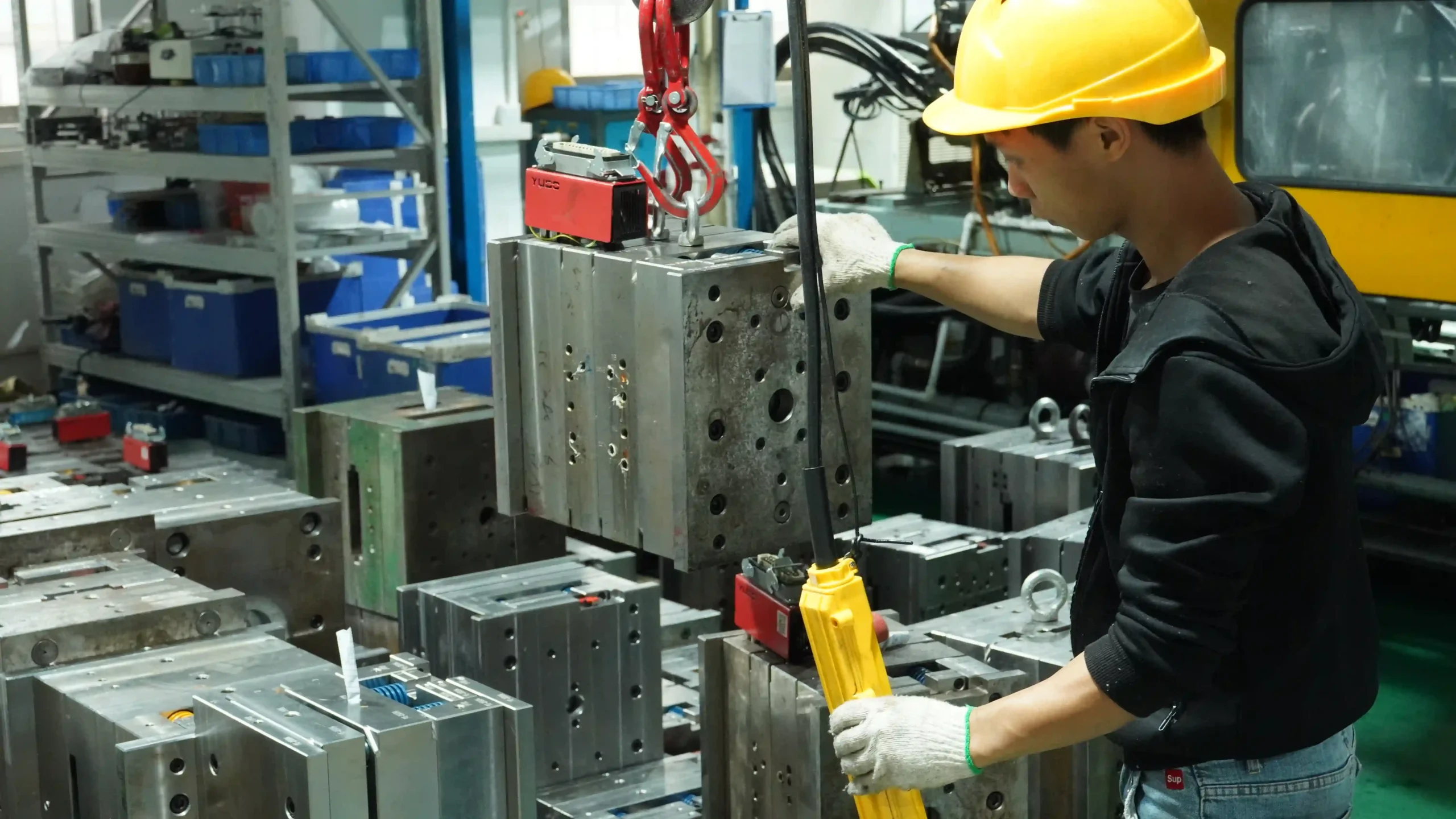
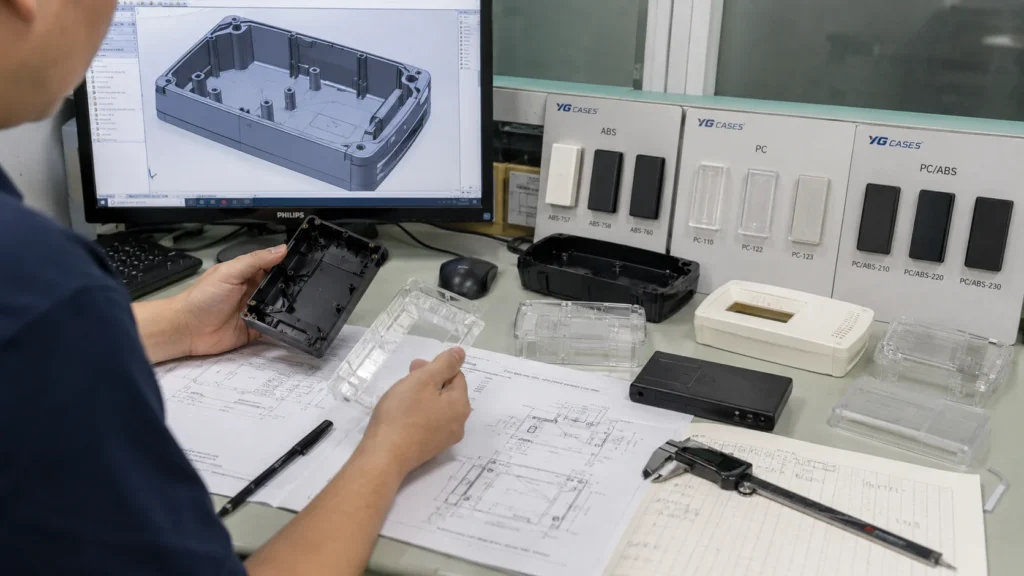
YG reviews the product structure, operating environment, surface requirements, and target cost before recommending a suitable resin grade. We can also support DFM analysis, prototyping, mold development, injection molding, and sample validation for custom consumer electronics housings and protective cases.
With over 30 years of experience in mold making and injection molding, including more than a decade in phone case manufacturing, we help customers reduce material and tooling risks before mass production.
Which Is Better, ABS or PC?
Neither material is universally better.
Choose ABS when the product needs:
- An attractive opaque finish
- Reliable injection molding
- Easy color and surface customization
- Moderate impact resistance
- Controlled production cost
Choose PC when the product needs:
- Higher impact resistance
- Better heat performance
- Transparency or light transmission
- Greater toughness
- A suitable high-performance or certified resin grade
Choose PC/ABS when the product needs:
- More heat and impact resistance than standard ABS
- Better moldability than many pure PC grades
- A strong cosmetic surface
- A balance of performance and cost
- A material suitable for demanding electronic housings
The final decision should be based on the exact resin grade, product structure, and validation results.
FAQ
Is ABS Stronger Than Polycarbonate?
Generally, polycarbonate provides higher impact resistance than standard ABS. However, actual performance also depends on the resin grade, wall thickness, part geometry, operating temperature, and molding quality.
Is ABS Harder Than PC?
Hardness, stiffness, and toughness are different properties. ABS may provide a more rigid feel and a cosmetic surface that hides minor scratches well, while PC is generally tougher and less likely to fracture under strong impact.
Is PC More Expensive Than ABS?
PC is usually more expensive than ABS in both resin cost and processing requirements. The final cost comparison should also include drying, cycle time, scrap, surface treatment, assembly, and product failure risk.
Can ABS and PC Be Used Together?
Yes. They are commercially available as engineered PC/ABS blends. Manufacturers should select a qualified PC/ABS resin grade rather than simply mixing standard ABS and PC pellets during production.
Final Thoughts
An ABS vs polycarbonate decision should begin with the finished product—not with a generic list of material properties.
For an indoor cosmetic housing, ABS may provide the best balance of appearance, moldability, and cost. For a transparent or high-impact component, PC may be necessary. For many demanding electronic enclosures, PC/ABS provides a practical middle ground between performance and production efficiency.
YGcases supports consumer electronics brands with material evaluation, DFM, mold making, injection molding, surface finishing, and assembly. Send us your product drawings, operating requirements, finish specifications, and estimated order volume, and our engineering team can review a suitable material and manufacturing approach before tooling begins.