Qi2 vs MagSafe is a common question because both use magnets to improve wireless charging alignment.
They look similar in daily use, but they are not the same standard.
MagSafe was built around Apple’s iPhone and magnetic accessory ecosystem.
Qi2 is a newer wireless charging standard from the Wireless Power Consortium, designed to bring magnetic alignment to a wider range of devices and accessories.
The real difference is not only charging speed.
Phone compatibility, charger support, magnetic strength, case thickness, and accessory design can all affect the final charging experience.
This guide compares both standards in simple terms.
It also explains how phone cases can affect charging stability, magnetic hold, and real-world accessory use.
Qi2 vs MagSafe: Quick Comparison
Table of Contents
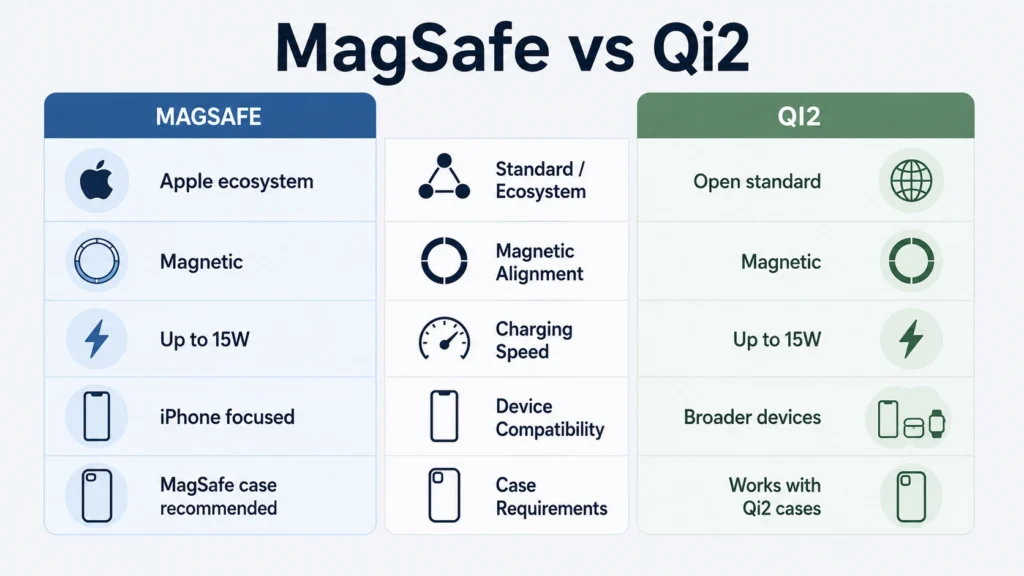
ToggleThe fastest way to compare Qi2 vs MagSafe is to look at the ecosystem behind each one.
MagSafe is closely tied to Apple devices and Apple-style magnetic accessories. Qi2 is designed as a broader wireless charging standard.
In daily use, the result depends on the full setup.
The phone, charger, power output, certification, and case design all decide whether magnetic wireless charging works as expected.
| Comparison Point | MagSafe | Qi2 |
|---|---|---|
| Standard / Ecosystem | Apple magnetic charging system | Open wireless charging standard from WPC |
| Magnetic alignment | Uses Apple’s MagSafe magnet layout | Uses magnetic alignment under the Qi2 standard |
| Charging speed | Depends on iPhone model, charger, and certification | Depends on device, charger, and Qi2 support |
| Device compatibility | Mainly built around iPhone | Designed for wider device compatibility |
| Case requirements | Works best with a MagSafe-compatible case | Often needs a Qi2-compatible or magnetic phone case |
| Best for | iPhone users and Apple accessory setups | Cross-platform users and future magnetic accessories |
MagSafe is still more established for iPhone users.
It has a larger accessory ecosystem and more familiar product labels.
Qi2 has a different value.
It gives device makers and accessory brands a more open path to magnetic wireless charging beyond Apple’s ecosystem.
What Are MagSafe and Qi2?
MagSafe and Qi2 both improve wireless charging through magnet-based positioning.
The difference is where they come from, which devices they support, and how they fit into the accessory market.
What Is MagSafe?
MagSafe is Apple’s magnetic charging and accessory system for iPhone.
Apple introduced it with the iPhone 12 series, using built-in magnets to help the phone align with supported wireless chargers.
MagSafe is more than wireless charging.
It supports a full accessory ecosystem, including magnetic phone cases, wallets, stands, car mounts, battery packs, and desk chargers.
A regular phone case may still allow wireless charging, especially if it is thin.
But it can reduce magnetic strength or make the phone harder to align with MagSafe accessories.
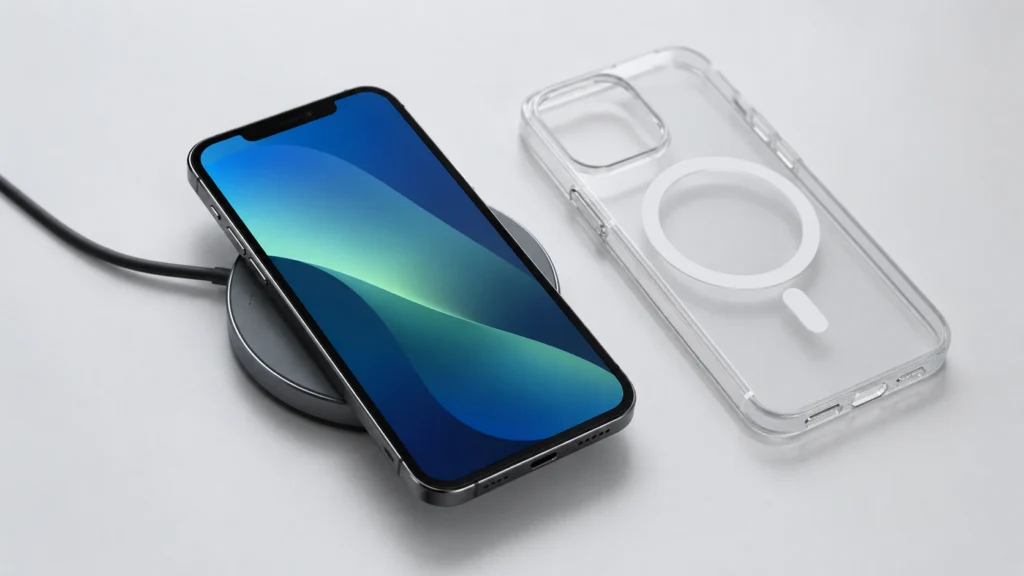
That is why many MagSafe-compatible cases include a built-in magnet ring. Clear magnetic cases are one of the most common formats used in the current accessory market. The ring helps the case connect more securely with chargers and magnetic accessories.
What Is Qi2 Wireless Charging?
Qi2 wireless charging is the newer standard in the Qi wireless charging family.
It was developed by the Wireless Power Consortium to improve alignment between the phone and the charger.
The key change is magnetic alignment.
Instead of relying only on manual placement, Qi2 helps the device sit in a more accurate charging position.
This can reduce common wireless charging issues.
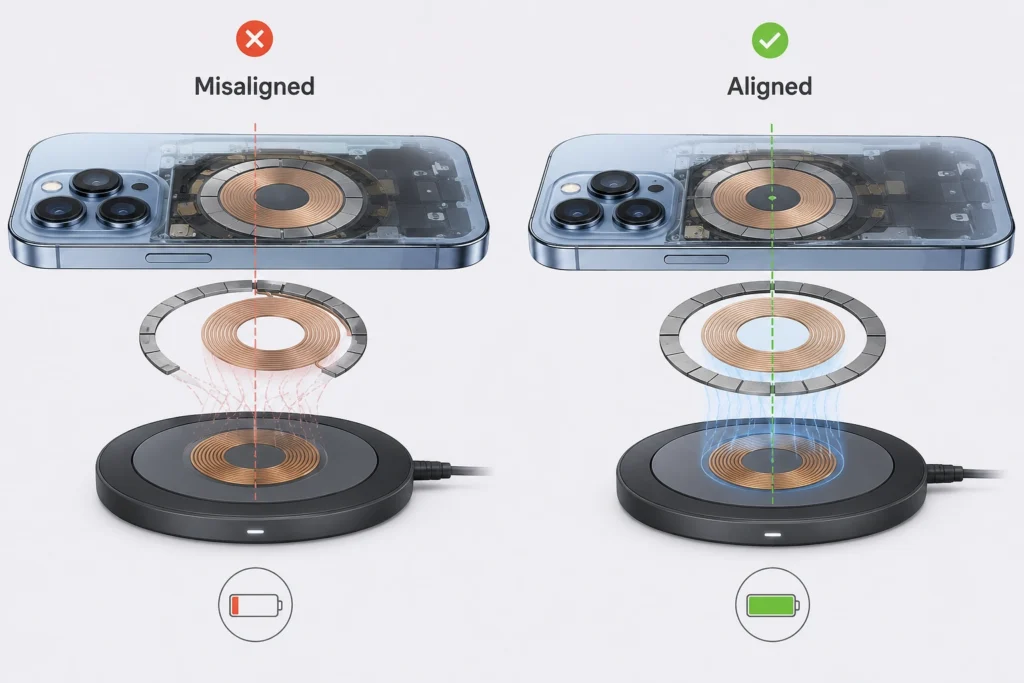
Poor alignment may cause slower charging, more heat, or unstable contact, especially when the phone is used with a case.
Qi2 brings a MagSafe-like charging experience into a more open standard.
Most Qi2 products focus on magnetic alignment and 15W wireless charging, while higher-power versions are also being developed.
Qi vs Qi2 vs MagSafe: Key Differences
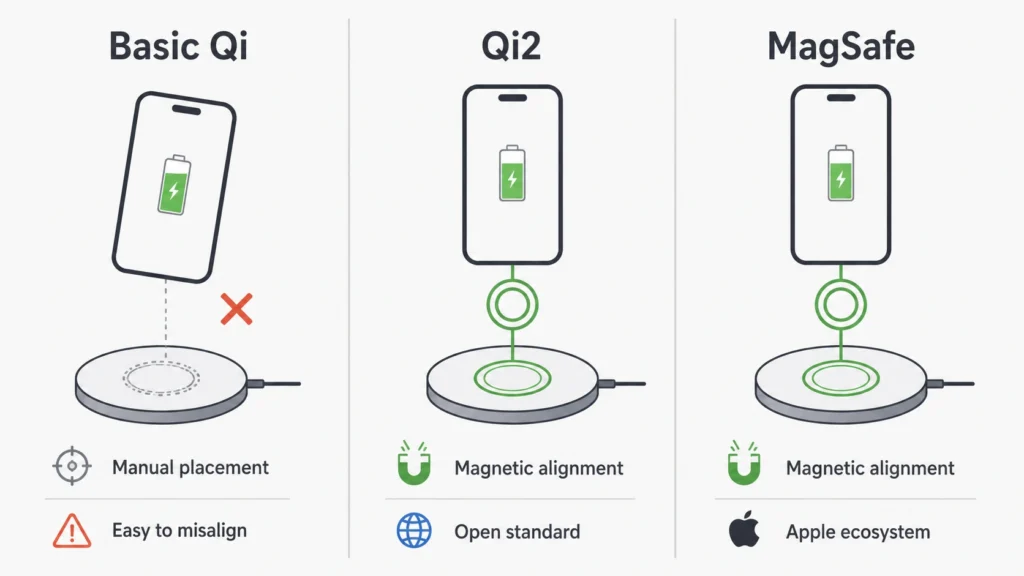
Basic Qi, Qi2, and MagSafe all support wireless charging.
The real differences are alignment method, charging behavior, accessory compatibility, and case sensitivity.
| Feature | Basic Qi | Qi2 | MagSafe |
|---|---|---|---|
| Alignment method | Manual placement | Magnetic alignment | Magnetic alignment |
| Typical charging experience | Easier to misalign | More stable positioning | Stable positioning on supported iPhones |
| Charging speed | Depends heavily on device and charger | Often designed around 15W support | Depends on iPhone model, charger, and certification |
| Accessory ecosystem | Charger-focused | Growing magnetic accessory ecosystem | Mature Apple-focused accessory ecosystem |
| Case impact | Thick cases may reduce efficiency | Case design can affect magnetic alignment | Works best with MagSafe-compatible cases |
Charging Speed and Alignment
Charging speed is not decided by the charger alone.
The phone, charging protocol, power adapter, certification, temperature control, and phone case can all affect the final result.
Basic Qi charging relies more on manual placement.
If the phone is slightly off-center, charging may still start, but efficiency can drop and heat may increase.
Qi2 and MagSafe reduce this problem with magnets.
The phone sits closer to the correct charging position, which can make wireless charging more stable in daily use.
This is why some chargers do not reach the advertised speed.
The charger may support fast wireless charging, but the phone may not support that mode, the power adapter may be weak, or the case may reduce alignment quality.
MagSafe vs Qi2 charging is not only about wattage.
A well-aligned 15W setup can feel more reliable than a higher-claimed charger with heat, weak magnets, or poor case fit.
iPhone and Android Compatibility
Qi2 vs MagSafe for iPhone can feel confusing because many products now show both labels.
You may see MagSafe, Qi2, and “magnetic compatible” on chargers, cases, power banks, and stands.
For iPhone, MagSafe remains closely tied to Apple’s accessory ecosystem.
Qi2 can also work with supported iPhones, but actual charging speed still depends on the phone model, charger, power adapter, and certification.
Android compatibility is developing in a different way.
Some newer Android devices may support Qi2 directly, while others may need a magnetic phone case to create a similar snap-on charging experience.
Multi-device users may find Qi2 more flexible over time.
For homes, offices, and retail accessory lines that involve both iPhone and Android users, Qi2 can help support a wider device mix.
Do Phone Cases Affect Qi2 or MagSafe Charging?
A phone case can affect Qi2 and MagSafe charging, especially when magnets are involved.
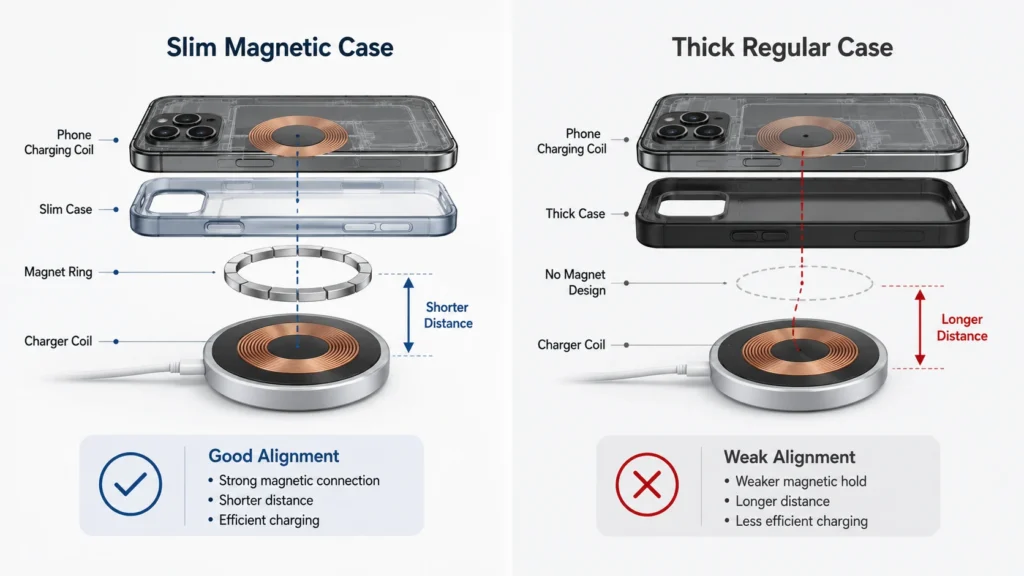
A thin case may still allow basic wireless charging, but it may not provide the same magnetic hold as a proper magnetic phone case.
Common Case-Related Problems
The most common problems are slow charging, extra heat, weak attachment, and poor alignment.
The phone may slide on the charger or fail to stay secure on a stand, car mount, wallet, or power bank.
Case thickness is one of the main factors.
A thicker protective case creates more distance between the phone and the charger, which can weaken magnetic attachment and reduce charging efficiency.
Magnet strength and placement also matter.
If the magnet ring is weak or slightly off-center, the phone may attach at the wrong angle or lose contact during use.
Rugged cases, hybrid cases, and multi-layer cases need more careful design.
Their thicker structures can reduce magnetic pull, so the charging area and magnet layout need tighter control.
Metal plates, decorative inserts, camera rings, and thick back panels can also affect charging performance.
A magnetic phone case needs to balance protection, appearance, magnetic alignment, and charging stability.
What Makes a Good Qi2 or MagSafe Compatible Phone Case?
A good Qi2 compatible phone case should support charging, magnetic attachment, and daily accessory use at the same time.
It should help the phone align correctly and hold securely with magnetic accessories.
The key points include accurate magnet ring placement and stable magnetic holding force.
The magnet ring should match the charging coil area, while the magnetic strength should work with the case thickness and structure.
Charging-area thickness needs careful control.
A thinner back area may help with charging efficiency, while the outer structure can still provide protection, grip, and drop resistance.
Real-device testing is also important during magnetic phone case manufacturing.
Testing should include different phone models, wireless chargers, magnetic wallets, stands, car mounts, and power banks.
Heat and charging stability should be checked during longer use.
A case may attach well, but poor alignment or thick materials can still lead to slower charging or more heat.
Product claims should be clear.
Brands and buyers should separate “MagSafe compatible,” “Qi2 compatible,” and certified claims where certification applies, so the final description matches the actual performance.
Qi2 vs MagSafe: Which Is Better?
There is no single winner in the Qi2 vs MagSafe comparison.
The better choice depends on the phone, charger, case, and accessories that need to work together.
For iPhone users, MagSafe is still convenient.
The ecosystem is mature, and there are many compatible cases, wallets, stands, mounts, and battery packs already available.
For cross-platform users, Qi2 may become more flexible.
Its open standard can make magnetic wireless charging easier to use across different brands and future devices.
For Android users, Qi2 may become more important as device support grows.
For devices without built-in magnets, a well-designed magnetic phone case can help create a more stable snap-on charging experience.
For phone case brands, the key is not only the standard name.
Magnet placement, case thickness, charging tests, heat control, and real accessory compatibility all affect the final user experience.
In simple terms, MagSafe is strong in the Apple ecosystem.
Qi2 has more room to grow across a wider device and accessory market.
FAQ
Can a MagSafe case work with a Qi2 charger?
In many cases, yes.
But the result depends on the phone, charger, case thickness, and magnet layout.
Why is my Qi2 or MagSafe charger charging slowly?
Slow charging may come from device limits, weak power output, poor alignment, case thickness, heat, or certification limits.
Is a magnetic phone case always necessary?
Not always.
Basic wireless charging may work with a thin regular case, but magnetic accessories usually need a Qi2-compatible phone case or MagSafe-compatible case.
Can thick protective cases support Qi2 or MagSafe charging?
Yes, if they are designed properly.
The case needs accurate magnet placement, controlled thickness, and real charging tests.
Conclution
Qi2 vs MagSafe is not just about choosing a charger.
The real experience depends on the device, charging standard, magnetic alignment, phone case design, and accessory compatibility.
MagSafe remains a mature choice for iPhone users.
Qi2 brings magnetic wireless charging into a more open standard, which makes it important for future cross-platform accessories. The same compatibility considerations are now being applied to eco-friendly phone case development.
For brands developing Qi2-compatible phone cases or MagSafe-compatible cases, early design checks can reduce production risks.
Magnet layout, device compatibility, accessory testing, and product claims should be confirmed before bulk production.
YGcases supports custom magnetic phone case development as a professional phone case manufacturer with in-house engineering, tooling, and production capabilities.
Contact us today to discuss your Qi2 or MagSafe-compatible phone case project and get a practical manufacturing solution for your brand.