Selecting the right custom phone case manufacturer is one of the most consequential sourcing decisions a brand can make. Get it right, and you gain a reliable production partner capable of delivering consistent quality, on-time shipments, and the design flexibility your customers expect. Get it wrong, and you face a cascade of expensive problems: elevated return rates, delayed launches, inconsistent colorways, non-compliant materials, and a damaged brand reputation that takes years to rebuild.
This guide is written specifically for phone case brand owners, wholesale buyers, DTC entrepreneurs, and retail purchasing managers in the US and EU who are evaluating their options across the phone case OEM factory landscape. Whether you’re launching a new line or scaling an existing brand, this checklist-driven framework will help you confidently navigate the key decision points—from supplier qualification to pilot order approval—when you choose a phone case manufacturer in China or Asia.
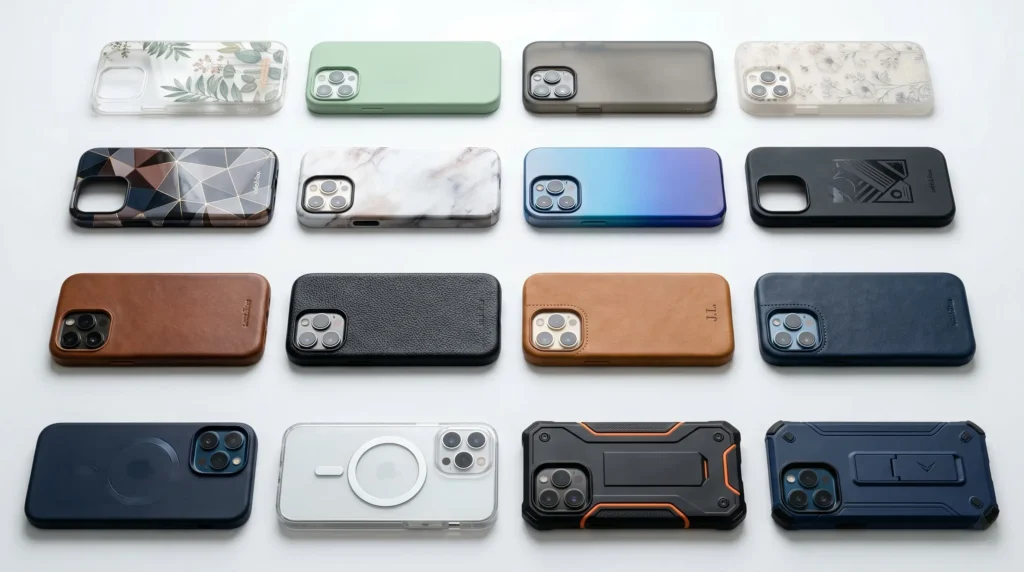
Why Choosing the Right Custom Phone Case Manufacturer Matters for Brand Growth
Table of Contents
ToggleFrom Product Quality to Brand Reputation
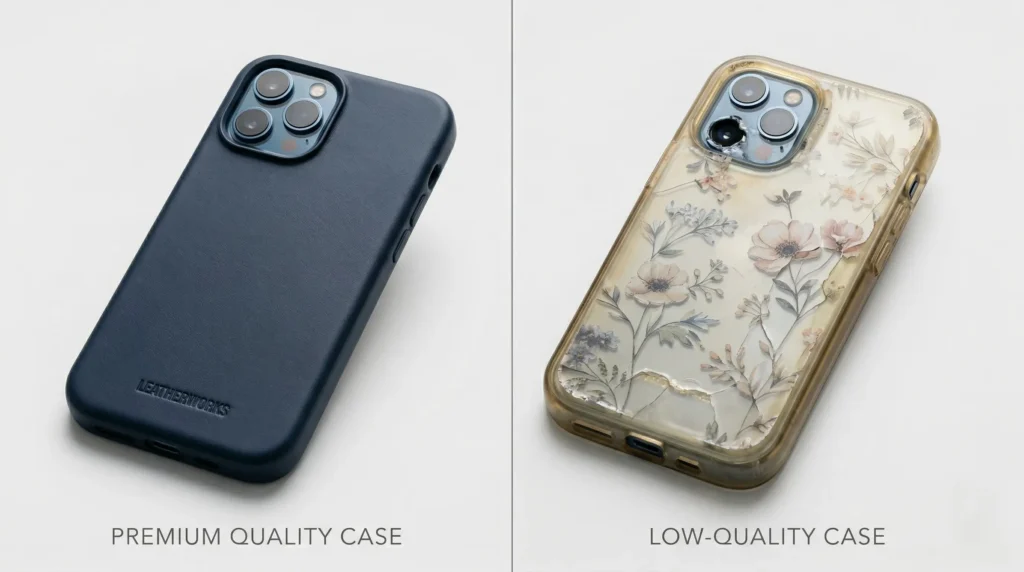
A phone case is not a commodity purchase for the end consumer—it is a daily-use accessory that represents your brand every time someone reaches for their phone. The tactile feel of a well-made TPU grip, the precision fit around a camera cutout, the UV resistance of a printed design—these details are invisible when done right and catastrophically visible when done wrong.
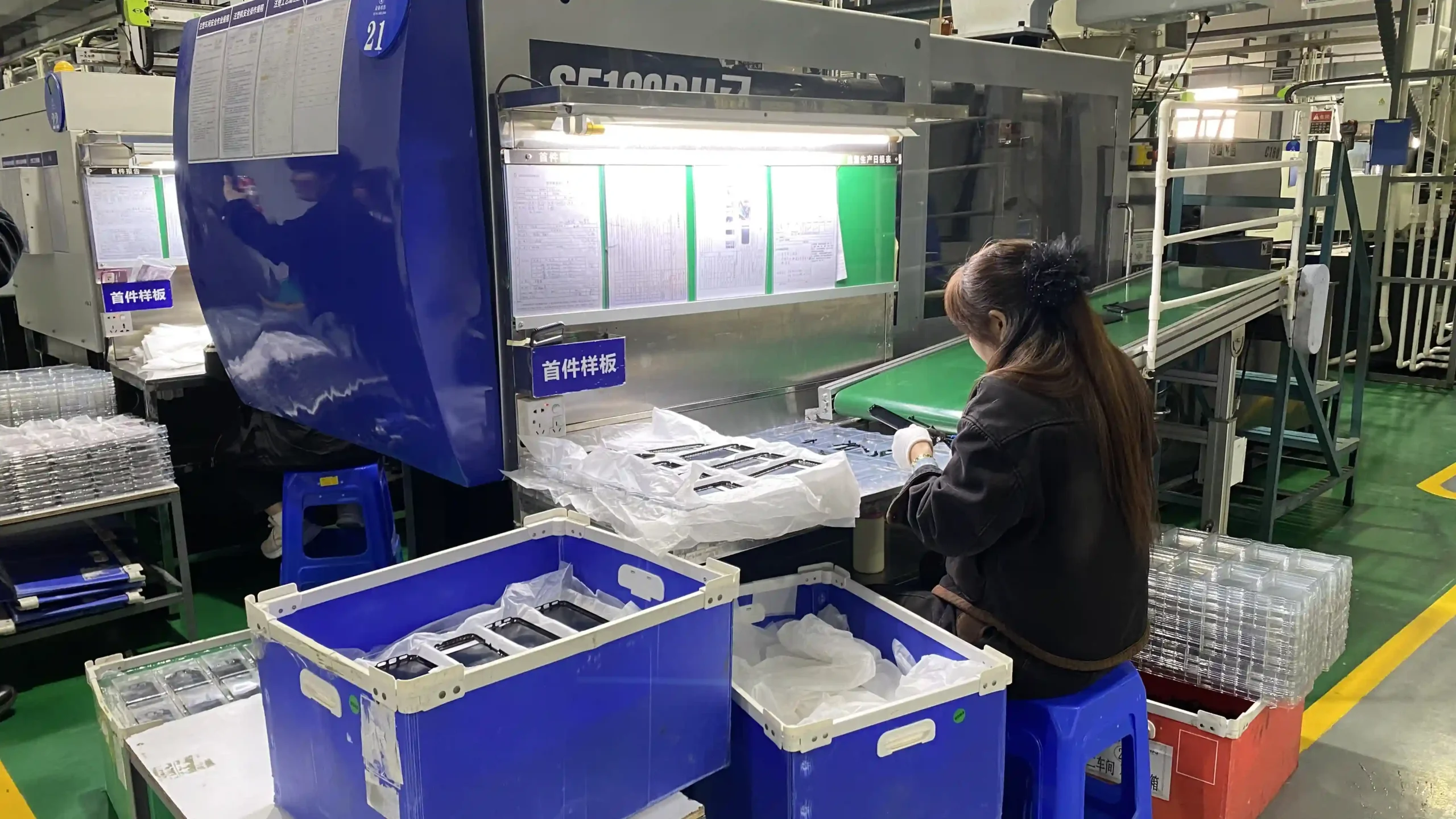
Your phone case supplier for brands is effectively a co-manufacturer of your brand perception. A factory with strong mold-making capabilities, tight injection tolerances (typically ±0.1mm for proper model fit), and stable pigment batching will consistently deliver cases that feel premium. A factory without these controls will ship products that vary in color between batches, gaps around ports, and yellow within months.
How the Wrong Supplier Increases Returns, Delays, and Margin Loss
Working with an underqualified supplier introduces multiple cost vectors that erode margin fast. Return rates of even 3–5% on a phone case line—driven by fit issues, print delamination, or discoloration—can wipe out the savings from a lower unit price entirely. Add in re-shipment costs, customer service load, and potential marketplace penalties on platforms like Amazon, and the financial impact multiplies quickly.
Production delays are equally damaging. A supplier that overpromises lead times, lacks dedicated production capacity, or has poor raw material sourcing may push a seasonal launch past its window—a loss that cannot be recovered.
Why US & EU Buyers Need a Sourcing-First Checklist
US and EU markets carry additional compliance obligations that many low-tier suppliers simply cannot meet—REACH, RoHS, California Prop 65, CPSC standards, and retail-ready packaging requirements. Without a structured evaluation process, buyers often discover these gaps only after placing a bulk order.
A systematic checklist approach ensures you qualify suppliers before committing capital, not after.
Phone Case OEM Factory vs ODM Phone Case Manufacturer vs Private Label: What Is the Difference?
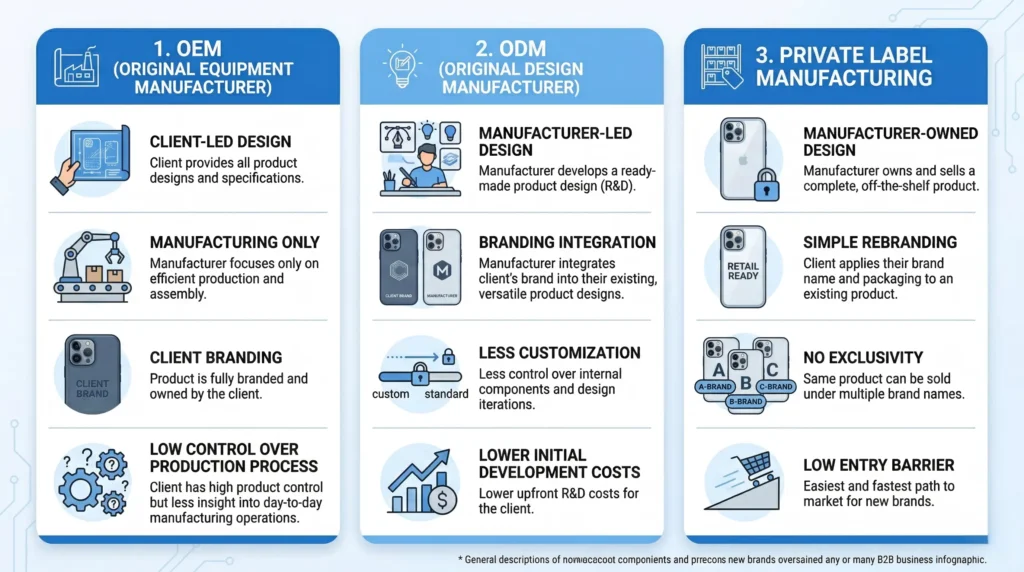
OEM, ODM, and Private Label Explained in B2B Terms
Understanding these production models is foundational to sourcing strategy:
- OEM (Original Equipment Manufacturer): You own the design, molds, and IP. The factory manufactures to your exact specifications. You control every variable—materials, finish, packaging, dimensions—but you also bear the tooling investment (molds typically cost $300–$1,500+, depending on complexity and cavity count).
- ODM (Original Design Manufacturer): The factory owns existing mold tooling and product designs. You license or customize an existing product with your branding, colorway, or packaging. Lower upfront cost, faster time to market, but less differentiation.
- Private Label: A simplified version of ODM where you apply your brand to a stock product with minimal modification. Suitable for fast market entry, but limited brand uniqueness.
Which Model Fits Startups, Growing Brands, and Wholesalers
For startups with limited capital, ODM or private label reduces tooling costs and sampling timelines significantly.
For growing brands seeking differentiation, a hybrid approach—using ODM for core SKUs while investing in OEM tooling for hero products—balances cost and brand equity.
For wholesalers supplying multiple retail accounts, ODM with exclusive colorways or packaging offers brand protection without full OEM investment.
When to Choose a Custom Phone Case Factory China / Asia Partner
China remains the dominant production hub for plastic and TPU phone cases due to its mature supply chain ecosystem—raw material suppliers, colorant manufacturers, packaging printers, and mold makers are all within hours of major production cities like Shenzhen, Dongguan, and Huizhou.
Vietnam and other Southeast Asian countries are emerging alternatives, particularly for buyers managing tariff exposure.
However, China’s depth of technical expertise, mold-making capability, and production flexibility remains unmatched for complex custom projects.
How to Choose Phone Case Manufacturer: A 10-Step OEM/ODM Checklist
1. Customization Depth: Logo, Texture, Color, Molding, Finishing
Evaluate what the factory can actually customize versus what they claim. True custom phone case manufacturers should be able to produce in-mold texture (IMD/IML), UV printing, hydro-dipping, electroplating, rubberized soft-touch coating, glitter encapsulation, and custom logo placement via pad printing or laser engraving. Ask for a material and finish capability sheet with physical samples—not just photos.
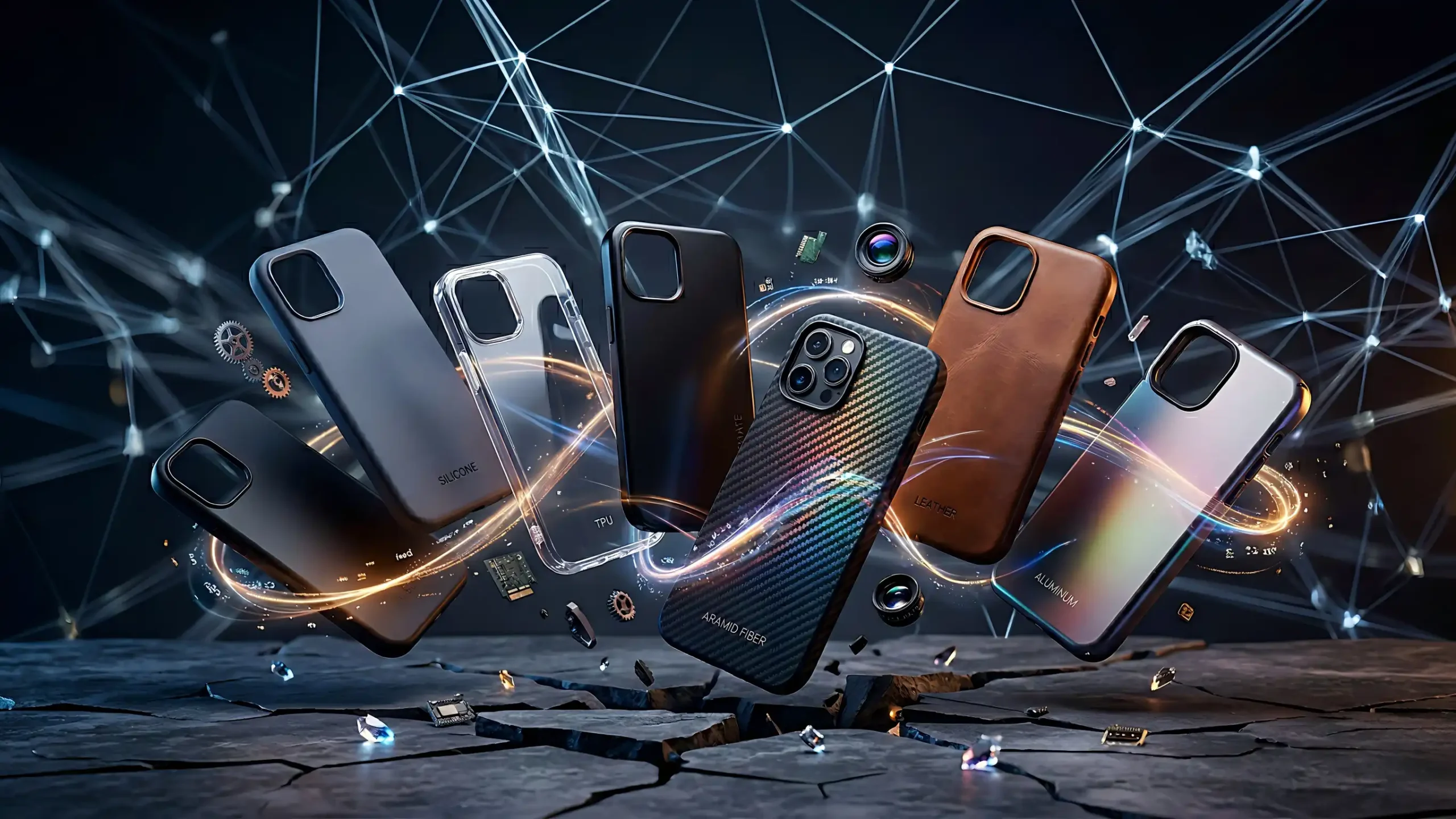
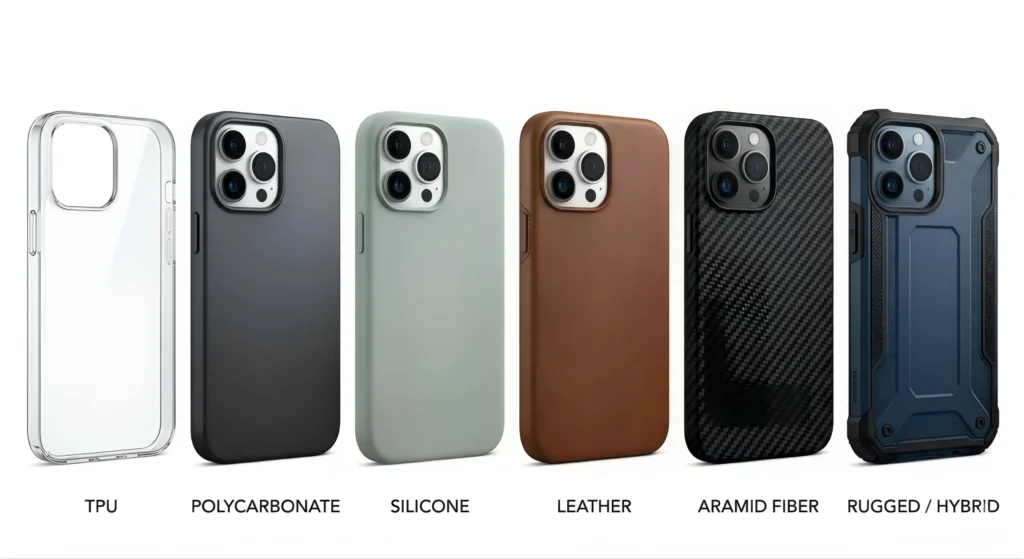
2. Material Options: TPU, PC, Silicone, Leather, Aramid Fiber, Eco Materials
A well-equipped phone case OEM factory works with the full material stack: TPU (shore hardness 85A–95A), polycarbonate, dual-layer PC+TPU composites, genuine and PU leather, aramid fiber (Kevlar-style), and increasingly, biodegradable or recycled materials for eco-conscious brands. Ask for material data sheets including hardness, tensile strength, and UV stability ratings.
3. Case Types and Compatibility: MagSafe, Slim, Rugged, Wallet Case
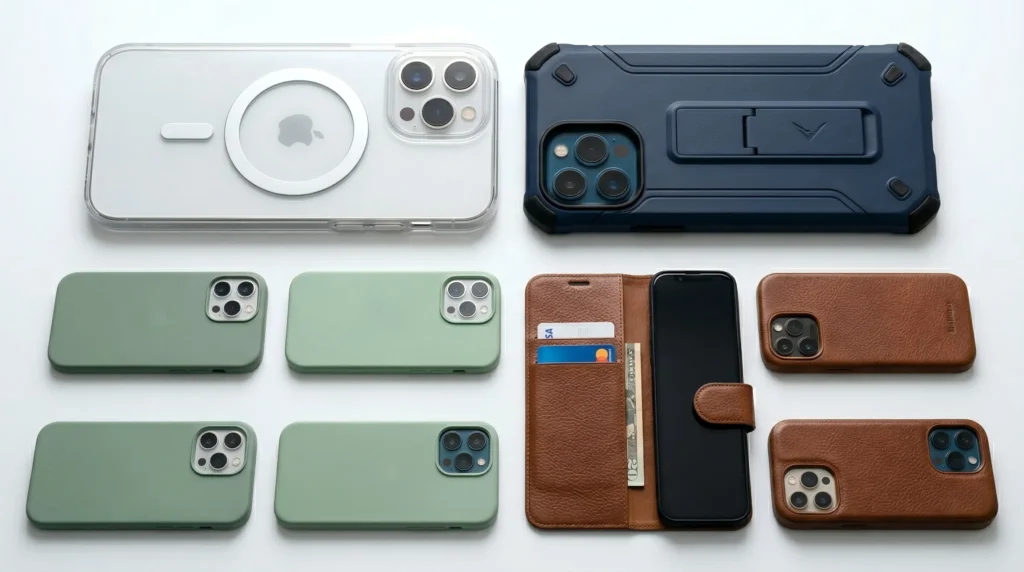
Confirm the factory’s experience with your target case categories. MagSafe-compatible cases require precise magnet array placement and N52 magnet sourcing—a detail many general factories fumble. Rugged cases demand dual-material co-injection or assembly processes. Wallet cases require secondary materials like card-slot fabric or RFID-blocking layers. Ask for model compatibility track records across the iPhone and Samsung flagship series.
4. MOQ and Scaling Strategy for New and Established Brands
Typical MOQ at a qualified custom phone case factory China partner ranges from 200–500 pieces per design/color for ODM and 500–1,000 pieces per SKU for OEM with new tooling. Be wary of factories with no minimum (signals stock reselling, not manufacturing) or extremely high MOQs that indicate inflexibility toward smaller brand buyers.
5. Sampling Process and Prototype Approval
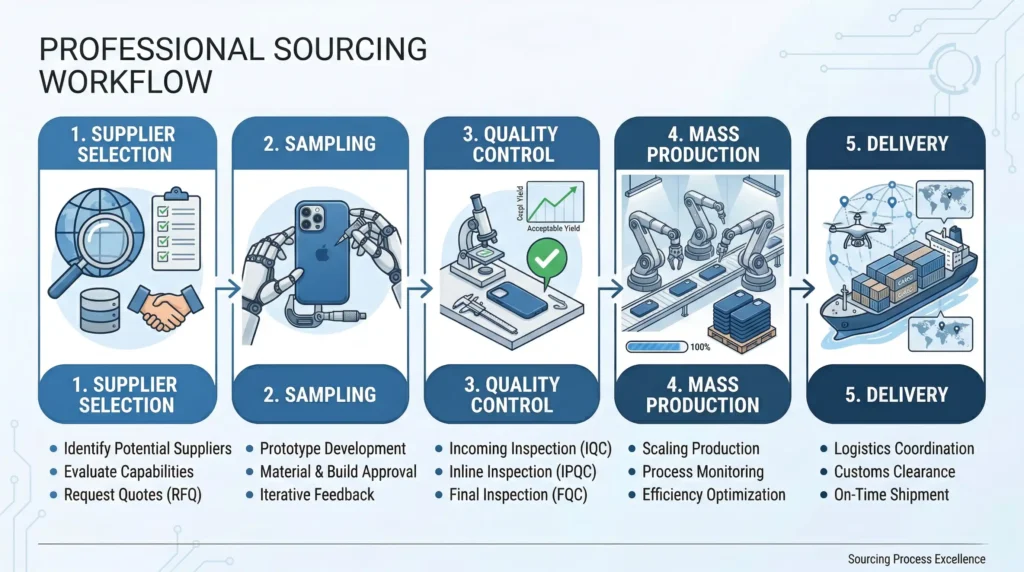
Request a clear sampling workflow: initial drawing confirmation → 3D model review → first physical sample → revision rounds → pre-production sample (PPS) approval. A professional manufacturer will typically deliver T1 samples within 10–15 business days of mold completion. Budget for 2–3 revision rounds before finalizing.
6. Quality Control System and Defect Tolerance
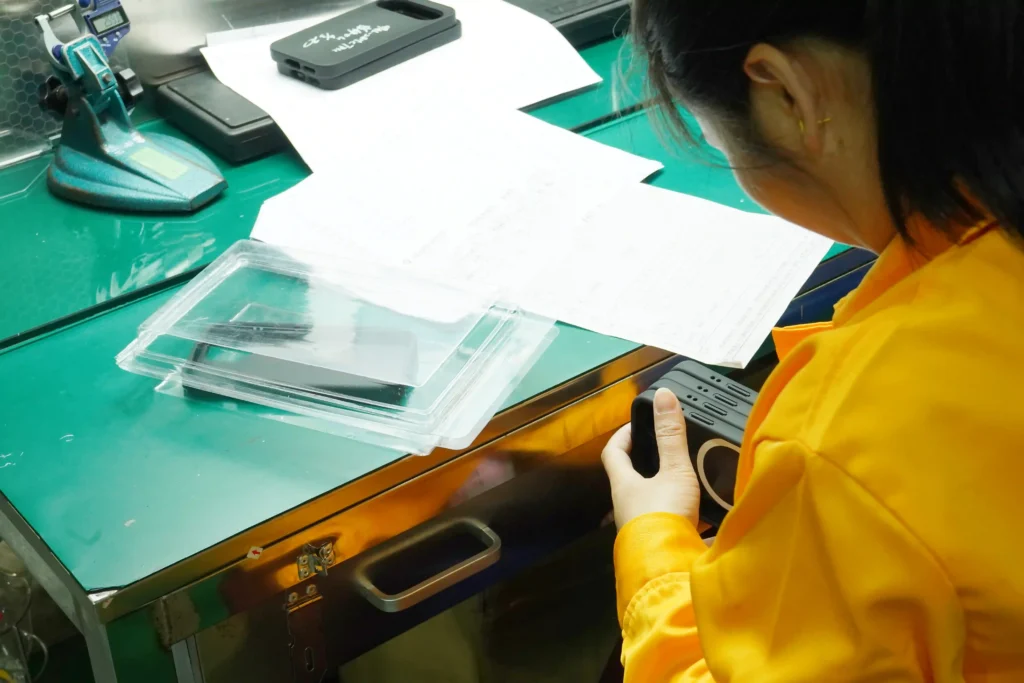
Ask for the factory’s AQL (Acceptance Quality Limit) standard. Reputable factories operate at AQL 2.5 or tighter for critical defects (dimensional tolerance, port alignment) and AQL 4.0 for minor cosmetic defects. Request their internal inspection checklist and ask whether they support third-party inspection access from firms like SGS, Bureau Veritas, or QIMA.
7. Production Capacity and Lead Time
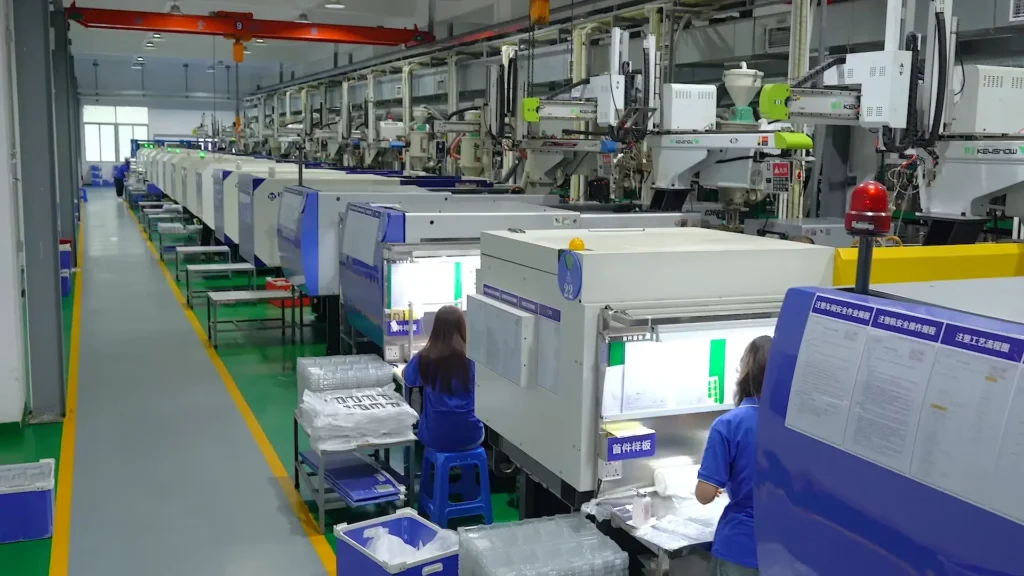
Standard mass production lead times run 25–40 days for established molds with confirmed materials and approved samples. New mold creation adds 15–20 days. Ask for actual machine capacity numbers—injection molding machines, assembly stations, and printing lines—to validate whether claimed timelines are realistic, especially during Q3 peak season.
8. Packaging, Barcode, Labeling, and Retail Readiness
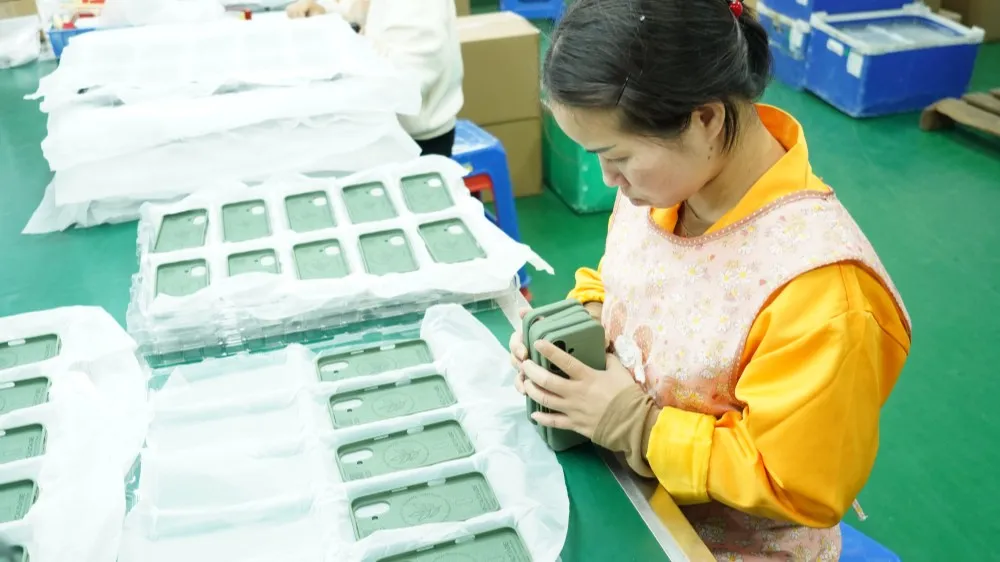
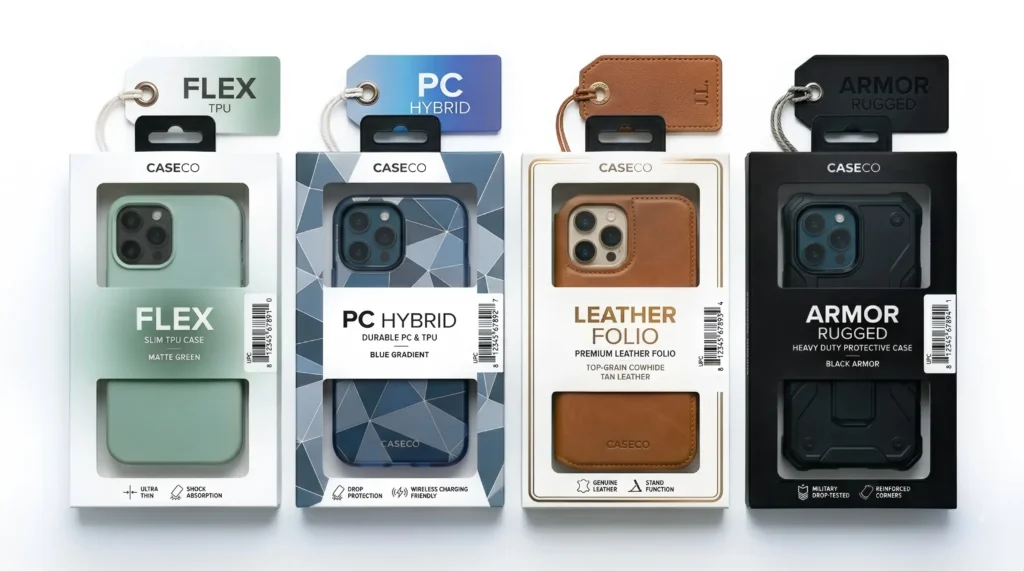
US and EU retail channels have strict packaging requirements. Confirm the factory can produce custom retail boxes with barcodes, hang tags, poly bag suffocation warning labels, country-of-origin labels, and compliance marks. Packaging artwork management and color accuracy (Delta-E ≤3 for brand colors) should be part of the production workflow, not an afterthought.
9. Communication, Project Management, and After-Sales Service
Evaluate responsiveness before you commit. A 24-hour response window, dedicated account managers, and structured project tracking (even simple milestone sheets) signal a professionally managed supplier. After-sales processes for batch defect resolution, replacement shipments, and RMA handling are equally critical for long-term partnerships.
10. Export Experience and Documentation Support
Your OEM phone case manufacturer should be experienced in generating the full export document set: commercial invoice, packing list, bill of lading, certificate of origin (Form E, GSP, or CO depending on destination), material compliance declarations, and test reports. Factories without this experience create customs delays and potential import holds.
What US & EU Buyers Should Check Before Placing an Order
Material Compliance and Testing Requirements
REACH (EU) restricts SVHCs including certain phthalates and heavy metals commonly found in low-grade TPU. California Prop 65 adds additional restrictions on lead, cadmium, and BPA. Request third-party test reports from accredited labs confirming compliance—and specify the test standard (EN71-3, IEC 62321, etc.) in your purchase order terms.
Certification and Quality System Review
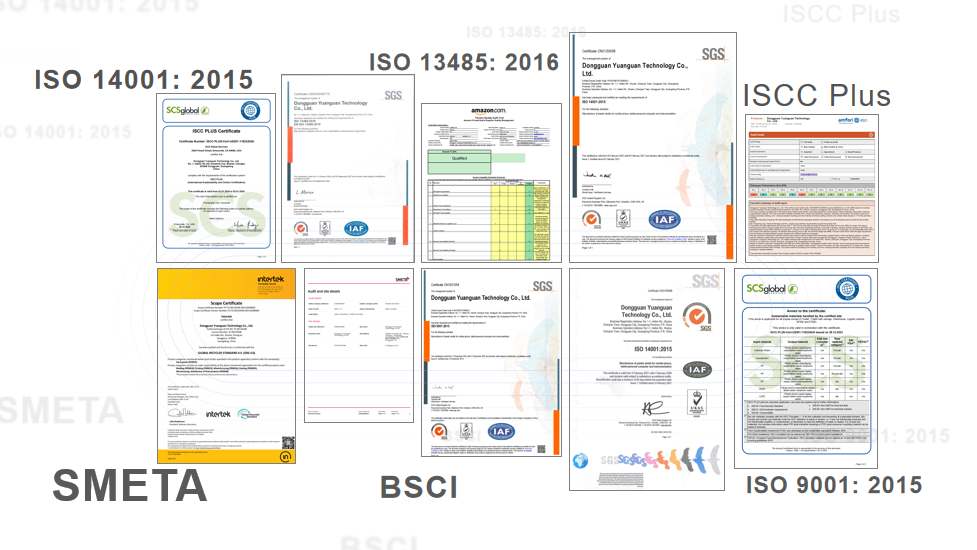
ISO 9001 certification is a baseline indicator of process discipline. For electronics accessories, BSCI or SEDEX audit records are increasingly required by EU retail chains. Request current certificates and verify authenticity directly with the issuing body.
IP Protection, NDA, and Design Ownership
Before sharing proprietary design files, require a signed NDA and a clear clause in the OEM agreement specifying that mold tooling paid for by the buyer is the buyer’s exclusive property. This prevents factories from producing identical products for competitors—a common risk in high-volume categories like phone cases.
Import Documents, Packaging Compliance, and Customs Readiness
Ensure packaging meets destination market requirements: CE marking considerations for EU, FCC indications where relevant, and ASTM F963 awareness for children’s accessories. Mismatched or missing labeling is among the top causes of US Customs holds on consumer accessories shipments.
Risk Control for Color Consistency, Print Durability, and Model Fit
Establish Pantone references for brand colors and require color standards with Delta-E tolerance documentation. For printed designs, specify adhesion test standards (cross-cut tape test per ASTM D3359) and UV exposure resistance. Model fit should be validated against physical devices, not just CAD drawings, before mass production approval.
How to Evaluate a Phone Case Supplier for Brands
Questions to Ask During RFQ
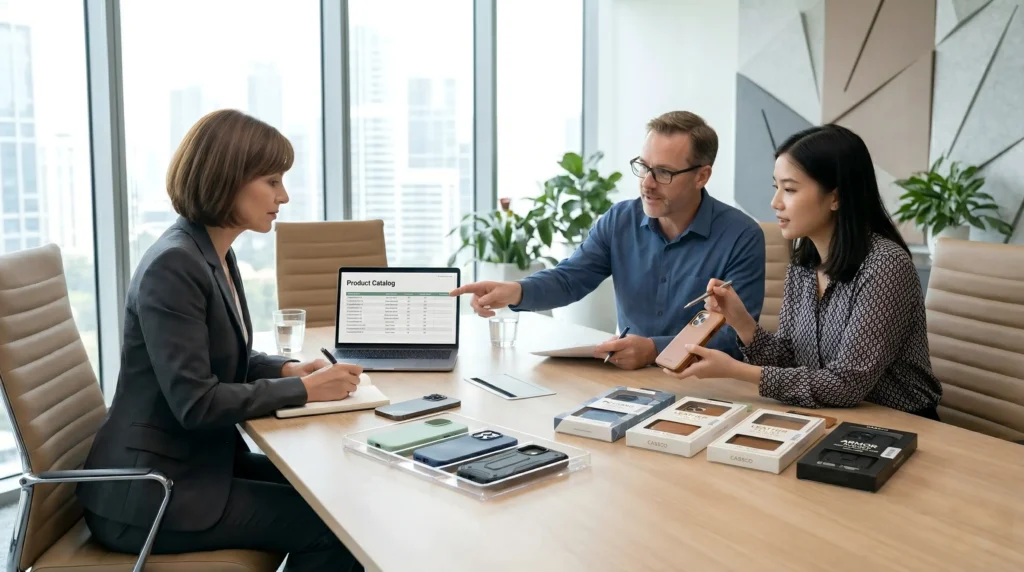
Ask specifically: What is your in-house mold-making capability? Who are your TPU and PC resin suppliers? What is your injection machine tonnage range? How do you handle color batch consistency across reorders? How many active brand clients do you currently serve in the US or EU? These questions quickly separate genuine manufacturers from trading companies misrepresenting themselves as factories.
How to Compare Quotations Beyond Unit Price
Unit price is the only variable. Compare total landed cost (unit price + tooling + packaging + freight + tariff), sampling costs, revision policy, tooling ownership terms, warranty on defective goods, and reorder pricing stability. A factory quoting $0.15 less per unit but charging for every revision round and offering no defect warranty may cost significantly more over a production lifecycle.
Factory Audit Checklist for Brands and Distributors
Key audit items include: production line capacity verification, raw material storage and incoming QC process, injection molding machine maintenance records, UV printing or pad printing equipment condition, worker training documentation, and waste management compliance. Virtual factory tours with live video are now a widely accepted pre-audit tool.
Sample Scorecard: What to Approve Before Mass Production
Build a formal pre-production sample scorecard evaluating: dimensional accuracy (±0.1mm on critical cutouts), color match to Pantone standard, surface finish consistency, logo placement precision, material shore hardness, print adhesion, and packaging integrity. Only issue production authorization after all scorecard criteria are met with documented sign-off.
Choosing the Right Product Direction for Your Brand
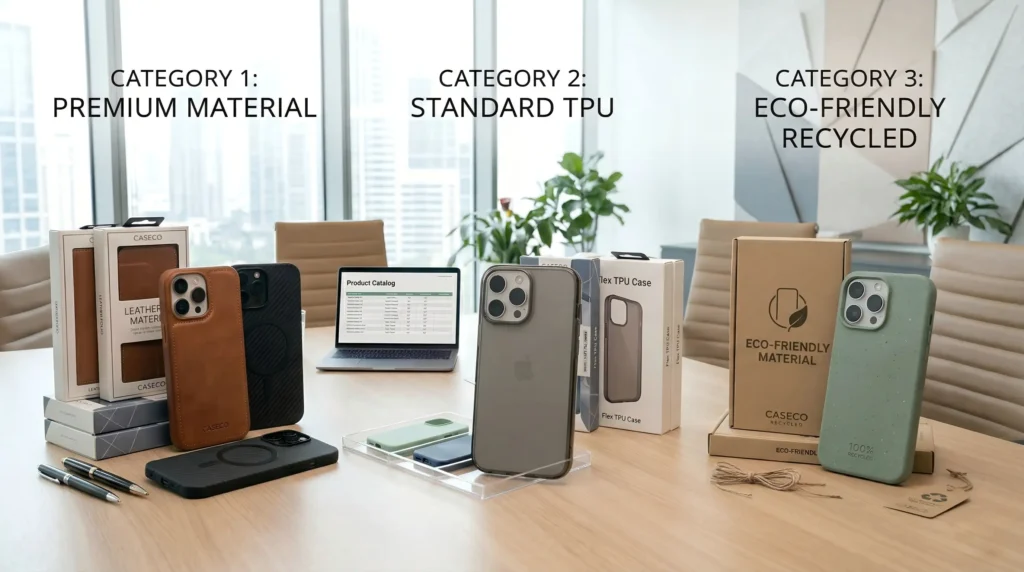
Best Materials for Premium, Budget, and Eco-Friendly Positioning
For premium positioning, aramid fiber, genuine leather, and hard PC with electroplated accents command higher perceived value and support $40–$80+ retail price points. For budget-friendly lines, standard TPU or dual-layer TPU+PC delivers strong protection at accessible cost. For eco-conscious brands, biodegradable TPU (plant-based or PBAT-blended), recycled PC, and FSC-certified packaging create a compelling sustainability narrative.
Which Styles Sell Best for DTC, Retail, and Wholesale Channels
DTC channels favor storytelling-driven designs: unique textures, limited-edition colorways, and premium finishing that photographs well. Retail channels prioritize planogram efficiency—slim cases, MagSafe variants, and wallet cases in clean retail-ready packaging. Wholesale buyers generally prefer proven bestsellers in high-compatibility SKUs (latest iPhone and Samsung Galaxy flagship models).
How to Balance Protection, Design, and Perceived Value
The strongest brands in the phone case category deliver all three. Work with your manufacturer’s design team to evaluate whether your case achieves MIL-STD-810G drop test performance, communicates that protection visually through design cues (raised bezels, reinforced corners), and carries finishing that justifies margin—all while staying within your target landed cost.
Red Flags When Choosing a Custom Phone Case Factory China / Asia
Vague MOQ or Unstable Pricing
MOQ figures that shift between conversations, or unit prices that fluctuate without explained material cost changes, signal either a trading company without production control or a factory with unstable procurement practices.
No Sample Control or Inconsistent Quality
If T1 samples arrive without a corresponding inspection report, or if two units from the same sample batch show visible color variation, this is a direct preview of what your mass production will look like.
Weak Communication and Slow Response
A supplier that takes 3–5 days to respond to a basic technical question will take proportionally longer to resolve production issues. Communication quality is a production risk, not just a service inconvenience.
No Clear Compliance, Packaging, or IP Process
If the factory cannot immediately provide a REACH test report template, describe their NDA process, or explain how they handle packaging artwork sign-off, they are not set up to serve US or EU brand buyers professionally.
Overpromising Lead Times Without Capacity Proof
“We can deliver in 15 days” without a capacity schedule, confirmed mold availability, and raw material stock is a negotiating tactic, not a production commitment. Always request a formal production timeline tied to a confirmed order date.
Suggested Sourcing Workflow for Brand Buyers
Step 1: Shortlist Qualified Suppliers
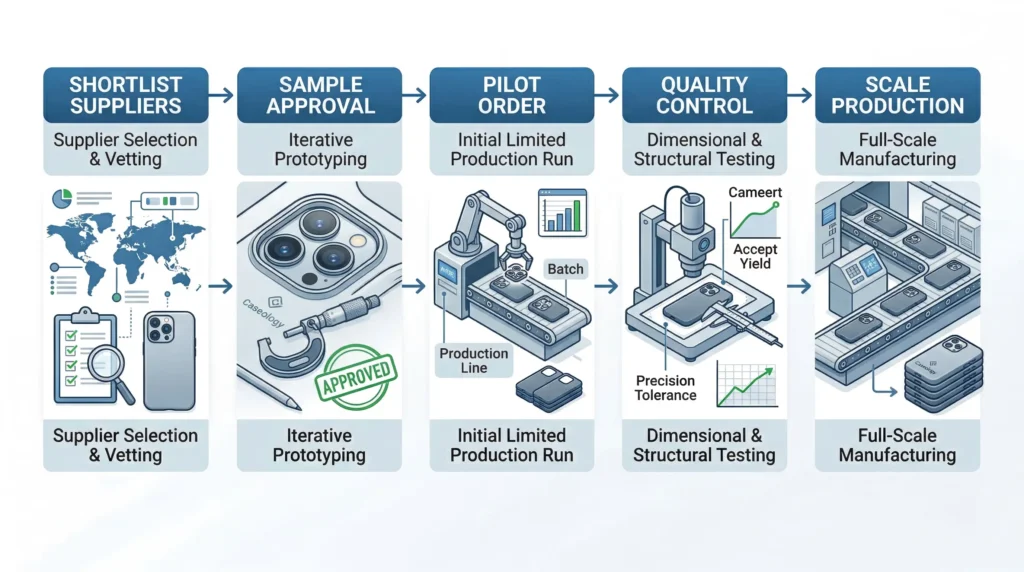
Use Alibaba Gold Supplier verification, trade show presence (Global Sources, Canton Fair), and direct referrals to build an initial list of 5–8 candidates. Filter immediately by export experience, material certifications, and US/EU client references.
Step 2: Request Samples and Specs
Send a standardized RFQ with your design brief, target materials, case type, compatibility requirements, and packaging spec. Request samples with full material data sheets. Evaluate against your pre-production scorecard.
Step 3: Run a Pilot Order
Place a limited pilot order (typically 200–500 units) with your top one or two suppliers. This validates production quality, communication reliability, lead time accuracy, and packaging execution under real production conditions.
Step 4: Approve Packaging and QC Standard
Before scaling, formally approve all packaging artwork, barcode placement, compliance labels, and QC inspection standards in writing. Create a documented standard that governs all future reorders.
Step 5: Scale to Repeat Production
Once a supplier has proven performance across one full production cycle, scale confidently. Establish reorder pricing terms, lead time commitments, and priority scheduling agreements for peak season planning.
FAQ
How do I choose the right custom phone case manufacturer for my brand?
Start with the 10-step checklist above. Prioritize factories with documented material compliance, mold-making capabilities, proven US/EU export experience, and strong communication practices. Always validate with samples before committing to mass production.
What is the difference between OEM and ODM for phone cases?
OEM means you own the design and tooling; the factory manufactures to your specifications. ODM means the factory provides existing designs or tooling that you customize with your branding. OEM offers more differentiation; ODM is faster and lower-cost to enter.
What MOQ should I expect from a phone case OEM factory?
For ODM orders, MOQs typically start at 200–500 pieces per SKU. For OEM with new mold tooling, expect 500–1,000 pieces minimum. Factories with extremely low MOQs (under 50 pieces) are usually resellers, not manufacturers.
How do I verify a phone case supplier for brands is reliable?
Request ISO 9001 and any relevant audit certificates, ask for verifiable US or EU brand references, conduct a virtual or in-person factory audit, and place a pilot order before scaling. Third-party inspection on the pilot order adds an additional verification layer.
How long does sampling and mass production usually take?
New mold creation takes 15–20 days. T1 samples are typically available 5–10 days after mold completion. Allow 2–3 rounds of revisions before PPS approval. Mass production runs 25–40 days from confirmed order and approved samples.
What should US & EU buyers check before importing custom phone cases from China or Asia?
Verify REACH and Prop 65 compliance via third-party test reports, confirm packaging labeling meets destination market requirements, validate export documentation completeness, and ensure mold ownership and NDA protections are in place before production begins.
How do I protect my design and branding when working with an OEM phone case manufacturer?
Execute a mutual NDA before sharing design files. Include explicit mold ownership clauses in your OEM agreement stating that tooling paid for by the buyer is buyer property. Register design trademarks in China if you plan significant, ongoing production there.
Conclusion
Choosing a supplier for your phone case brand is not a price negotiation exercise—it is a strategic partnership decision. The right custom phone case manufacturer delivers across every dimension simultaneously: creative customization capability, efficient sampling processes, stable production quality, full compliance documentation, intellectual property protection, and reliable on-time delivery.
The brands that win in the US and EU phone case market are those that treat their manufacturing partner as a long-term competitive asset rather than a cost line to minimize. Use this OEM/ODM checklist to shortlist qualified candidates first. Then request samples, run a pilot order to validate the relationship under real conditions, formalize your QC and packaging standards, and scale with confidence from there.
The sourcing process takes time to do correctly. But every hour invested in proper supplier qualification pays back in fewer returns, stronger margins, cleaner launches, and a brand your customers trust.