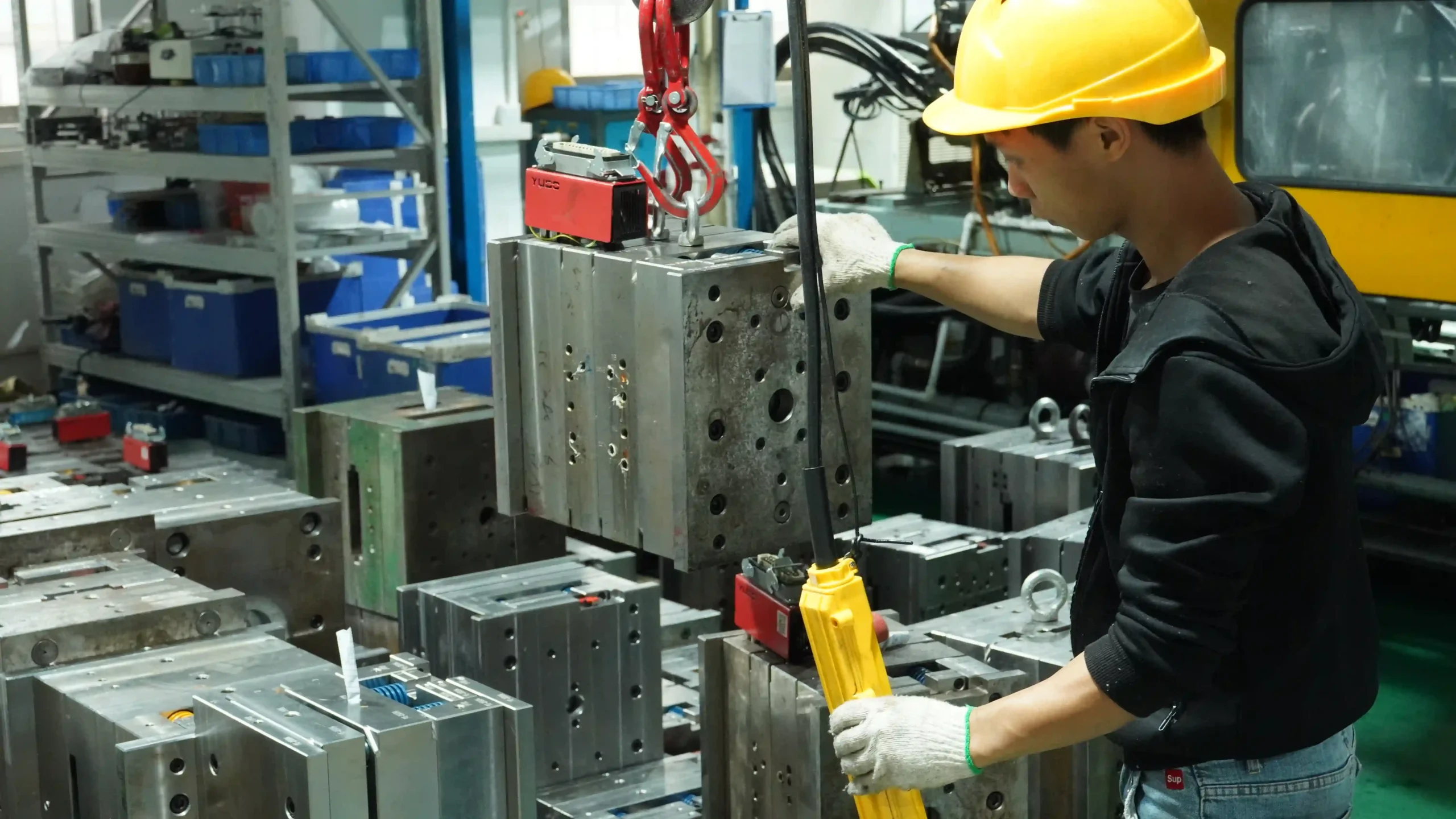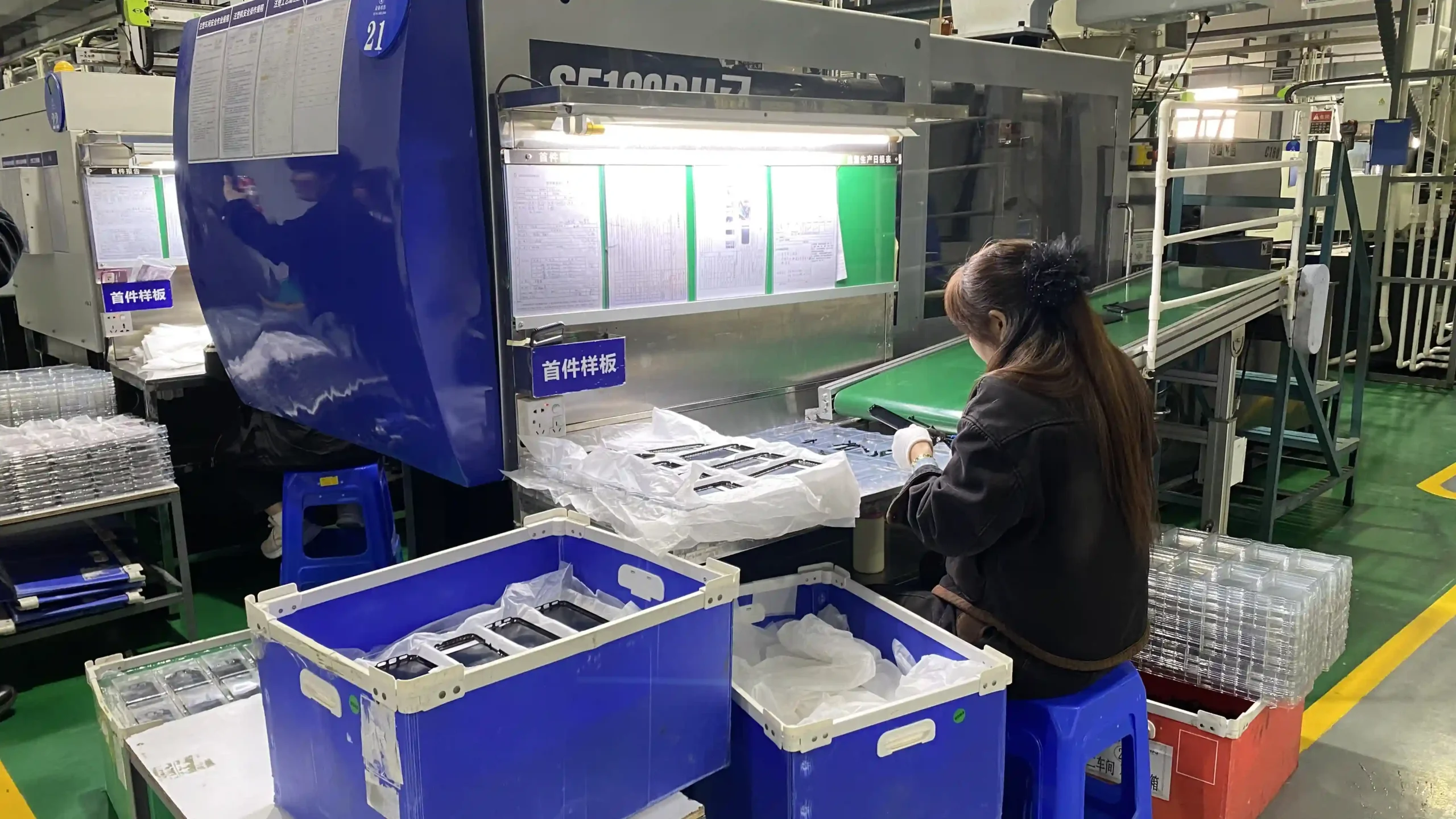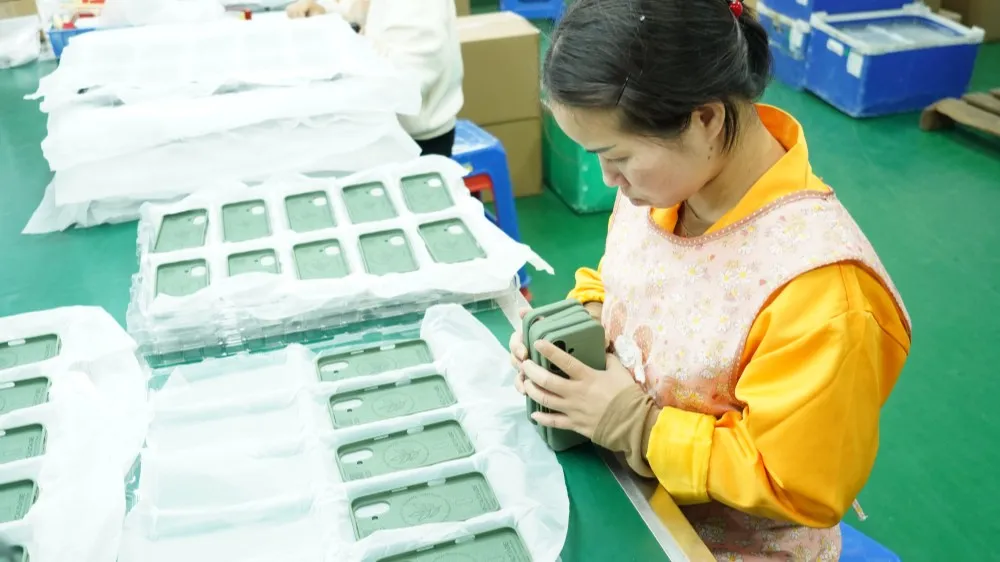
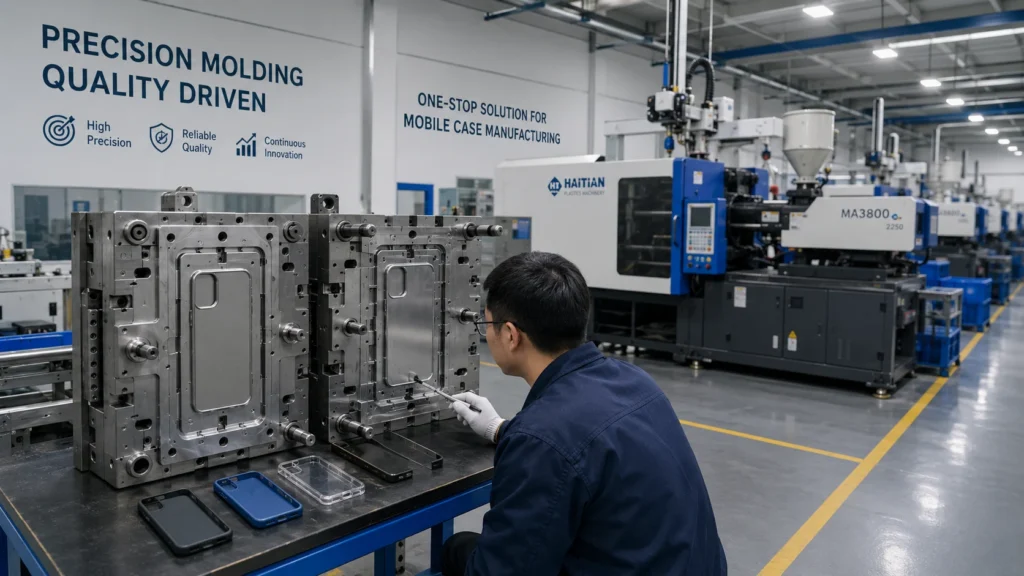
When you source custom phone cases, mold condition directly affects product quality, production stability, and delivery time. A clear injection mold maintenance checklist helps you understand what a factory should inspect before and during mass production.
This guide explains the key points of injection mold maintenance and how proper mold care can help you reduce defects, avoid delays, and maintain consistent quality in repeat orders.
What Is Injection Mold Maintenance?
Table of Contents
ToggleInjection mold maintenance means keeping the mold clean, stable, and ready for repeated production. It helps the factory check key mold areas before defects appear in mass production.
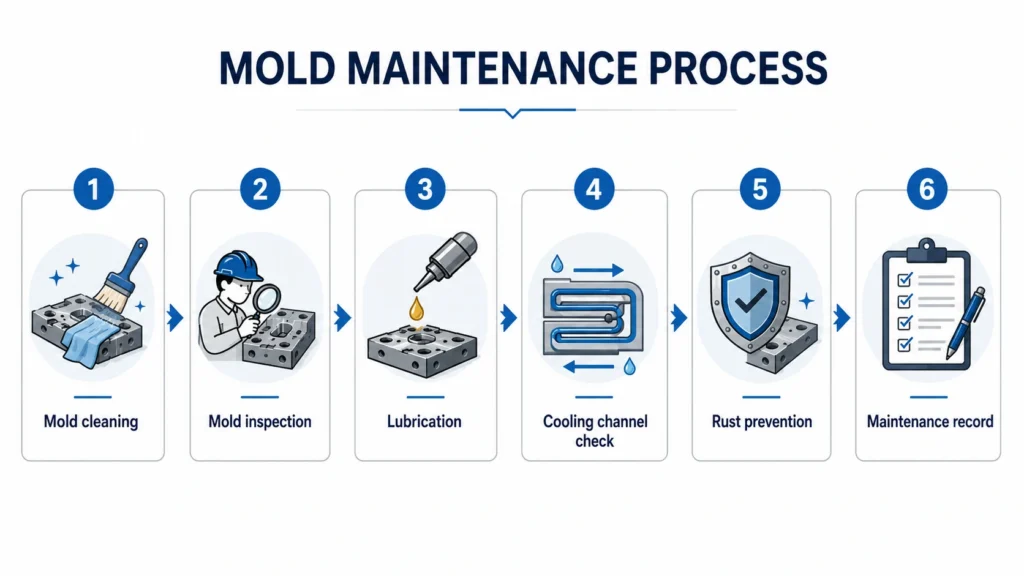
In your phone case project, mold care usually covers cleaning, inspection, lubrication, rust prevention, cooling channel checks, defect tracking, and maintenance records. These steps help reduce common risks such as flash, scratches, poor fit, and unstable bulk quality.
When these checks are done regularly, your production is easier to control from the approved sample to the final shipment.
What Is Preventive Maintenance of Injection Mold?
Preventive mold maintenance means the mold is checked and serviced before it causes production problems. The goal is to prevent defects instead of repairing the mold only after phone cases show burrs, warping, scratches, or demolding issues.
This matters because early maintenance helps make your mass production more predictable. It can reduce sudden downtime, lower defect rates, and keep your repeat orders more consistent.
When the mold is checked before problems appear, you have a better chance of avoiding delays, rework, and unexpected quality issues.
Why Mold Maintenance Matters for Phone Case Quality
Mold care is not just an internal factory task. It directly affects the quality of the phone cases you receive, especially when you place bulk orders or repeat orders.
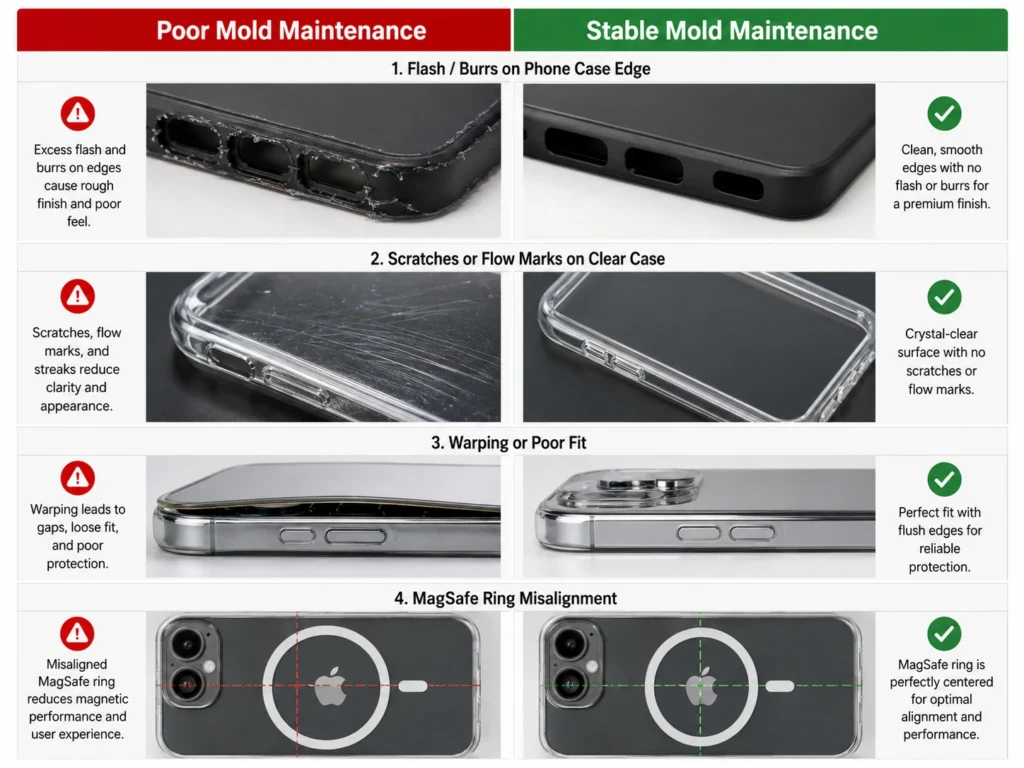
If the mold is not cleaned or inspected properly, phone cases may have flash, burrs, scratches, flow marks, and weld lines, or uneven edges. Poor mold control can also lead to inaccurate camera cutouts, button holes, charging ports, and weak fitting on the phone.
For MagSafe phone cases, the mold condition can affect the position and stability of the magnetic ring area. When you work with a phone case manufacturer, a clear mold maintenance process helps reduce these risks and keeps mass production more consistent.
Injection Mold Maintenance Checklist: Key Items to Check
A practical injection mold maintenance checklist helps you see whether a supplier controls the mold before defects reach your order. For phone case production, the checklist should focus on the areas that affect appearance, fit, demolding, and production stability.
A clear checklist also makes quality problems easier to trace. If a defect appears during mass production, the factory can check the related mold area instead of guessing the cause.
Mold Surface, Core, Cavity, and Parting Line
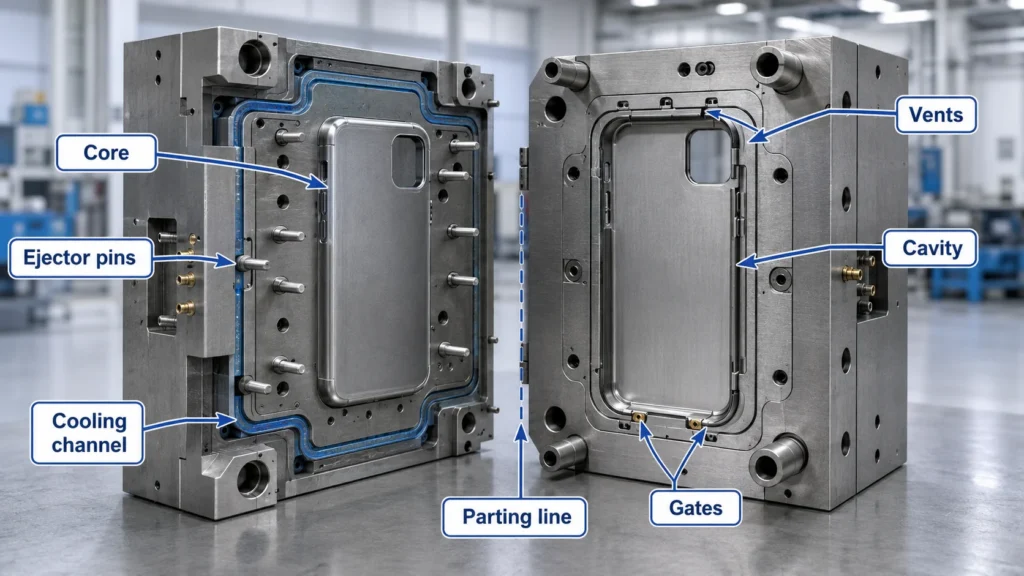
The mold surface, core, cavity, and parting line should be checked for plastic residue, dust, oil, scratches, and wear. These areas shape the visible surface and outer edges of the phone case.
If they are not cleaned or inspected properly, you may see flash, rough edges, surface marks, or uneven frame lines on the finished phone cases. This is especially important for clear cases, solid-color cases, and thin-edge designs.
| Mold Area to Check | What the Factory Should Look For | Possible Phone Case Issue |
|---|---|---|
| Mold surface | Dust, oil, scratches, residue | Surface marks, spots, scratches |
| Core and cavity | Wear, damage, plastic buildup | Poor shape, unstable fit |
| Parting line | Residue, gap, uneven closing | Flash, burrs, rough edges |
| Edge-forming area | Wear or uneven surface | Uneven phone case frame |
Ejector Pins, Slides, Inserts, and Moving Parts
Ejector pins, slides, inserts, and other moving parts should move smoothly without sticking, shaking, or uneven pressure. These parts affect how the phone case is released from the mold and how small structural areas are formed.
If these parts are worn or poorly maintained, you may see whitening marks, ejector marks, demolding problems, or deformation. For phone cases with camera cutouts, button structures, card slots, or stand designs, unstable moving parts can also cause poor detail accuracy.
Cooling Channels and Temperature Control
A proper plastic injection mold maintenance checklist should include cooling channel checks and mold temperature control. Blocked or dirty cooling channels can make the mold temperature unstable during production.
For phone cases, poor cooling may cause shrinkage, warping, and unstable dimensions. This can lead to weak fitting, uneven edges, or products that do not match the approved sample in bulk production.
Vents, Runners, Gates, and Residue Cleaning
The checklist should also include vents, runners, gates, and residue cleaning. These areas control material flow and air release during injection molding.
If vents are blocked or runners and gates have residue buildup, the phone case may not fill properly. You may see short shots, burn marks, flow lines, or incomplete edges around thin areas, camera openings, and button sections.
How Often Should Injection Molds Be Maintained?
There is no single fixed schedule for injection mold preventive maintenance. The right frequency depends on the mold structure, material type, production volume, product precision, and how often the mold is used.
For phone case production, basic cleaning and inspection should be done before and after each production run. During mass production, the factory should also monitor product defects, mold temperature, demolding condition, and fitting accuracy.
A reliable injection mold maintenance management program should also use shot count, defect records, and storage conditions to plan maintenance. Private molds, high-precision molds, and molds for MagSafe or multi-part phone cases usually need stricter checks.
Before long-term storage, the mold should be cleaned, lubricated, protected against rust, and recorded properly. This helps you keep repeat orders stable instead of restarting production with an unknown mold condition.
How Many Times Can an Injection Mold Be Used?
The service life of an injection mold does not have one fixed number. It depends on mold steel quality, mold structure, material type, production volume, maintenance frequency, and product precision requirements.
You do not need to focus only on how many shots the mold can run. A more practical point is whether the supplier has a clear maintenance process, complete mold records, and a stable system for repeat production.
This helps you understand whether the mold can support consistent quality, not just one successful production run.
Common Phone Case Defects Caused by Poor Mold Maintenance
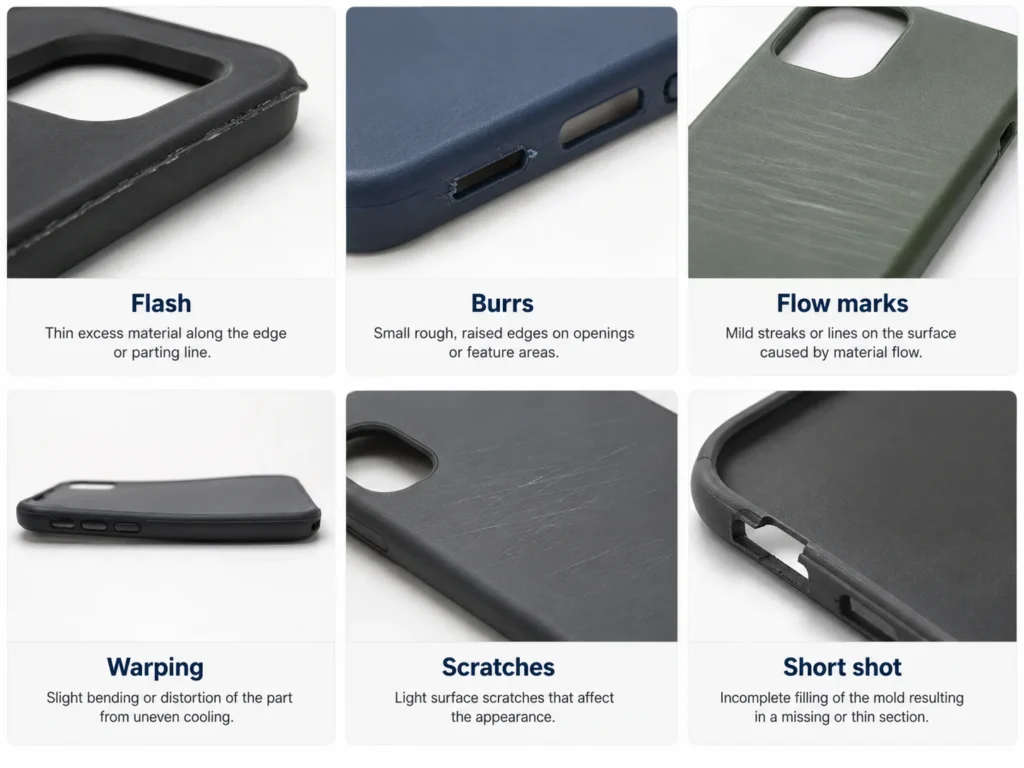
Poor maintenance of plastic injection molds often leads to common injection molding defects in your phone case order. These defects can affect surface appearance, phone fitting, part assembly, packaging quality, and customer feedback.
If the mold issue is not corrected early, small problems such as flash, warping, scratches, or short shots may spread across the bulk order.
Good mold maintenance helps the factory find mold-related issues before they become batch problems. The table below shows the correlation between mold conditions and phone case quality.
| Mold Maintenance Issue | Possible Phone Case Defect |
|---|---|
| Dirty parting line | Flash, burrs, rough edges |
| Worn cavity or core | Poor fit, unstable dimensions |
| Blocked vents | Burn marks, short shots, flow marks |
| Poor cooling | Warping, shrinkage, deformation |
| Ejector pin issue | Ejector marks, whitening, and demolding problems |
| Residue on the mold surface | Scratches, spots, surface defects |
These problems may look small at the beginning, but they can become costly in bulk production. If the factory does not track and correct them quickly, you may face rework, delayed delivery, or inconsistent repeat orders.
How to Evaluate a Phone Case Manufacturer’s Mold Maintenance Capability
When you choose a phone case manufacturer, you should not only check price, MOQ, and sample quality. You should also ask how the factory controls mold conditions before, during, and after production.
A clear injection mold maintenance checklist can show whether the factory has a standard process or only fixes problems after defects appear. You can ask these questions before placing a bulk order:
| Question to Ask | Why It Matters |
|---|---|
| Do you have a mold maintenance checklist? | Shows whether mold checks are standardized |
| How do you record mold maintenance history? | Helps trace repeated quality issues |
| Do you inspect molds before bulk production? | Reduces risk before mass production starts |
| How do you monitor defects during production? | Helps catch flash, warping, scratches, and poor fit early |
| How are private molds stored after production? | Protects repeat orders and long-term projects |
| How do you control repeat order consistency? | Helps keep size, fit, and appearance stable |
For custom phone case manufacturing, a reliable mold maintenance system helps reduce rework, delays, dimensional problems, and surface defects. It also helps you judge whether the supplier can support stable production beyond the first order.
FAQ
What should be included in an injection mold maintenance checklist?
An injection mold maintenance checklist should cover mold cleaning, surface inspection, moving parts, cooling channels, vents, runners, gates, lubrication, rust prevention, and maintenance records.
For phone case production, these checks help reduce flash, scratches, warping, poor fit, and unstable dimensions.
Why is mold maintenance important for custom phone cases?
Mold maintenance is important because custom phone cases rely on accurate details, such as camera cutouts, buttons, charging ports, MagSafe ring areas, and outer edges.
Good injection mold maintenance helps keep bulk orders closer to the approved sample and supports more stable repeat production.
Final Thoughts
Good mold maintenance helps keep your phone case production more stable, especially when your order involves custom colors, precise cutouts, MagSafe structures, or repeat production. It also helps reduce common risks such as flash, scratches, poor fit, delayed delivery, and inconsistent bulk quality.
When you work with a manufacturer that manages molds properly before, during, and after production, your quality control process becomes easier. A clear maintenance process also helps your approved sample stay closer to the final bulk order.
YG supports your custom phone case projects with mold inspection, quality checks, and stable production management. Contact us to discuss your phone case design, material options, customization needs, and bulk order requirements.