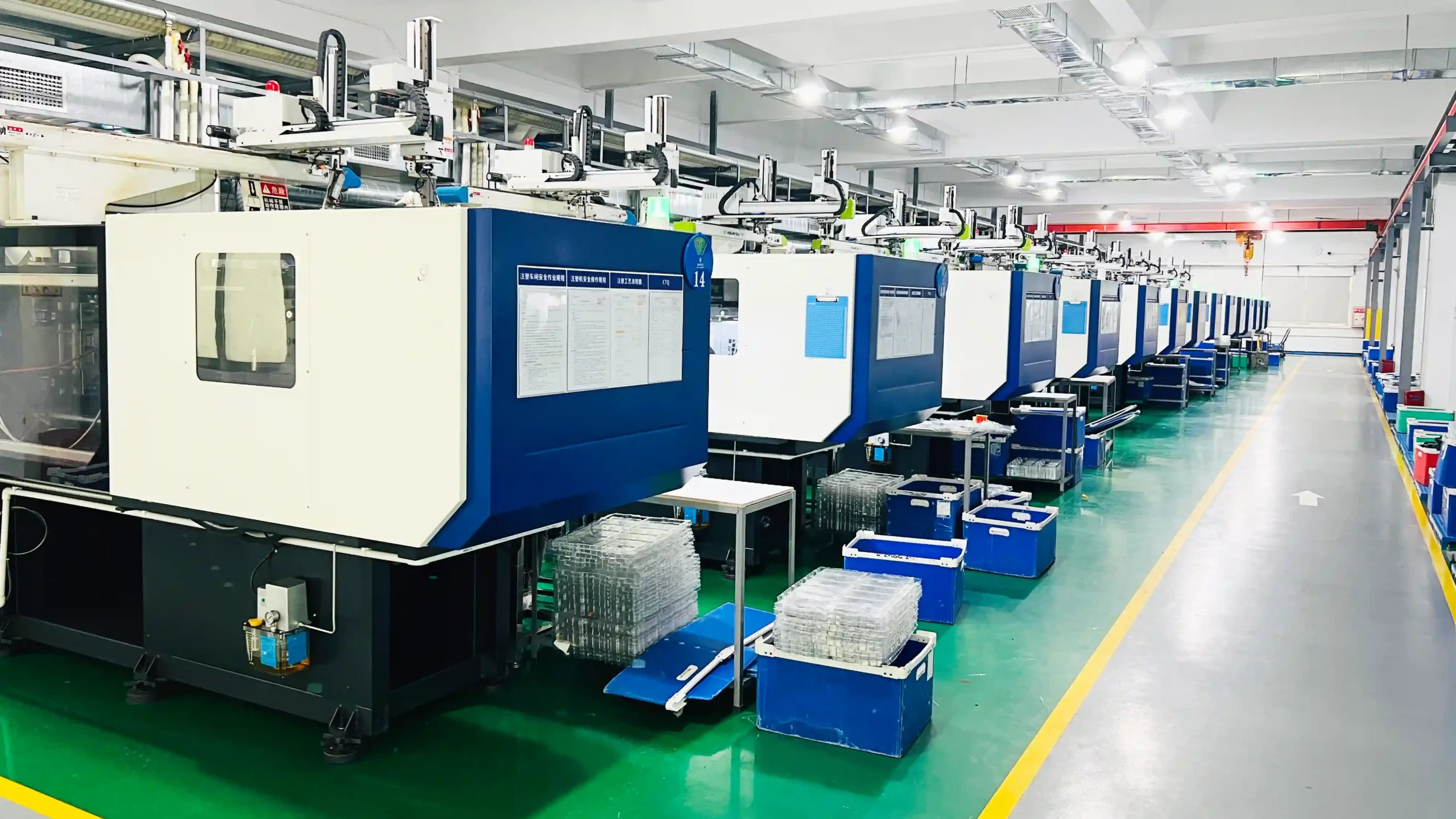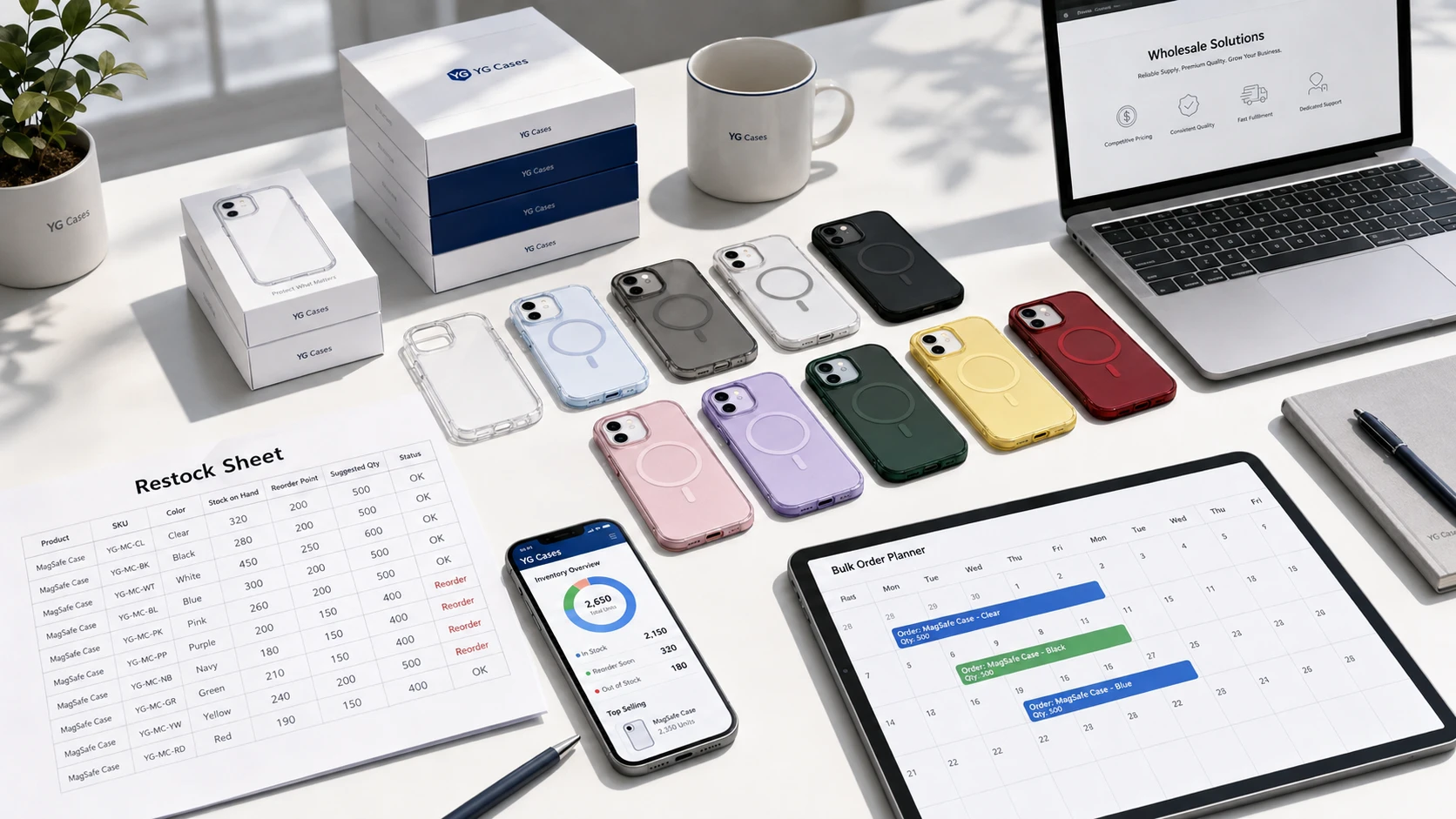
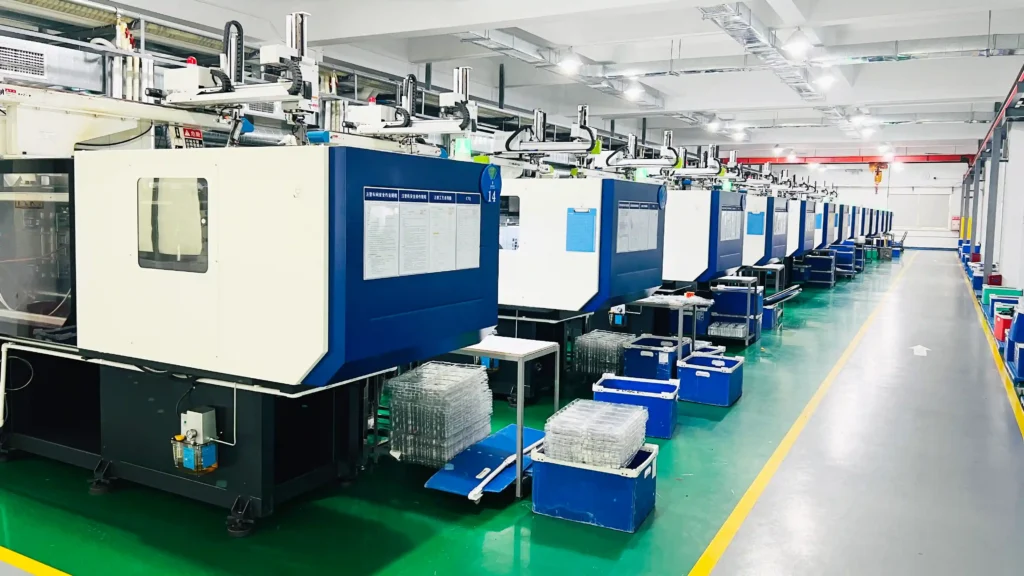
Most plastic phone cases are manufactured through injection molding, but molding is only one part of the process.
A fully custom phone case normally moves through product design, DFM analysis, prototyping, mold making, trial molding, mass production, surface finishing, component assembly, quality control, and packaging.
The exact manufacturing route depends on the case material and structure. A basic TPU case may require only one mold, while a rugged MagSafe case can involve PC and TPU molding, multiple components, adhesive dispensing, magnetic-ring alignment, functional testing, and custom packaging.
This guide explains how phone cases are manufactured in an OEM factory, focusing on the engineering and production stages that directly affect quality, cost, and lead time.
What Are Phone Cases Made Of?
Table of Contents
ToggleThe most common phone case materials are TPU, polycarbonate, silicone, and combinations of rigid and flexible materials.
The most common phone case materials are TPU, polycarbonate, silicone, and combinations of rigid and flexible materials.
| Case material | Main characteristics | Typical process |
|---|---|---|
| TPU | Flexible, impact-absorbing, easy to install | Injection molding |
| PC | Rigid, lightweight, available in clear grades | Injection molding |
| PC + TPU | Rigid back with flexible protective bumper | Overmolding or assembly |
| LSR silicone | Soft touch, heat-resistant, stable elasticity | Liquid silicone injection molding |
| Recycled PC or TPU | Suitable for recycled-material product programs | Injection molding |
| Aramid fiber | Thin, lightweight, premium appearance | Compression forming and CNC trimming |
Many modern cases also contain magnets, metal buttons, camera frames, stands, decorative panels, adhesives, or internal support structures. Therefore, how is a phone case made? It often includes both injection molding and secondary assembly.
How Are Phone Cases Made Step by Step?
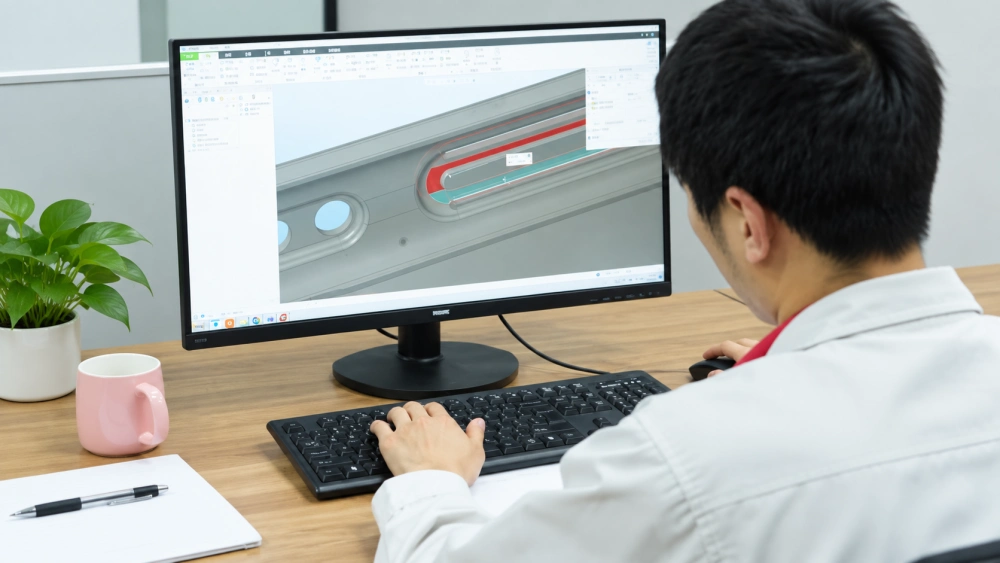
1. Product Design and DFM Analysis
A manufacturing project begins with a product concept, reference sample, or 3D CAD file.
Before mold making, the engineering team reviews:
- Wall thickness
- Draft angles
- Parting lines
- Gate position
- Undercuts
- Material shrinkage
- Camera and button clearance
- Raised screen and camera edges
- MagSafe ring position
- Assembly methods
- Potential sink marks, weld lines, and warpage
This process is known as Design for Manufacturing, or DFM.
DFM is particularly important for clear, multi-material, and high-gloss cases. A gate or weld line may not affect the structural function of the case, but it can still create an unacceptable cosmetic defect.
For PC and TPU cases, engineers must also determine whether the two materials should be connected through overmolding, insert molding, snap-fit assembly, adhesive bonding, or ultrasonic welding.
A detailed DFM review reduces mold modifications and production risks before tooling begins.
2. Prototype and Fit Verification
Before investing in production tooling, a prototype can be used to check the shape, dimensions, and product structure.
Common prototype methods include:
- 3D printing for initial fit and appearance evaluation;
- CNC machining for higher dimensional accuracy;
- Rapid tooling for small-batch testing with production-grade materials;
- Molded samples for final material and functional validation.
The prototype is normally tested with an actual phone to verify:
- Installation and removal
- Button response
- Camera clearance
- Charging-port access
- Speaker and microphone openings
- Screen and camera protection
- Wireless charging
- MagSafe alignment
A 3D-printed sample is useful for confirming the design, but it cannot completely represent the flexibility, shrinkage, surface finish, or impact performance of a molded TPU or PC product. Final approval should be based on molded samples.
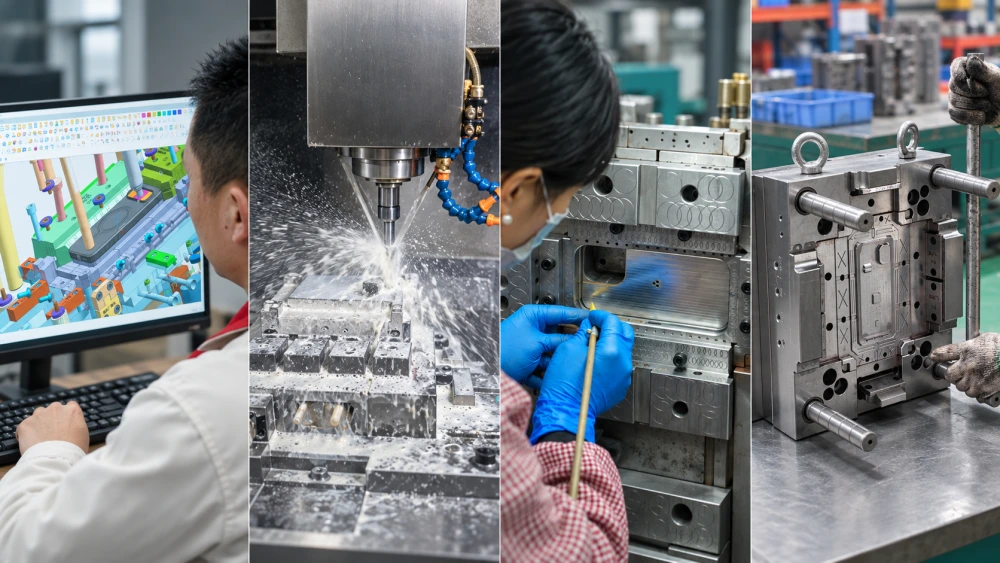
3. In-House Mold Design and Manufacturing
Once the design is approved, the mold is created according to the material, case structure, production volume, and cosmetic requirements.
Phone case mold manufacturing typically involves:
- Mold design
- CNC machining
- EDM processing
- Wire cutting
- Grinding and fitting
- Polishing or texturing
- Mold assembly
- Trial molding
The mold structure directly affects product quality.
For example:
- A clear PC case requires high-quality mold polishing and careful gate positioning;
- A rugged case may need several molds for the bumper, backplate, buttons, and stand;
- An overmolded case requires accurate positioning and reliable material bonding;
- A multi-cavity mold increases output but requires balanced filling and cooling.
YG operates an in-house mold workshop, allowing the engineering, tooling, and molding teams to work together during DFM, mold fabrication, trial production, and mold modification.
This is especially valuable when a product requires fast engineering changes or contains complex multi-material structures.
4. T0, T1, and Golden Sample Approval
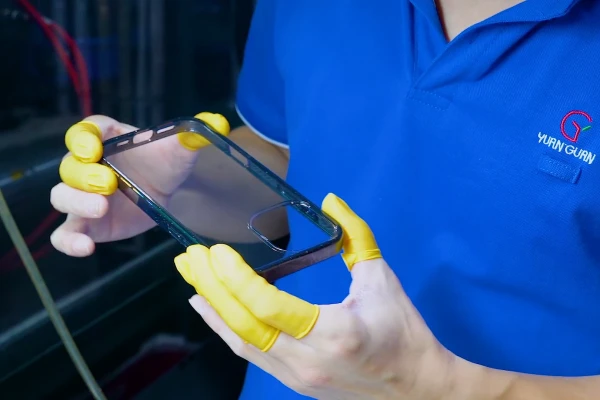
The first molded parts from a new tool are evaluated before mass production.
T0 trial
The T0 trial identifies initial mold and injection molding defects, such as:
- Short shots
- Flash
- Sink marks
- Weld lines
- Flow marks
- Warpage
- Ejection marks
- Incorrect dimensions
- Poor phone fit
The engineering team records the problems and determines whether they should be corrected through mold modification, molding parameters, or product-design changes.
T1 trial
After the initial issues are corrected, T1 samples are produced and evaluated for:
- Dimensions
- Phone fit
- Button function
- Port and camera clearance
- Surface appearance
- Material performance
- Component assembly
Once the structure, material, color, surface finish, logo, and packaging are confirmed, an approved sample is retained as the Golden Sample.
The Golden Sample and inspection documents become the reference standard for mass production. This step helps prevent differences between the sample approved by the customer and the final production order.
5. Injection Molding and Process Control
During injection molding, plastic resin is dried, heated, injected into the mold, cooled, and ejected as a finished part.
Although the basic principle is straightforward, stable production depends on controlling:
- Material drying
- Barrel and mold temperature
- Injection speed
- Holding pressure
- Cooling time
- Clamp force
- Cycle time
- Production environment
Different materials require different controls.
TPU is sensitive to moisture and may develop bubbles, silver streaks, or unstable surfaces if it is not properly dried. Clear PC requires strict control of material cleanliness, mold condition, stress, flow marks, and scratches.
For hybrid cases, the factory may use:
- Two-shot molding
- Overmolding
- Insert molding
- Separate molding followed by assembly
During production, first-off samples and in-process parts are checked for dimensions, appearance, color, flash, deformation, and actual-device fit.
6. Surface Finishing and Advanced Processes
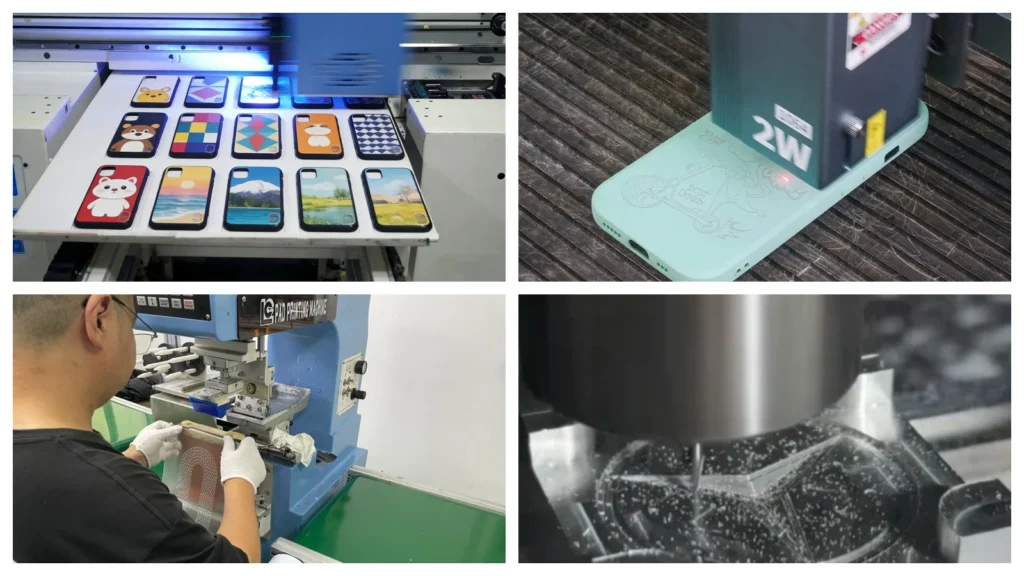
After molding, the case may receive additional decoration or surface treatment.
Common options include:
- Silk-screen printing
- Pad printing
- UV digital printing
- Laser engraving
- UV coating
- Soft-touch coating
- Spray painting
- Mold texturing
- IMD or IML
The correct process depends on the product material, artwork, surface geometry, durability requirement, and order quantity.
IMD and IML
For cases requiring integrated graphics or decorative surfaces, YG can support IMD and IML processes.
A typical process includes:
- Film printing
- Drying or curing
- Film forming
- Punching and trimming
- Film positioning in the mold
- Injection molding
- Final trimming and inspection
Because the graphic film becomes part of the molded structure, IMD and IML can provide more durable decorative effects than exposed surface printing.
YG also supports LSR, multi-material molding, and other specialized processes for projects that cannot be produced through standard single-material injection molding.
7. MagSafe and Functional Component Assembly
A modern custom phone case may contain more components than the molded shell itself.
Common components include:
- MagSafe magnetic rings
- Steel positioning rings
- Metal buttons
- Camera frames
- Kickstands
- Decorative backplates
- Strap connectors
- Internal frames
- Microfiber linings
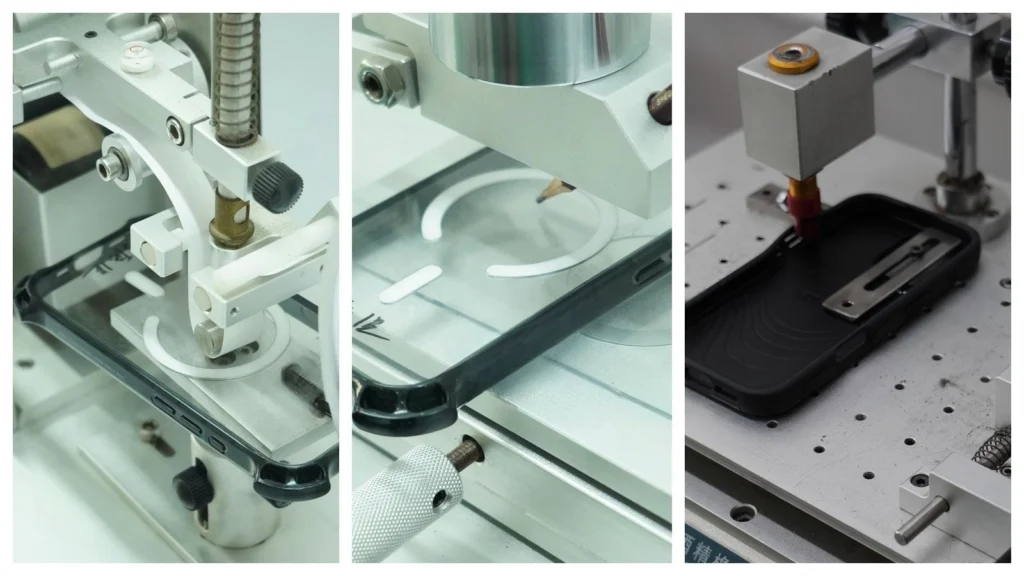
For a MagSafe case, the magnetic components must be positioned accurately. A typical assembly process includes:
- Inspecting the magnets and steel ring
- Confirming magnet polarity
- Positioning the ring in an alignment fixture
- Dispensing a controlled amount of adhesive
- Pressing and curing the assembly
- Inspecting ring position
- Testing magnetic attraction
- Verifying wireless charging compatibility
Incorrect polarity, weak adhesive, or poor ring alignment may affect magnetic attachment and charging performance.
Depending on the case structure, YG can also use automatic dispensing, heat staking, ultrasonic welding, snap-fit assembly, and controlled pressing to integrate functional components.
8. Quality Control, Packaging, and Shipment
Quality control should begin with raw materials and continue throughout production.
YG’s quality-control workflow includes:
| Stage | Main inspection |
|---|---|
| IQC | Resin, magnets, metal parts, adhesives, and packaging materials |
| IPQC | Molding conditions, dimensions, appearance, and in-process defects |
| FQC | Finished-product appearance, assembly, and function |
| OQC | Quantity, labels, packaging, and shipment condition |
Depending on the product requirements, testing may include:
- Actual-device fit testing
- Dimensional measurement
- Drop testing
- Abrasion and alcohol-rub testing
- UV-aging evaluation
- Button-life testing
- Pull-force testing
- Magnetic attraction testing
- Temperature and humidity testing
- Salt-spray testing for metal components
- Carton drop and vibration testing
Not every case requires every test. The test methods, sample size, and acceptance criteria should be defined according to the product specification and customer requirements.
After final inspection, the cases can be packed in custom retail boxes, kraft boxes, trays, polybags, or bulk packaging. Barcode, FNSKU, shipping marks, and other customer-specific labels can be added before shipment.
How Different Phone Cases Are Manufactured
Different case structures require different production routes.
| Phone case type | Typical manufacturing route |
|---|---|
| TPU case | Material drying → injection molding → trimming → inspection → printing → packaging |
| Clear PC case | PC drying → molding → cosmetic inspection → coating → protective film → packaging |
| PC + TPU case | PC molding → TPU overmolding or assembly → fit testing → finishing |
| Rugged case | Multiple-part molding → button, frame, or stand assembly → drop and function testing |
| LSR silicone case | Liquid silicone molding → curing → trimming → surface treatment → lining or frame assembly |
| MagSafe case | Shell molding → magnetic-ring assembly → alignment and attraction testing |
| IMD/IML case | Film printing → forming and cutting → in-mold positioning → injection molding |
This is why how iPhone cases are manufactured cannot be explained by one universal process. Each phone model and case design has its own camera dimensions, button positions, charging requirements, and internal structure.
What Affects Custom Phone Case Cost and Lead Time?
The main cost factors are:
- Mold structure and cavity count
- Product material and weight
- Single-material or multi-material construction
- Surface finishing
- MagSafe and metal components
- Assembly requirements
- Testing standards
- Order quantity
- Custom packaging
A basic TPU case is generally faster and less complex to produce than a multi-part rugged case with magnets, metal buttons, a camera frame, and a kickstand.
For a new custom project, tooling commonly requires approximately 20–30 days after the design and DFM are approved. Trial molding, product revisions, customer approval, mass production, and packaging are scheduled separately.
An accurate quotation and project schedule should therefore be based on:
- 3D CAD files
- Material requirements
- Surface finish
- Components
- Estimated order quantity
- Testing standards
- Packaging requirements
A product photo alone is usually not enough for a final manufacturing quotation.
Why Work with an Integrated Phone Case Manufacturer?
A supplier that only performs injection molding may depend on external partners for engineering, tooling, finishing, assembly, and testing. This can increase communication time and make problem solving more difficult.
YG integrates the main stages of custom phone case production:
- Product and structural engineering
- DFM analysis
- Prototype development
- In-house mold manufacturing
- Injection molding and overmolding
- IMD and IML
- LSR processing
- Surface finishing
- MagSafe and component assembly
- Quality testing
- Packaging and logistics
This integrated structure allows engineering issues to be addressed by the relevant teams during the same project rather than being passed between unrelated suppliers.
YG’s manufacturing capacity includes more than 150 molds per month, up to 300,000 injection-molded parts per day, and more than 30,000 assembled products per day. Production planning still depends on the case structure, mold configuration, material, finishing process, and order requirements.
FAQ
How is a phone case made?
Most plastic phone cases are made by creating a CAD design, completing a DFM review, manufacturing a mold, and injection molding TPU, PC, or another plastic. The molded parts may then be printed, coated, assembled with magnets or other components, inspected, tested, and packaged.
What are phone cases made of?
Phone cases are commonly made of TPU, PC, silicone, TPE, recycled plastics, leather, or aramid fiber. Hybrid cases often combine a rigid PC shell with a flexible TPU bumper.
How are iPhone cases manufactured?
An iPhone case is designed around the dimensions of a specific device model. Engineers must confirm the camera opening, buttons, speakers, charging port, screen protection, wireless charging area, and MagSafe position before mold making and production.
How are MagSafe cases made?
The main shell is first molded from TPU, PC, silicone, or a combination of materials. The magnetic ring is then insert-molded or assembled using a positioning fixture. Its polarity, position, magnetic attraction, and wireless charging performance are inspected before packaging.
Can YG manufacture a phone case from a product idea?
Yes. YG can begin with a sketch, reference sample, or existing CAD file. The scope may include industrial design, structural engineering, DFM, prototyping, tooling, molding, assembly, testing, and packaging.
Conclusion
So, how are phone cases made?
Most plastic cases are manufactured through injection molding, but a reliable custom product requires much more than a molding machine. DFM, mold quality, trial validation, material control, component assembly, and inspection all affect the final result.
For straightforward products, the manufacturing route may be relatively short. For hybrid, IMD, LSR, rugged, or MagSafe cases, choosing a manufacturer with integrated engineering, tooling, molding, assembly, and quality-control capabilities can significantly reduce development risk.
Planning a custom phone case project? Send YG your CAD file, reference sample, or product concept for a manufacturing feasibility review.