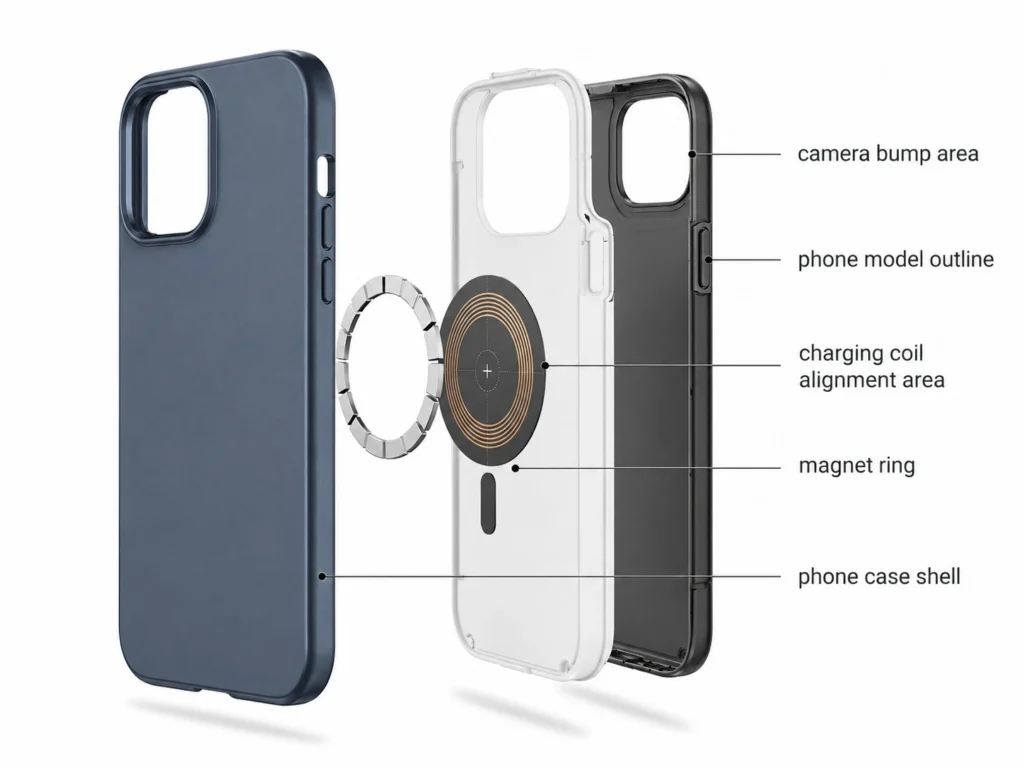
A Qi2 phone case is not just a regular case with a magnetic ring added. Magnet position, case thickness, material structure, and charging area can all affect charging speed, heat, magnetic hold, and accessory fit.
If these details are not checked before production, the case may look correct but fail in real use. This guide explains the key design, materials, testing, and supplier factors involved in developing a custom Qi2 phone case with a reliable phone case manufacturer.
Why Qi2 Phone Cases Matter for Brands
Table of Contents
ToggleQi2 makes magnetic wireless charging more important in phone case design. A Qi2 phone case needs to protect the device, but it also plays a role in how the phone aligns with chargers, power banks, stands, and car mounts.
From MagSafe to Qi2: A Bigger Magnetic Charging Ecosystem
MagSafe made magnetic charging familiar to iPhone users. Qi2 takes a similar idea and applies it to a broader wireless charging standard.
This means a Qi2 magnetic phone case is no longer only an iPhone-style accessory. It can become part of a broader charging and accessory system for more devices. The case now has to work as a functional component, not just as an outer shell. This is where ODM phone case solutions become important for new magnetic charging products.
Why Qi2-Ready Phones Create New Demand for Magnetic Cases
Some Android phones may support Qi2 charging but still rely on a magnetic case for better alignment. In this setup, the case is not just an add-on. It helps position the phone correctly on chargers and magnetic accessories.
This creates new demand for the Qi2 Ready phone case. If the magnet ring is not placed correctly, users may experience slower charging, more heat, or weaker attachment with power banks and car mounts.
For a Qi2 magnetic phone case, the manufacturing focus is clear. The case has to combine protection, accurate magnetic alignment, wireless charging stability, and accessory compatibility in one product.
Qi2 vs MagSafe Phone Cases
MagSafe and Qi2 are closely related, but they are not the same in product development. A MagSafe vs Qi2 phone case comparison should focus on compatibility, magnetic alignment, and how the case works with wireless charging devices.
MagSafe Compatible Does Not Always Mean Qi2 Ready
“MagSafe compatible,” “Qi2 compatible,” and “Qi2 Ready” are often used together, but they do not always mean the same thing. A case may attach to a magnetic charger, but that does not automatically mean it has been designed or tested for stable Qi2 charging.
For a Qi2 Ready phone case, the key point is function. The case should help the phone align correctly, charge consistently, and work with magnetic accessories without overheating or slipping.
Different Devices May Need Different Magnetic Case Designs
Not every phone uses the same magnetic structure. An iPhone, a Samsung device, a Pixel phone, or another Android model may have different charging coil positions, camera layouts, backplate shapes, and accessory clearance needs.
This means one Qi2 magnetic phone case structure cannot be copied across all devices. A wireless charging phone case works best when it is developed around the exact phone model, not only the screen size or outer dimensions.
Before production, the magnet ring position, charging area, camera bump clearance, and fit with common magnetic accessories all need to be confirmed. These details decide whether the case works well in real use.
Key Design Factors in Qi2 Phone Case Manufacturing
A reliable Qi2 phone case starts with structure, not appearance. The case needs to protect the phone, hold the magnet system in the correct position, and keep wireless charging stable during daily use.
For a custom Qi2 phone case, small design errors can create real product issues. A professional Qi2 phone case manufacturer is expected to check magnetic alignment, case thickness, material structure, accessory clearance, and assembly consistency before mass production.
Magnet Position and Charging Coil Alignment
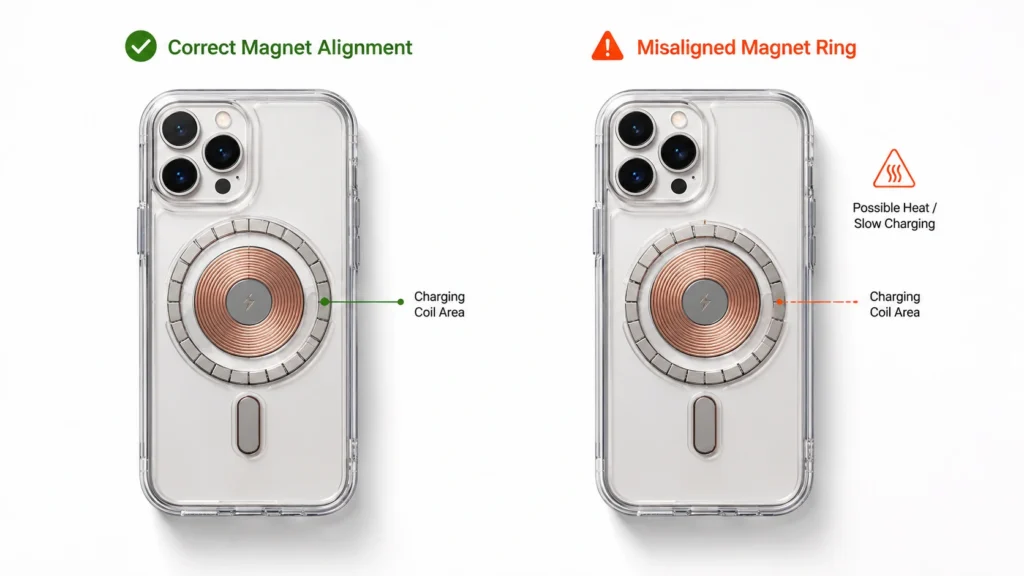
Magnet position is one of the most important parts of a Qi2 magnetic phone case. If the magnet ring does not match the phone’s charging coil, the case may still look fine, but charging performance can be unstable.
Poor alignment can lead to slower charging, charging interruption, extra heat, or weak attachment with magnetic accessories. This is why the magnet layout should be checked with the actual phone model, not only with a general drawing.
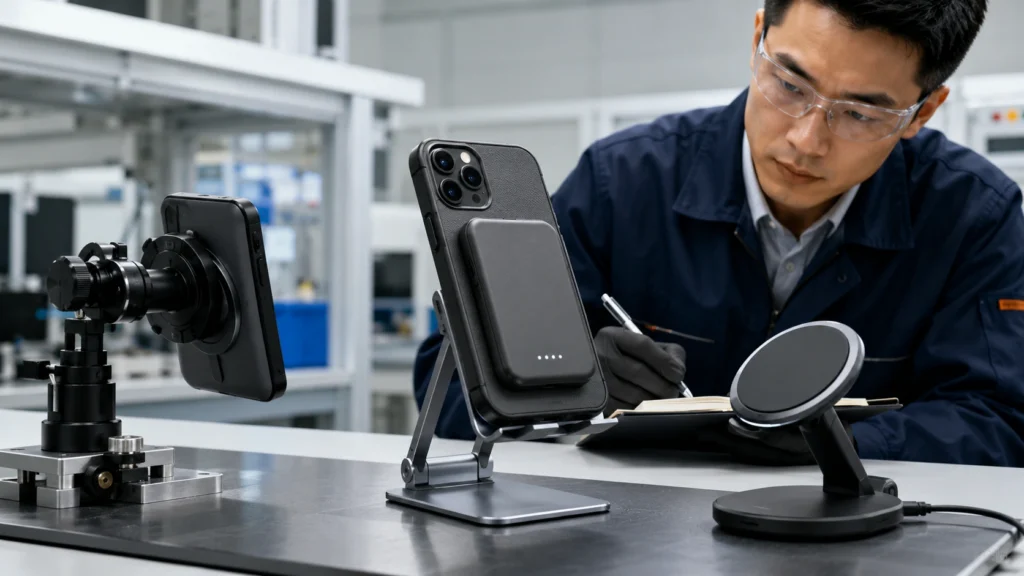
Before bulk production, the case should be tested with wireless chargers, magnetic power banks, stands, and car mounts. A wireless charging phone case has to stay centered and charge consistently in real use, not only pass a basic fit check.
Magnet Strength and Accessory Compatibility
Magnet strength affects how the case works with daily accessories. If the magnetic hold is too weak, a power bank may slide, a car mount may feel unstable, or a stand may not hold the phone at the right angle.
For a Qi2 magnetic phone case, magnet grade is only one part of the result. The magnet layout, backplate thickness, adhesive method, and inner structure also affect the final magnetic force.
A magnetic phone case manufacturer should verify these details during the sample stage. Testing with common magnetic chargers, power banks, car mounts, and stands helps confirm whether the case is ready for bulk production.
Case Thickness and Wireless Charging Efficiency
Case thickness has a direct effect on wireless charging performance, especially for backplate phone cases and protective magnetic structures. A thicker backplate, heavy shockproof structure, built-in stand, wallet layer, or metal part can increase the distance between the phone and the charger.
For a wireless charging phone case, this distance matters. If the back area is too thick or the structure blocks the charging zone, users may see slower charging, unstable charging, or extra heat during use.
When developing a custom Qi2 phone case, protection and charging compatibility need to be balanced. A strong protective structure is useful, but it should not weaken magnetic alignment or reduce wireless charging efficiency.
Camera Bump and Magnetic Accessory Clearance
Large camera modules can affect how magnetic accessories fit on the back of the case. If the camera bump is too close to the magnet area, a power bank, stand, or car mount may not sit flat.
This is especially important for models such as the Samsung Ultra series and Pixel Pro series. These phones often have larger camera layouts, so the magnetic area needs to be checked together with the camera protection structure.
During sample testing, real accessories should be used to check the fit. A Qi2 magnetic phone case should allow stable attachment without the accessory touching the camera bump or shifting during use.
Best Materials for Custom Qi2 Phone Cases
Material choice affects protection, structure, charging performance, and final product cost. For a custom Qi2 phone case, the material should support wireless charging while leaving enough space for the magnet system.
TPU, PC, and Hybrid Structures
TPU is often used for flexible edges and shock absorption. It helps improve drop protection and makes the case easier to install and remove.
PC is better for hard backplates and stable structures. It can help hold the magnet area more consistently and support cleaner surface finishes.
A PC+TPU hybrid structure is common for protective magnetic cases. When working with an OEM phone case manufacturer, this structure can offer a practical balance between impact protection, magnetic alignment, and daily usability.
Materials That May Affect Wireless Charging
Some materials and structures can reduce wireless charging performance. Thick backplates, metal decorations, large metal plates, and heavy wallet layers may block the charging area or increase the distance between the phone and charger.
For a wireless charging phone case, the back area should stay as clean and stable as possible. If a stand, card holder, or decorative part is added, its position and material should be checked during sample testing.
The goal is not to avoid all added features. The goal is to make sure those features do not cause slow charging, unstable charging, or extra heat in daily use.
Manufacturing Process for a Custom Qi2 Phone Case
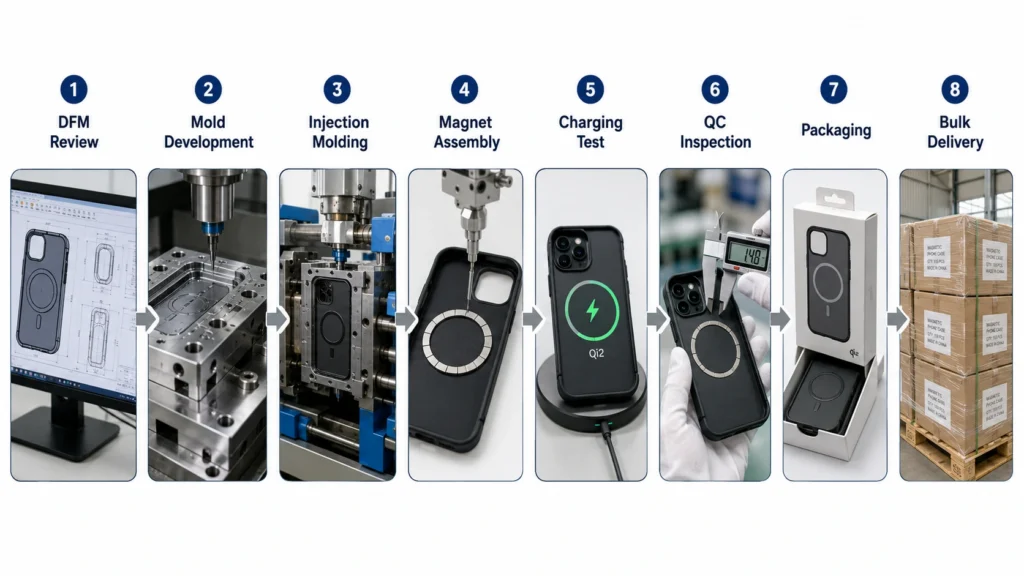
Developing a custom Qi2 phone case is not the same as buying a standard case and adding a magnetic ring. The magnet system, case structure, material, charging area, and accessory fit all need to be planned before production.
A qualified Qi2 phone case manufacturer should review these details early. This helps reduce sample revisions, avoid charging problems, and keep mass production more consistent.
DFM and Structure Review Before Mold Making
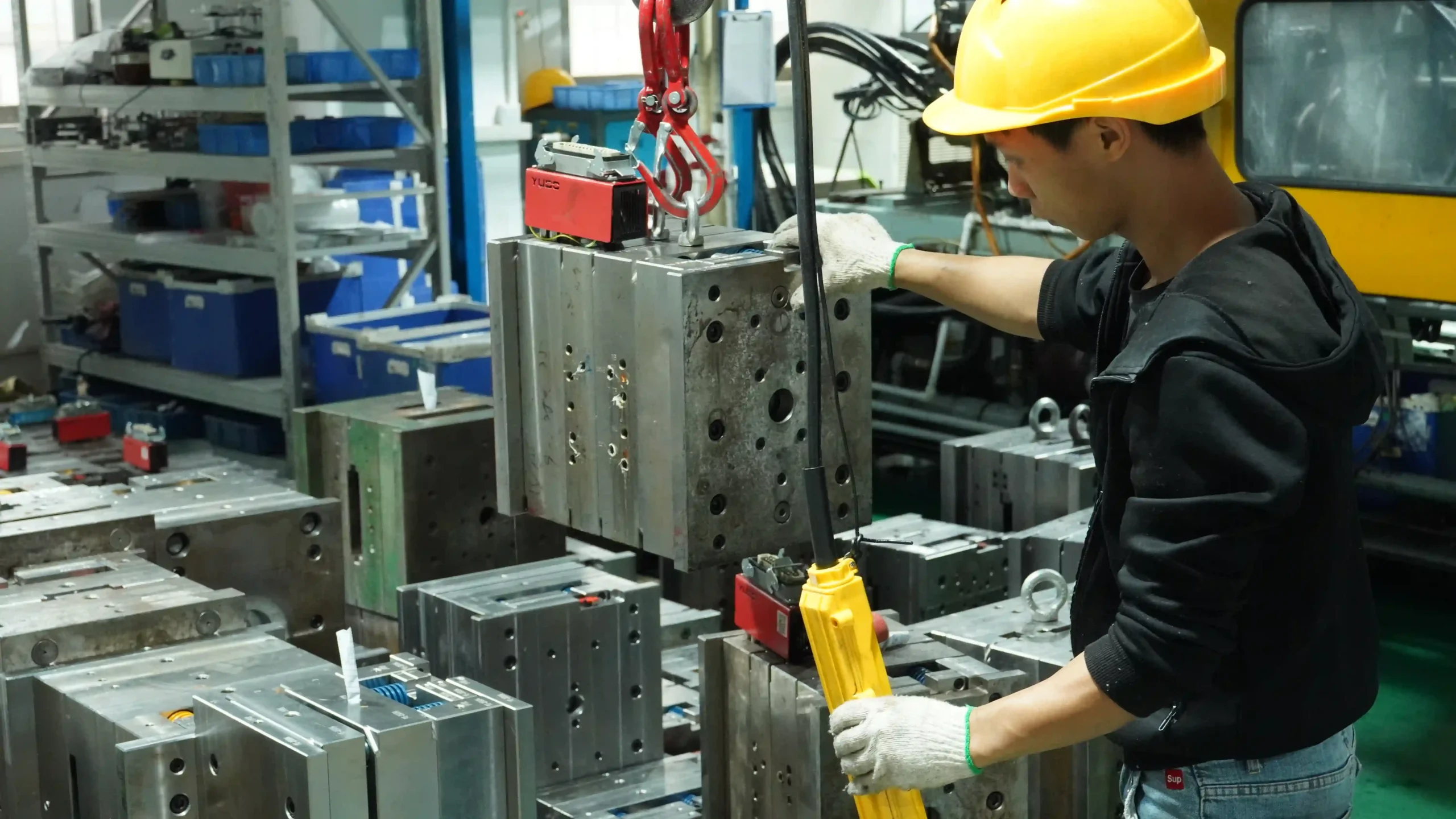
Before mold making, the structure should be checked around the exact phone model. This includes device dimensions, button position, camera frame, speaker openings, charging area, and overall case fit.
For a custom Qi2 phone case, the review also needs to cover magnet position, backplate thickness, drop protection structure, and accessory clearance. These details affect both product function and tooling accuracy.
If these points are not confirmed before mold development, problems may appear after the T1 sample. That usually means extra modification cost, longer lead time, and a higher risk of unstable bulk production.
Prototype and Sample Testing
Prototype testing helps find problems before they become bulk production defects. For a custom Qi2 phone case, the sample should be tested with the phone installed, not only checked as an empty case.
A case-on charging test is the first step. It confirms whether the phone can charge steadily through the case and stay aligned on wireless chargers during normal use.
Magnetic hold, accessory fit, heat performance, and drop protection also need to be tested. Power banks, car mounts, stands, and wireless chargers should all be checked before the sample is approved.
Magnet Assembly and Quality Control
Magnet assembly needs tight control. A small shift in magnet position can affect charging alignment, magnetic strength, and how well the case works with accessories.
A magnetic phone case manufacturer should check position tolerance, adhesive strength, and assembly consistency during production. The magnet ring should stay fixed after drop tests, daily handling, and repeated accessory use.
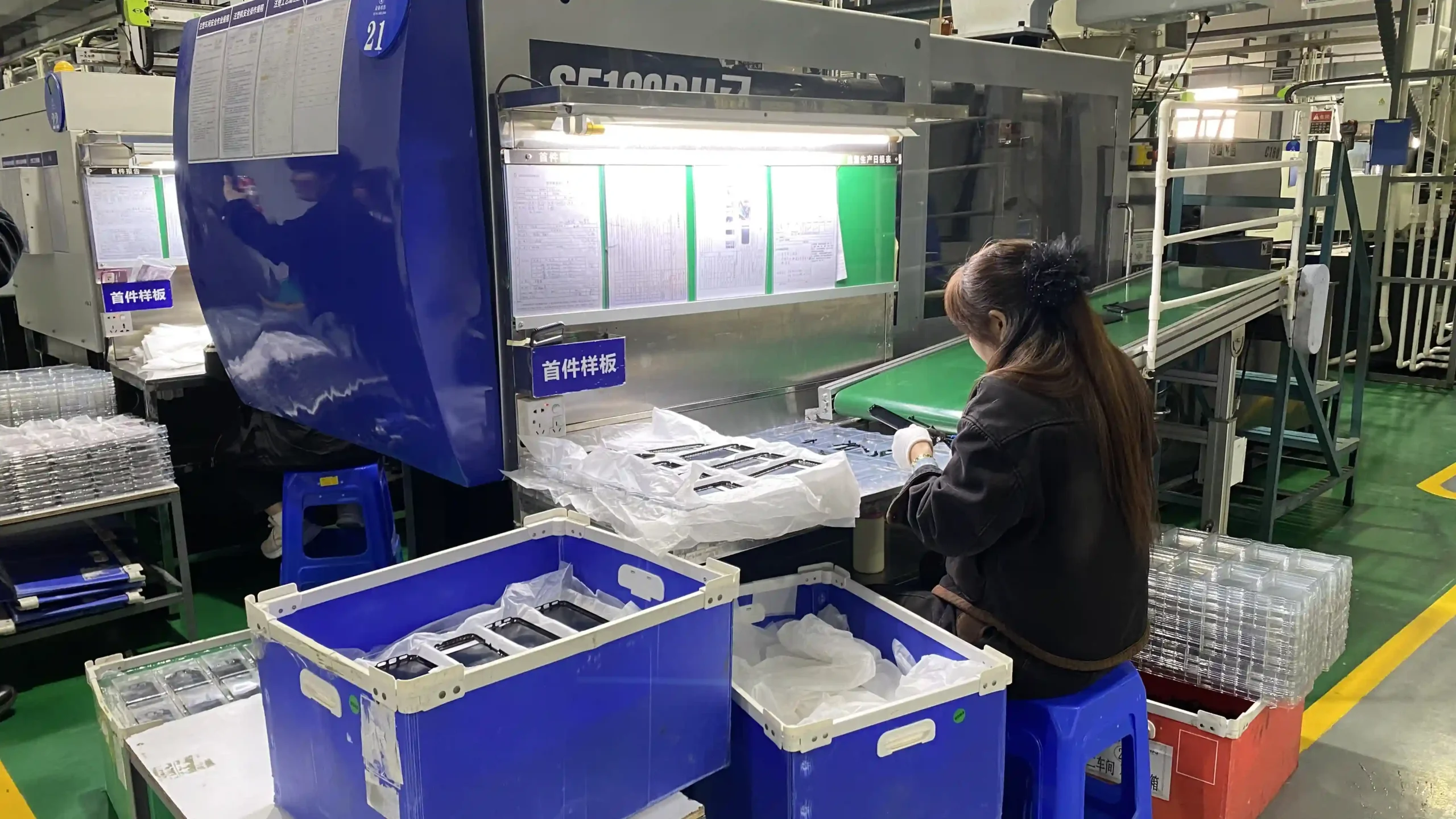
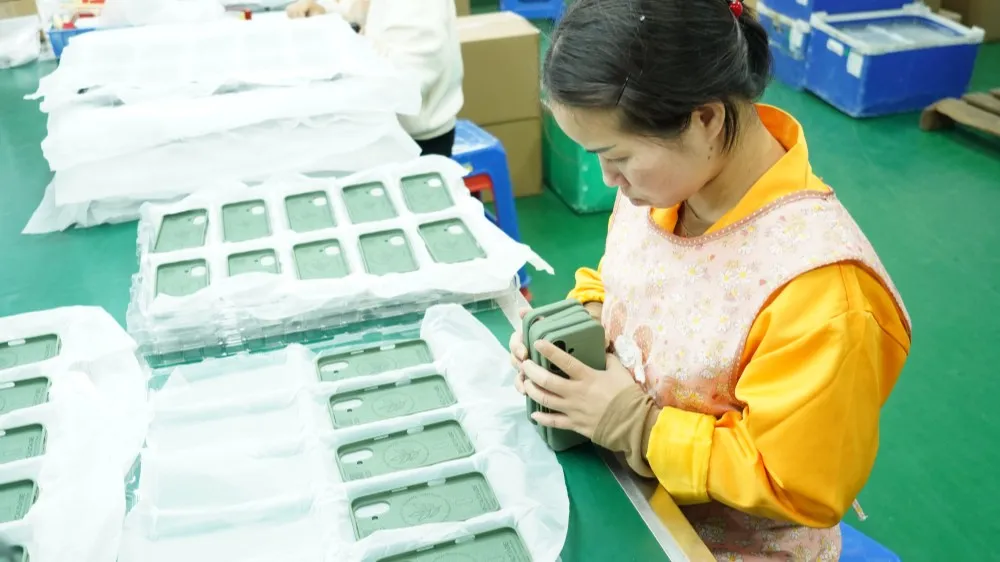
For this type of product, quality control should not stop at visual inspection. Each production batch should be checked for magnet placement, charging stability, magnetic hold, and overall fit before shipment.
Common Problems Brands Should Avoid
Many Qi2 magnetic phone case problems do not come from the phone itself. They often come from case design, material choice, magnet placement, or poor sample testing.
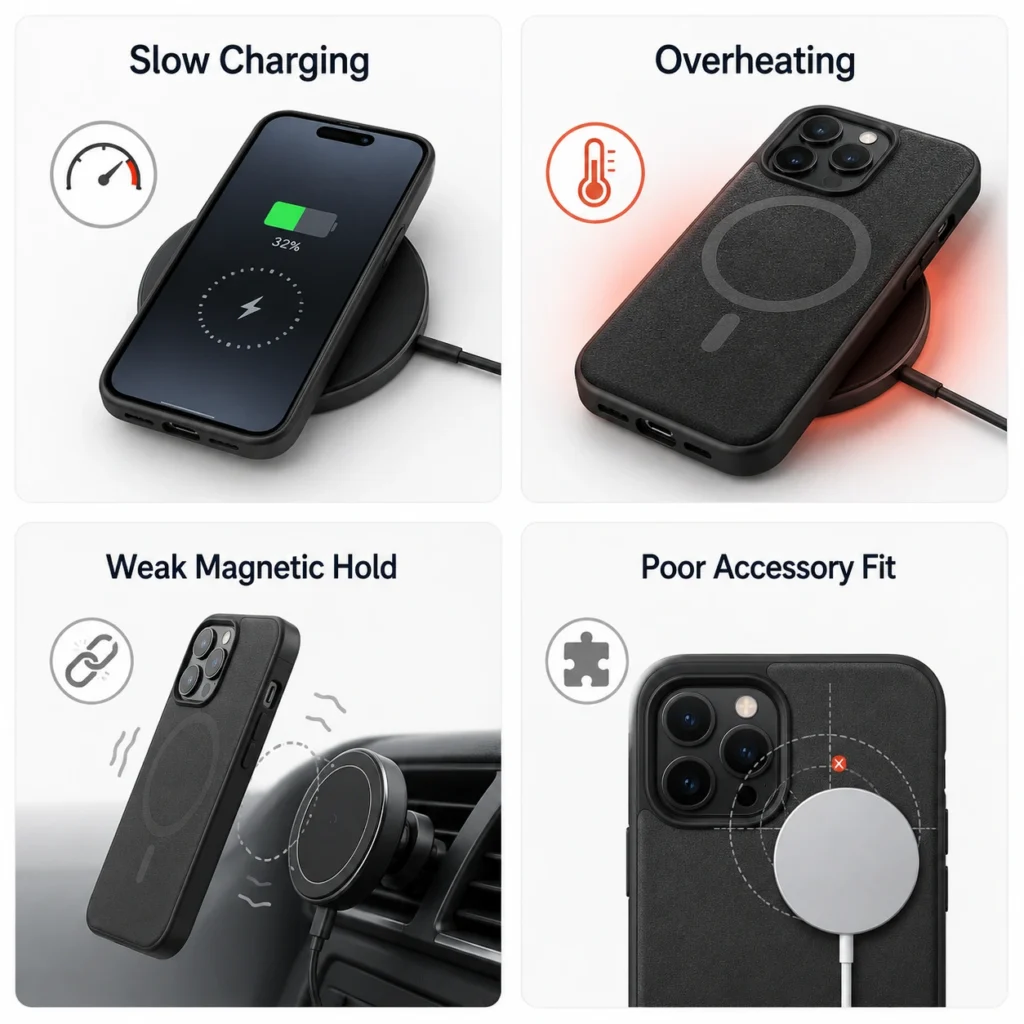
Slow Charging or Charging Interruption
Slow charging is one of the most common issues with a wireless charging phone case. It can happen when the backplate is too thick, the magnet ring is off-center, or the phone’s charging coil does not align well with the charger.
Material interference can also affect charging. Metal parts, thick decorative layers, or poorly placed internal structures may weaken charging efficiency and cause the phone to stop and restart charging.
This should be tested before bulk production, especially for magnetic wireless charging products. The case needs to charge steadily with the phone installed, not only look correct from the outside.
Overheating During Wireless Charging
Heat is another common issue with a wireless charging phone case. It can come from poor alignment, thick materials, blocked charging areas, or structures that keep heat from spreading out.
If the phone and charger are not aligned correctly, charging becomes less efficient. The system may generate more heat while delivering less power.
Usage also matters. Charging while using navigation, gaming, or video calls can increase heat. The case design should reduce avoidable heat by keeping the charging area thin, clean, and accurately aligned.
Weak Magnetic Hold
Weak magnetic hold affects how the case works in daily use. A Qi2 magnetic phone case may charge on a flat charger, but still fail with accessories that need stronger attachment.
This problem often appears with magnetic power banks, car mounts, and desktop stands. If the magnetic force is not stable, the phone may slide, rotate, detach, or feel loose during movement.
A magnetic phone case manufacturer should test magnetic strength with real accessories, not only with a simple magnet check. The case needs to hold firmly enough for normal charging, carrying, mounting, and hands-free use.
Misleading Compatibility Claims
Compatibility claims need to be used carefully. “Qi2 certified,” “Qi2 Ready,” “Qi2 compatible,” and “MagSafe compatible” can mean different things, depending on the phone, case, charger, and testing standard.
If these terms are used too loosely, customers may expect faster charging, stronger magnetic hold, or wider accessory support than the case can actually provide. This can lead to complaints, returns, and poor product reviews.
For a Qi2 Ready phone case, the safer approach is to match the claim with real test results. When comparing a MagSafe vs Qi2 phone case, product descriptions should explain what the case has been tested with and what level of compatibility it supports.
How to Choose a Qi2 Phone Case Manufacturer
Choosing a Qi2 phone case manufacturer is not only about price or production capacity. The supplier needs to understand phone structure, magnetic alignment, wireless charging, material behavior, and assembly control.
A qualified magnetic phone case manufacturer should help reduce design risk before tooling starts. This is especially important for a new model, a private mold, or a custom magnetic structure.
Engineering and DFM Capability
The supplier should be able to review the product structure before mold making. This includes phone fit, button feel, camera protection, magnet position, charging area, wall thickness, and drop protection.
An OEM phone case manufacturer with DFM capability can point out risks before they become tooling problems. This helps avoid repeated sample changes, extra mold cost, and delayed bulk production.
For a Qi2 phone case manufacturer, DFM should also cover the magnetic function. The supplier should check whether the structure supports accurate alignment, stable charging, and reliable accessory use.
Experience with Magnetic Phone Case Assembly
A magnetic phone case manufacturer should have real experience with magnet assembly, not only basic injection molding. The magnet position, polarity, adhesive method, and assembly process all affect the final product.
For a Qi2 magnetic phone case, assembly consistency is important. If the magnet ring shifts between batches, charging alignment and magnetic hold can become unstable.
It is worth checking whether the supplier has produced MagSafe or Qi2-style cases before. Experience helps reduce trial-and-error during sampling and makes bulk production easier to control.
Testing for Charging, Magnet Strength, and Fit
A qualified manufacturer should be able to test the case before bulk production. Visual inspection is not enough for a wireless charging phone case.
Charging stability, magnetic strength, accessory fit, and drop performance should be checked during the sample stage. The case should be tested with real phones, chargers, magnetic power banks, car mounts, and stands.
This helps confirm whether the case works in normal use, not only in factory conditions. If the supplier cannot test these points, the problem may not appear until customers start using the product.
Support for Custom Packaging and Bulk Orders
A custom Qi2 phone case is usually not finished after molding and assembly. It may also require logo printing, surface finishing, retail packaging, labels, inserts, barcodes, and shipment preparation.
An OEM phone case manufacturer should support these steps as part of the production plan. This helps keep the product consistent from sample approval to final delivery.
YGcases supports custom phone case projects from design review and mold development to injection molding, magnetic assembly, quality inspection, packaging, and bulk delivery. For a custom Qi2 phone case project, this one-stop workflow helps control both product function and order execution.
FAQs
Is Qi2 the same as MagSafe?
Not exactly. MagSafe is Apple’s magnetic charging system, while Qi2 is a wider wireless charging standard with magnetic alignment. For a MagSafe vs Qi2 phone case comparison, device support, charger compatibility, and case testing all matter.
Do Qi2 Ready phones need a magnetic phone case?
Some Qi2 Ready phones may need a magnetic case for better alignment with chargers and accessories. A Qi2 Ready phone case helps the phone stay centered on magnetic chargers, power banks, stands, and car mounts.
Does case thickness affect Qi2 charging?
Yes. A thick backplate, wallet layer, metal part, or heavy protective structure can reduce wireless charging performance. The charging area should stay thin enough and properly aligned.
What should be checked before bulk production?
Key checks include magnet position, charging stability, magnetic strength, accessory fit, heat performance, drop protection, and packaging details.
Conclution
This type of case is not built by simply adding a magnetic ring to a standard case. It needs accurate magnet placement, controlled backplate thickness, suitable materials, stable wireless charging, accessory compatibility, and consistent quality control.
For a custom Qi2 project, the right manufacturer should support engineering review, mold development, injection molding, magnetic assembly, testing, packaging, and bulk delivery.
YG supports custom phone case projects from design review and tooling to injection molding, magnetic assembly, quality inspection, packaging, and shipment. Contact us to discuss your phone model, structure, material, and order requirements.